
St. Quirinus Chapel – A Hidden Gem in Luxembourg City
Old Luxembourg City is the remnant of the ancient walled fortress of Luxembourg. Towering atop walls of rock, the views of the Petrusse Valley from Luxembourg City are spectacular.
But the views from below are equally magnificent. When you visit Luxembourg City, be sure to go down into the Petrusse Valley and walk the lower park with its amazing views looking up at old Luxembourg City and the fortress walls.
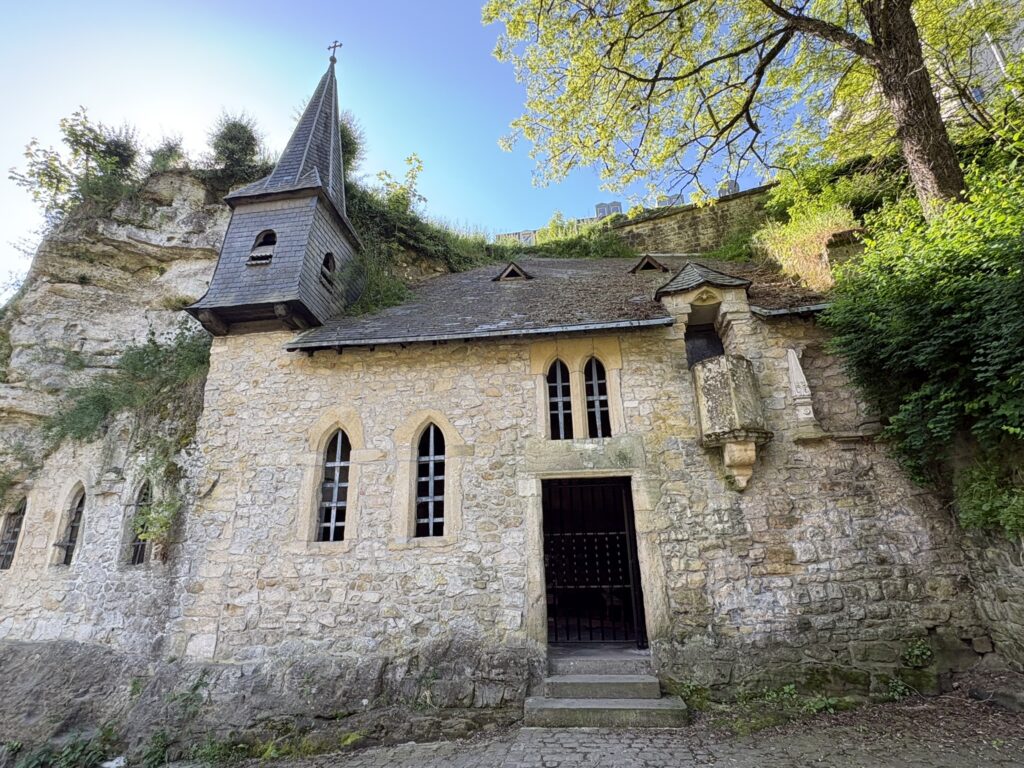
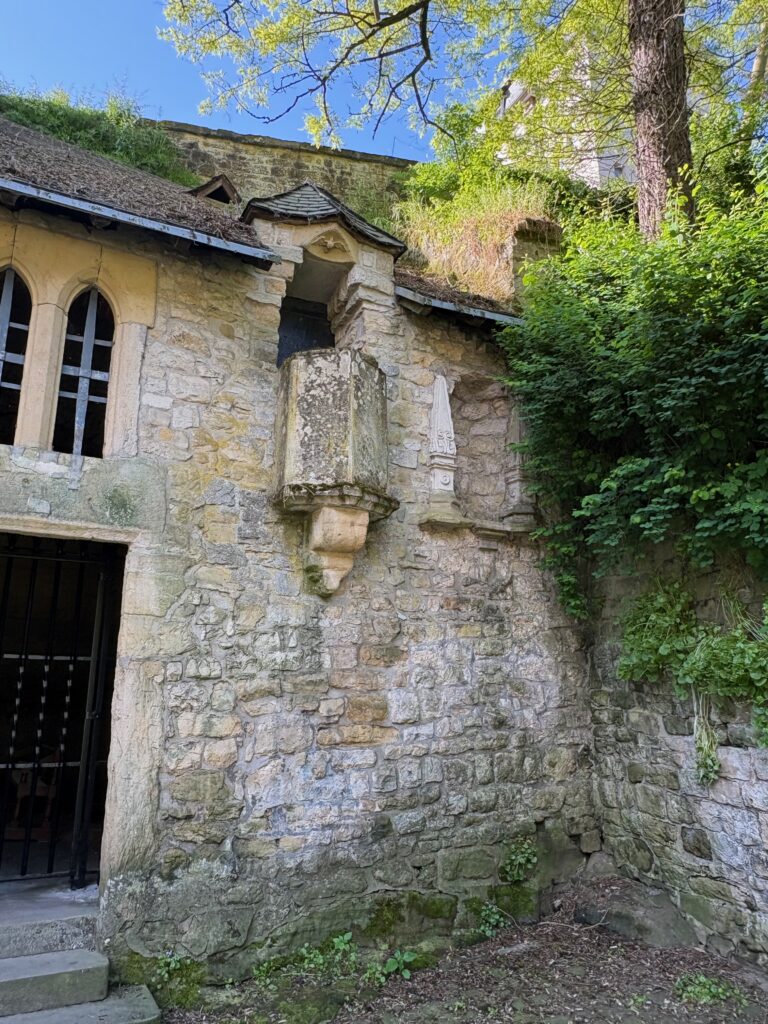
As you walk through the Petrusse Valley, you will also find a hidden gem that most people miss when visiting Luxembourg City, the ancient Chapel of St. Quirinus carved into the rocky wall of the city and dating to the mid-1300s.
Already in pagan times, the site of St. Quirinus Chapel was revered as a holy site, but in the 11th century, area Christians dedicated the site to St. Quirin of Neuss. While St. Quirin was a Roman martyr, devotion to him grew in Neuss, Germany, about 140 miles north of Luxembourg. In 1050, Pope Leo IX gave Quirin’s body to an abbess in Neuss, but eventually his remains were put into a church in Neuss, which still bears his name. Devotion to Quirinus spread throughout the region, including Luxembourg and strengthened during the time of the plague as he has been revered as a protector from the plague.
In 1355, the original shrine of St. Quirinus became the enclosed chapel carved into the rocky wall of Luxembourg that you can see today. From 1544 to 1666, St. Quirinus was recognized as the patron saint of the fortress city of Luxembourg. In 1666, he was replaced as patron by Our Lady of Luxembourg (Consolatrix Afflictorum), the statue still enshrined in Luxembourg’s cathedral bearing her name.
Over the centuries, pilgrims continued to flock to St. Quirinus Chapel to pray for healing and peace. Believers came seeking a cure from the waters of the natural spring that still flows beneath the chapel for their ailments, especially afflictions of the eyes.
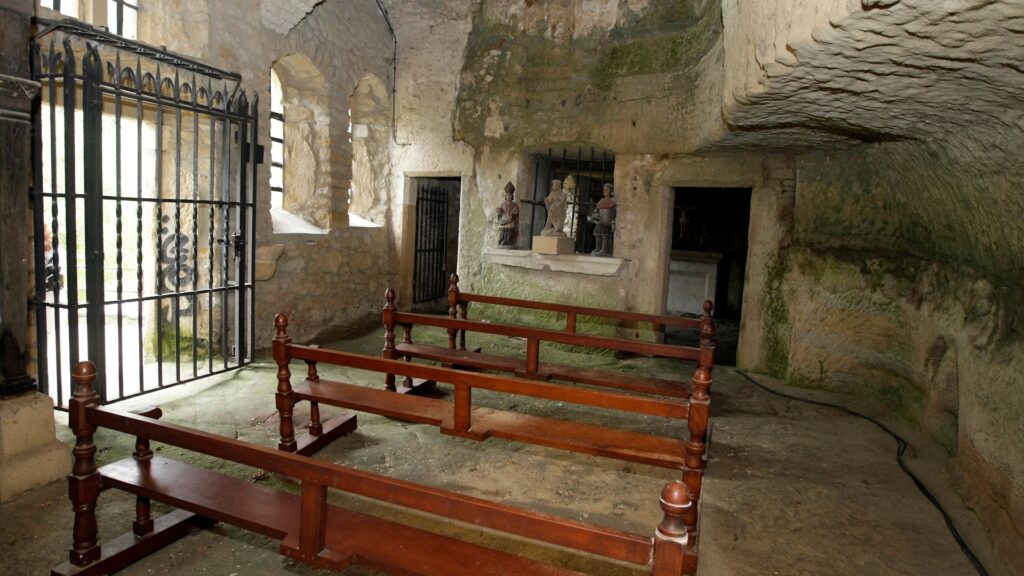
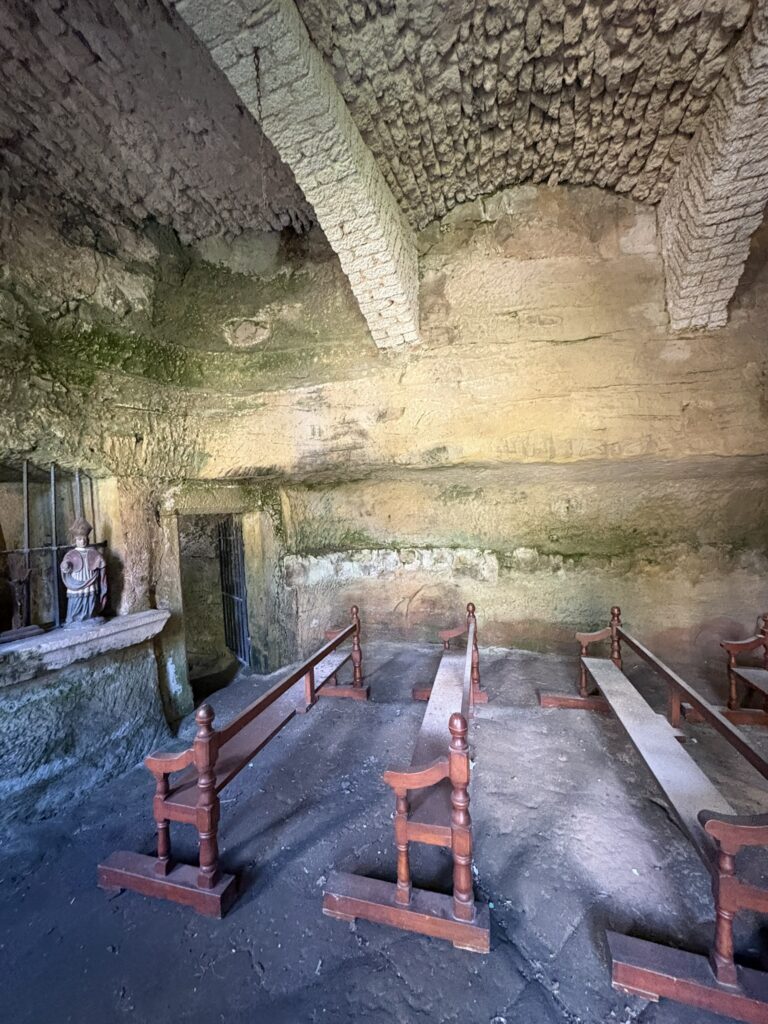
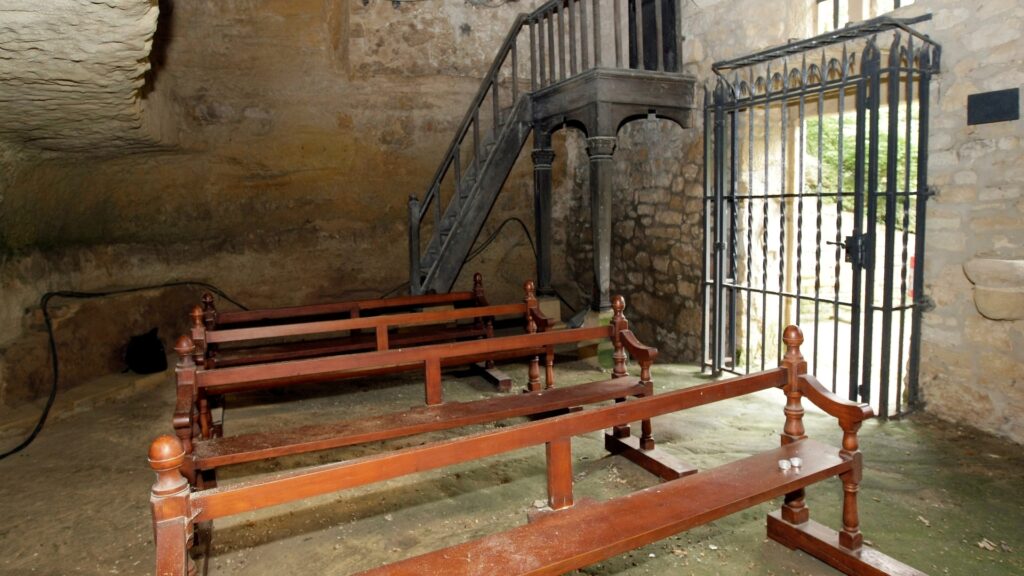
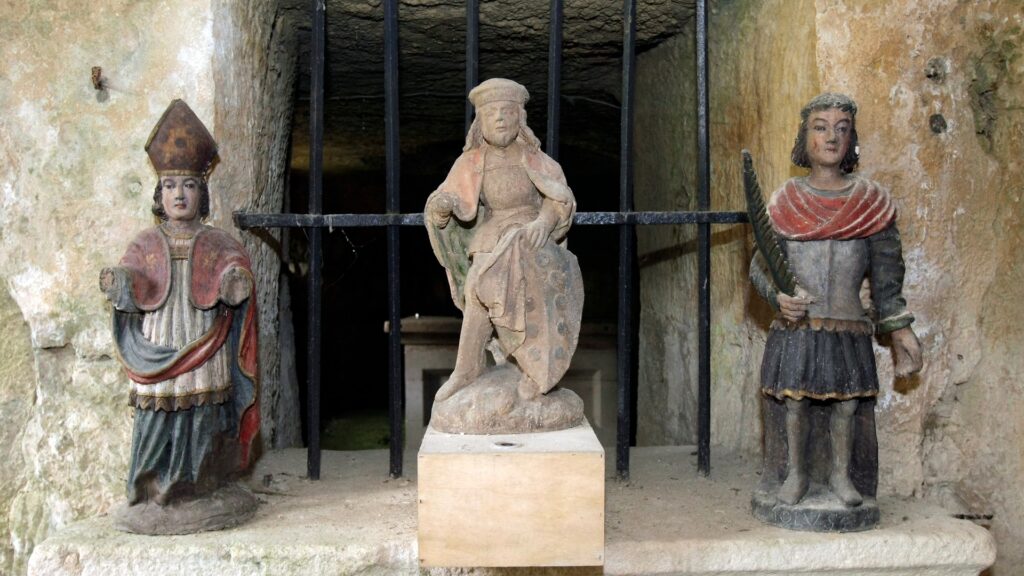
The chapel is divided into two small rooms carved from the rock. The main worship room holds a few wooden pews for the congregation, an altar with replicas of the original 17th century statues of St. Quirin in the middle, as well as St. Ferréol and St. Firmin, all patrons of healing from illness. Just out of view from the main door is the back worship chamber and the church sacristy. A statue of Jesus rests in the middle of the stone altar flanked by replica statues of two of three virgins, Spes (Hope), Fides (Faith) and Caritas (Charity), to whom the chapel is also dedicated.
Tradition holds that women visiting the chapel should say a prayer to the three virgins who were believed to protect children from childhood diseases. Not coincidentally, these three virgins are also the namesake of the town Troisvierges in the north of Luxembourg.
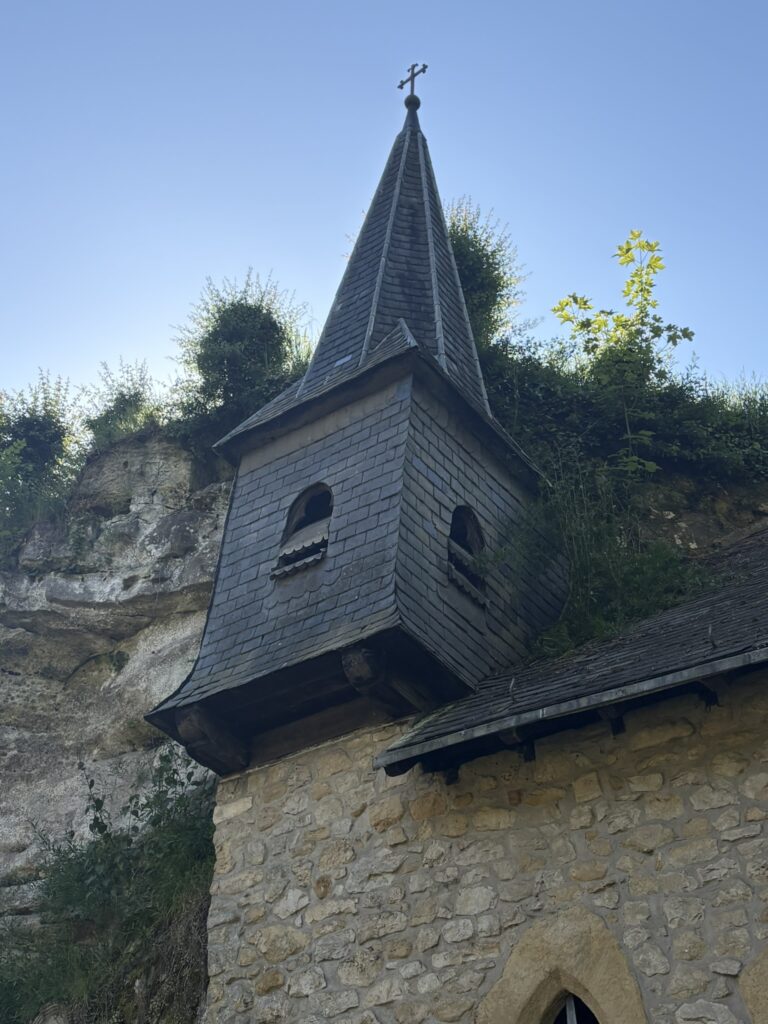
Looking at the exterior of the chapel, you will see a bell tower and peaked windows in the roof. These windows allowed air flow into the upstairs attic where the priest or caretaker of the church lived in the Middle Ages. Extending from the outer rock wall is a pulpit used to deliver sermons or messages to larger gatherings outside the chapel walls. The roof and small belltowers were an addition dating from the late 18th century.
Nothing is more beautiful than a morning or afternoon walk in the Petrusse Valley to savor the views looking up at old Luxembourg City. But as you take this walk, be sure to visit the Chapel of St. Quirinus. The chapel can be reached from the park in the Petrusse Valley or from a staircase located at 35, rue de Prague in Luxembourg City.
View Kevin’s video of St. Quirinus Chapel.
0 Comments