
By Kevin Wester
Throughout the years, there have been several communities in the United States bearing the name Luxemburg, the German spelling for Luxembourg. Today, only three of these communities remain: Luxemburg, Iowa; Luxemburg, Wisconsin; and Luxemburg, Minnesota. In this month’s Settlement Spotlight, we explore Luxembourgers in Luxemburg, Iowa.
Luxembourgers and Germans form parish and community
By the late 1850s, the Luxembourg and German settlers around Luxemburg, Iowa, wanted a Catholic parish of their own. Luxembourger John Pleschette, who died in 1859, bequeathed six acres of land so a church could be built in the center of Luxemburg. The proposed name for a new parish was St. John but it eventually became Holy Trinity. Roger Krieps in his 1963 book “Luxemburger in Amerika” tells the controversial story of the first frame church:
In 1864 [actually 1861], the settlers built a wooden church on the Fle’bierg, in Luxemburg, Iowa, without the prior consent of the bishop [of Dubuque]. Thereupon his Episcopal Eminence refused the consecration and for a long time he did not assign a clergyman to the place. That’s when on December 17, 1864, the Luxembourgers turned to their old homeland and sent a letter to the Luxemburger Wort [newspaper] pleading for a priest from Luxembourg “with fine references” to whom they would offer an annual salary of $400, plus $2 for the early Sunday morning service, $5 for every marriage and funeral and $1 for every weekday mass and baptism. Through the intervention of Bishop Adames [of Luxembourg], they got their first vicar in 1865.1
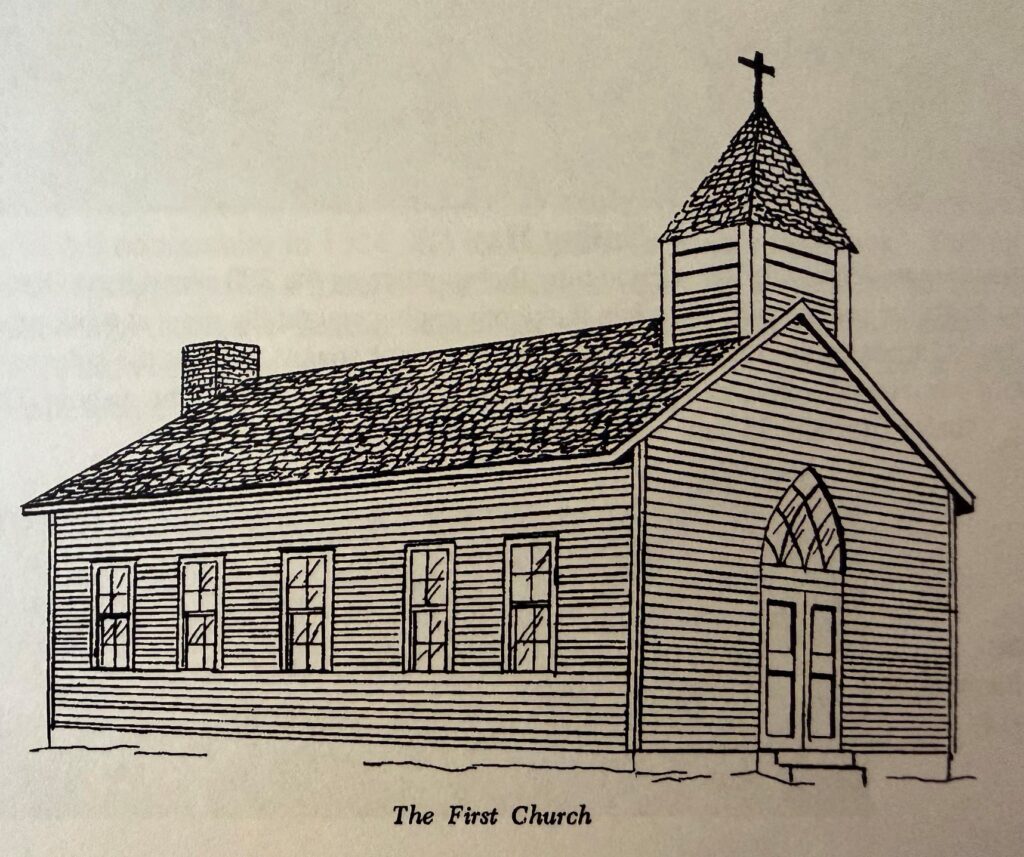
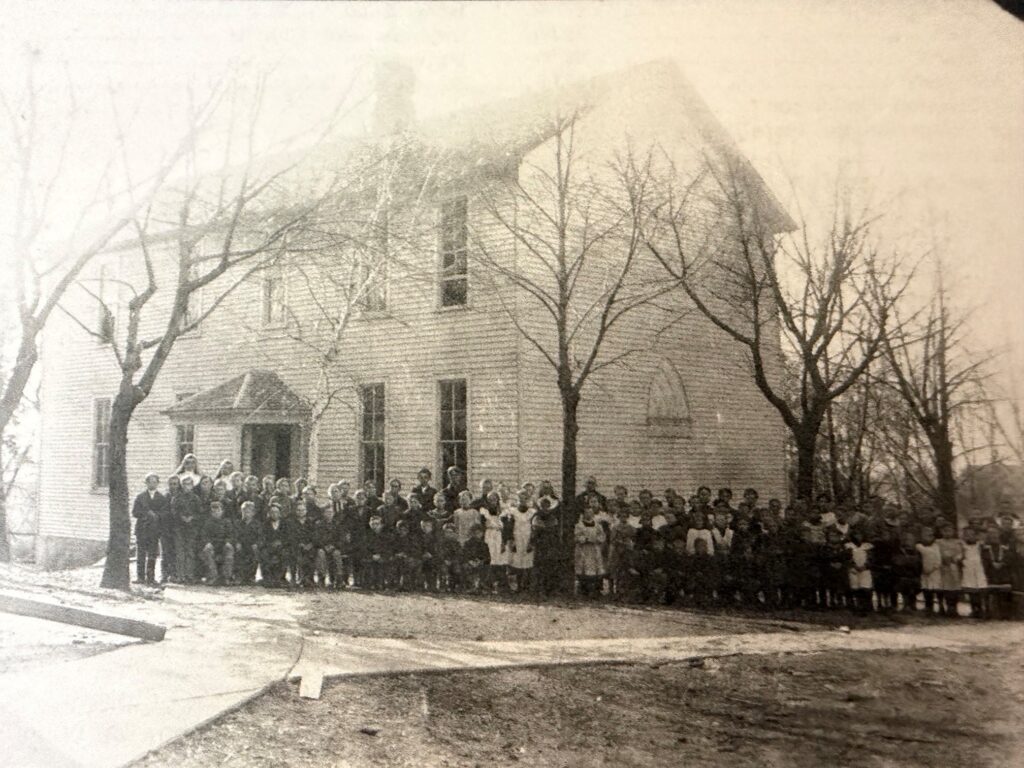
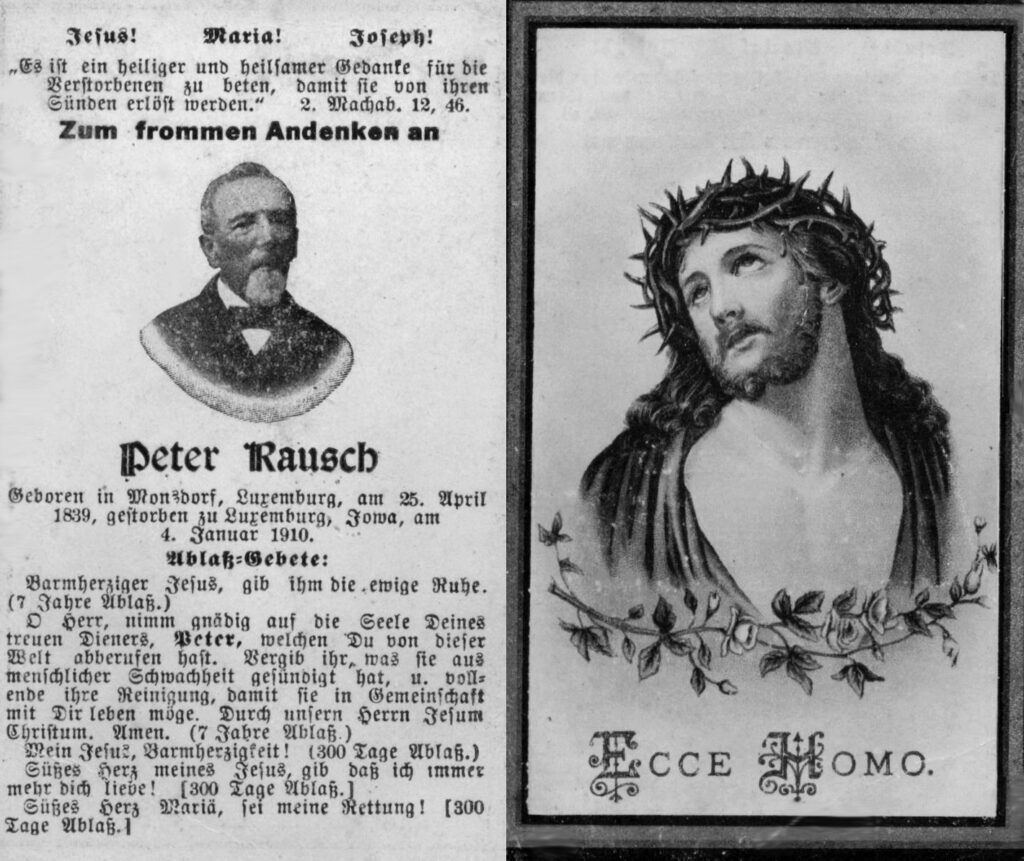
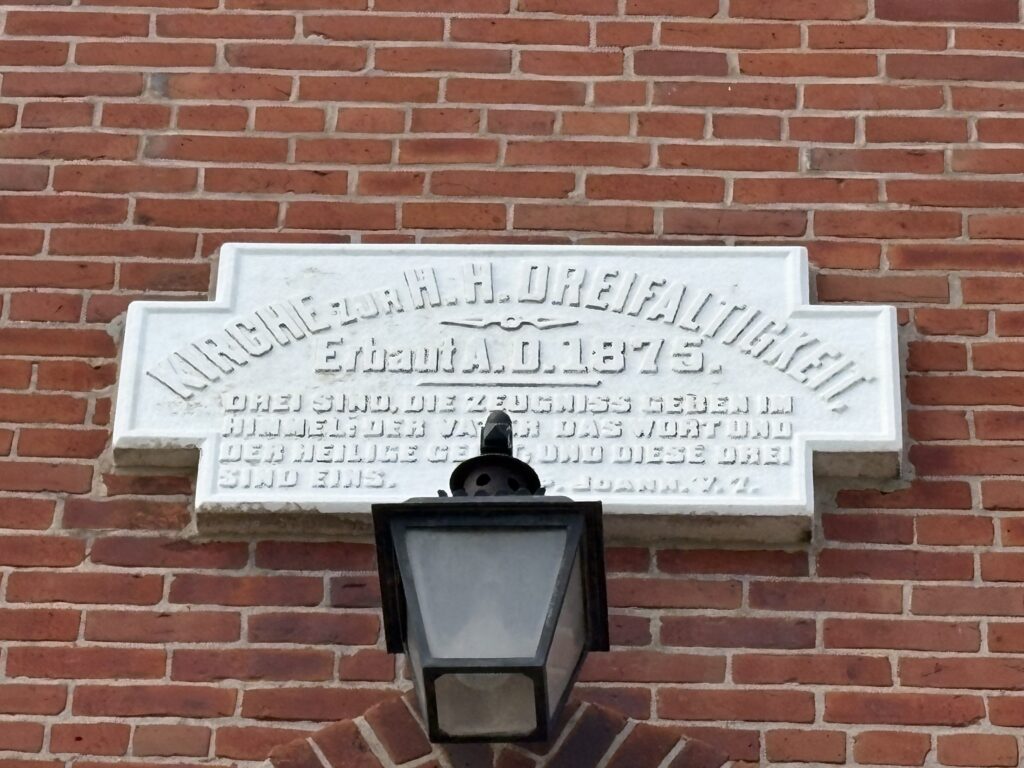
Despite the controversy behind the first church, the parish grew and thrived. In 1872, the legendary Rev. F. W. Oberbroekling was appointed pastor of Holy Trinity, and he soon realized the church was too small for the growing congregation. By 1873, plans were underway for a larger, more substantial church and by April 1874, the foundation for the next brick church was complete. Work commenced on the walls and roof of the new church, but tragedy struck the community on the night of July 25-26, when a tornado hit Luxemburg. The aftermath of the tornado is described in Luxemburg’s 2012 centennial book:
…The damage [to the yet to be completed church] was estimated at about six thousand dollars. The wreckage of stone, wood and brick was strewn about the area. The rafters and scaffolding were down and ruined. One side of the brick wall caved in and the steeple was badly damaged…In one moment the hard work of nearly five months had been reduced to rubble…Though badly hurt, Father Oberbroeckling and his sturdy people were not dismayed and resolved to finish the church. Within two weeks the builders were again at work and the building was completed in less than a month late of the original plan.2
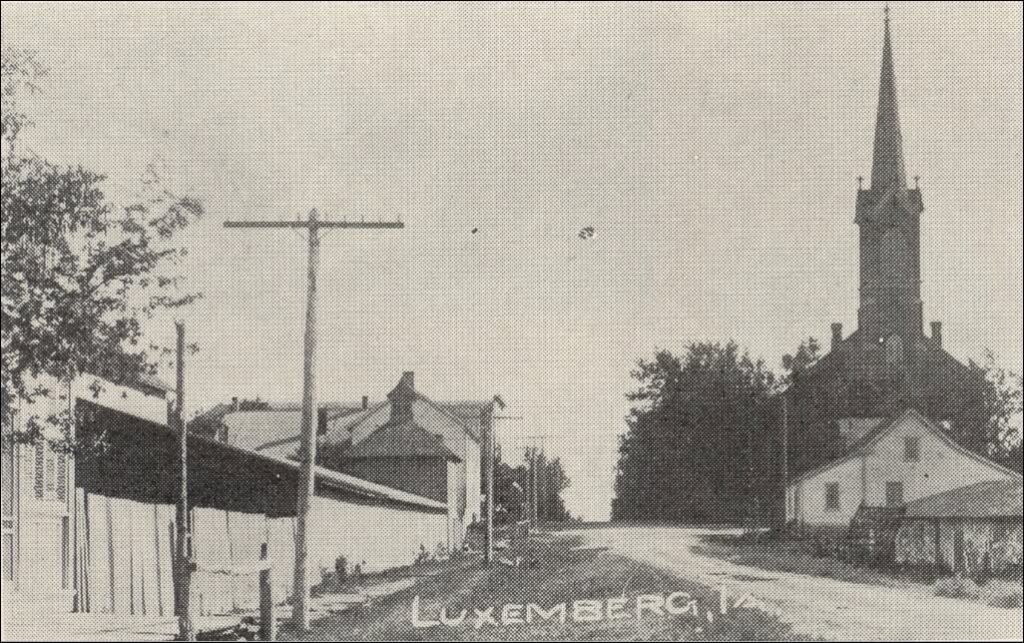
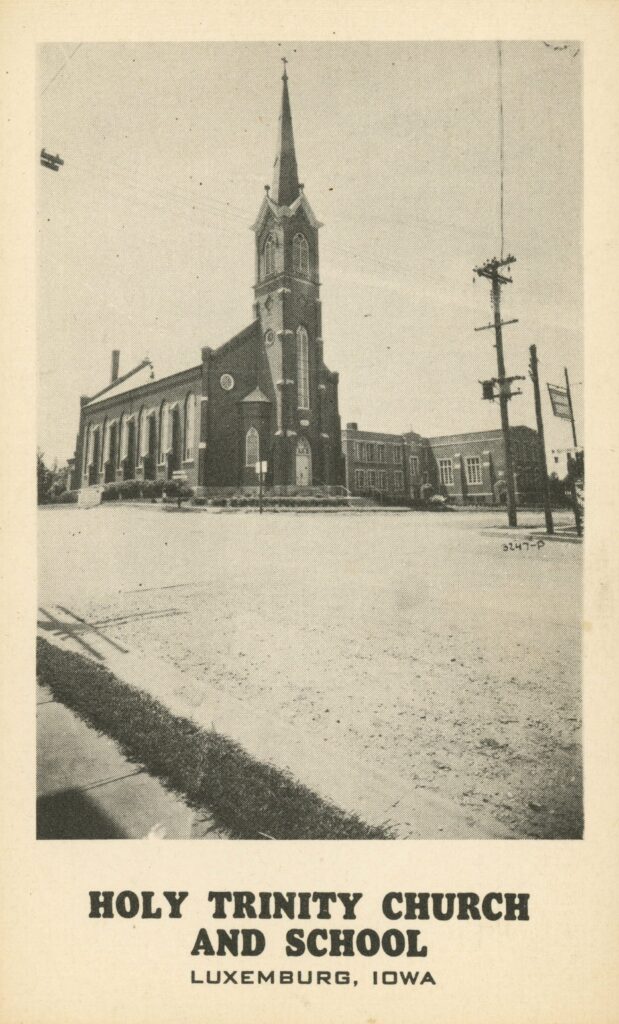
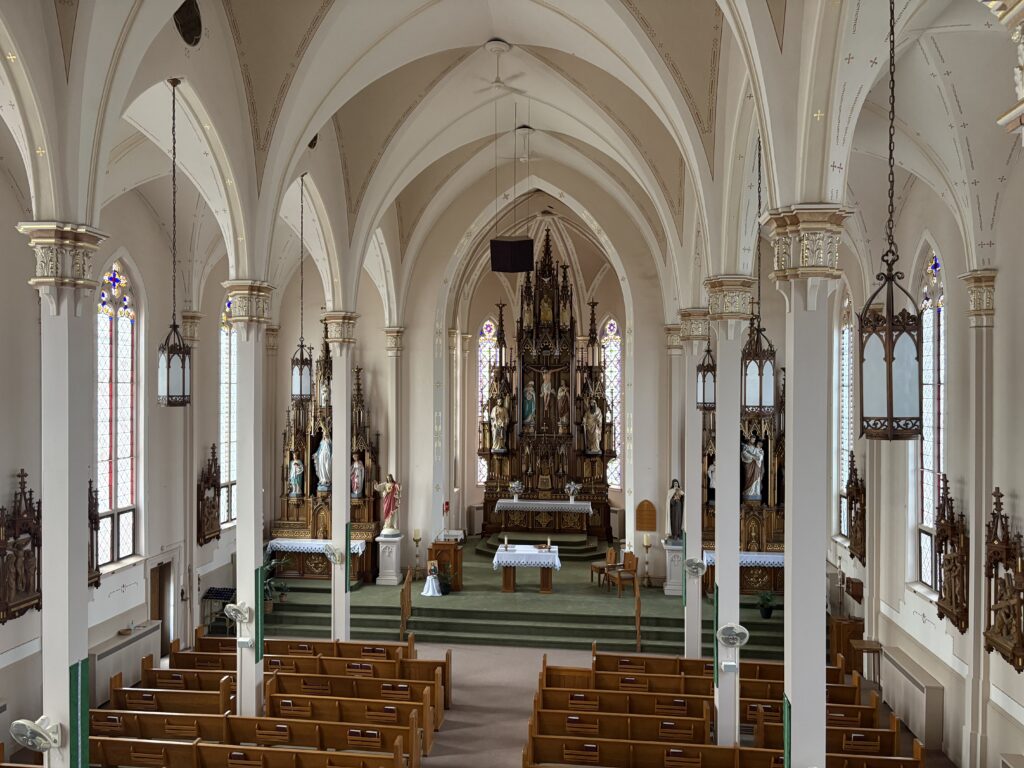
The new red 130-by-50-foot brick church with its piercing 172-foot steeple was dedicated by Bishop John Hennessy of Dubuque on July 11, 1875. In 1877, the first church was transformed into a new Catholic school. For more than 150 years, Holy Trinity Church and school have served as the heart of the Luxemburg community. The interior of the neo-Gothic church with its ornate altars and wood-carved stations of the cross with inscriptions in German, remains intact and is a symbol of the deep faith of the Luxembourg and German immigrants.
Near tragedy again hit the church during the stormy night of August 9, 2010. Lightning struck the piercing steeple of Holy Trinity and soon the steeple was ablaze. The New Vienna/Luxemburg Fire Department tackled the blaze with mutual aid from area departments, including Dubuque Fire and Rescue. The steeple came crashing down to the ground and was destroyed but fortunately the rest of the historic church was intact. The parishioners of Holy Trinity soon reconstructed the steeple out of metal, and it continues to rise above the community as a beacon of faith. In 2026, in a restructuring of parishes in the Archdiocese of Dubuque, it was determined that Holy Trinity Church would no longer be used for weekend Masses but only for a weekday Mass, weddings and funerals.
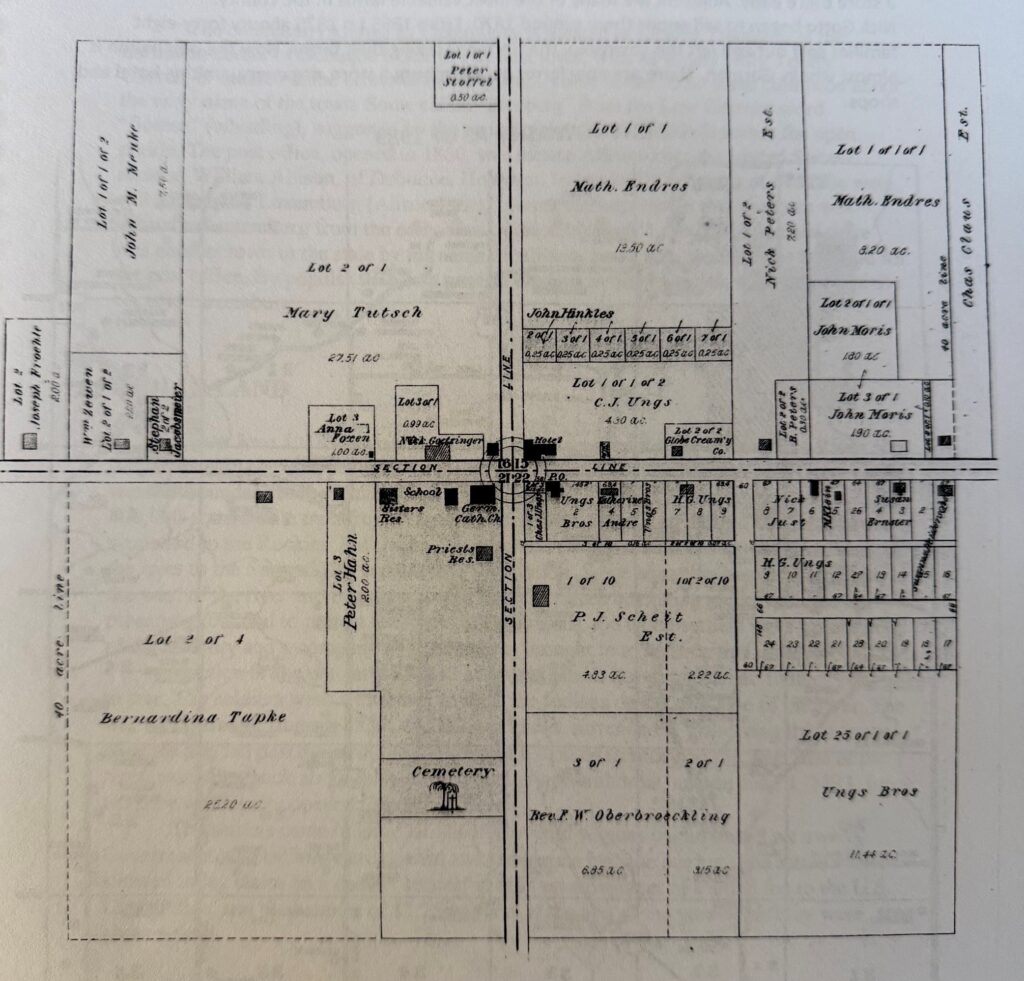
In 1912, Luxemburg was legally incorporated. At that time, the city comprised a number of businesses and about 30 residences. Luxembourg immigrant? Nicholas Goetzinger was elected its first mayor, and other Luxembourgers were elected to the city council including John Henkels, Gerhardt Ley and Bernard Goetzinger. Over the years, other Luxembourgers have served as mayors including Henry Gaul, Nick J. Rausch, Art Ungs and Ronnie Ungs.
Luxembourg culture in Luxemburg, Iowa
Though Luxemburg, Iowa was always a mixed community of Luxembourgers and Germans, historically it leaned heavily to the Luxembourgish language and culture. Journalist Rosch Krieps discovered this during his 1962 visit to Luxemburg accompanied by his photographer wife and his camera man and his wife. Krieps wrote:
…After we had already seen so many villages displaying a considerable amount of Luxembourgish heritage, without showing off the name of our capital or of our country, every place in America named Luxemburg was a disappointment. Most pleasant was Luxemburg, Iowa, a village, population 159, strongly mixed with immigrants of German and Dutch descent, and situated on a hill, west of the Mississippi. Emigrants from Luxembourg dominated so overwhelmingly that they had imposed the language as well as various customs from Luxembourg. At the very entrance of the village we saw an older woman working in her garden, a Luxembourger lady. How remote from the usual picture of American ladies in their groomed make-up! How remote from the sea of pompous hats, displayed during Sunday’s mass, in the ladies’ aisle! How remote from the lady at the steering wheel with a cigarette nonchalantly in the corner of her mouth. How remote from the funny Bermuda shorts of young folks, sex in a puritan package!
The lady in her garden corresponded to our archetype of a “E’sleker Bomi [grandmother from the Oelsing area in the north of Luxembourg]: a skinny person, lightly bent by hard work, with thick-boned hands and unconcealed wrinkles on her face, but with noble, trusting eyes. Under her apron she was wearing a long dress and woolen socks, the kind no farmer’s daughter in Luxembourg would wear these days. Her headdress was indeed a friendly welcome for us, both from our homeland and from old times: she was still wearing the “Hallet.”
Stop, strap on the photo camera, wind up the movie camera, switch on the tape recorder, everything as inconspicuously as possible, please, in order not to disturb the idyll. We stalked closer and said: “Gudde Moien!”[Good Morning!]. She looked up and nodded friendly, as if it was the most natural thing in the world to be greeted by a “Gudde Moien,” in the very heart of North America. We explained our intent to interview her. She struck both hands together “Omeiomei, like this am Schirkelf?” – [Oh my God, like this with the apron?] she asked. That’s exactly what we wanted to capture on film, but we could not prevent her from running into the house and coming back without her working attire and without the Hallett.
Mrs. Joe Rausch was her name. Her first name was Therese and her maiden name was Steffen. She was seventy-nine years old, very robust and content “an zeng Kanner gezillt.”[and I raised ten children]. She had worked since 1900 on her farm located a couple of miles from Luxemburg. Her father was born in “Nei Wein,” New Vienna, a village some five miles to the south, a place with many Luxembourgers too. The mother was from the village of Luxembourg, Iowa. She did not remember where the grandparents came from. “De ko’men vun doba’ussen,” [They came from outside] she said. “Doba’ussen” [Outside] that’s what all Luxembourg-Americans call Luxembourg, Europe, a place which almost none of them know…
…Joe Rausch…shows up. In 1947, he retired to the village after working fifty-five years on the farm. His farm was outside the village and is now farmed by his son. Joe had a modern little house built for his old days and he lives off the income of his stock portfolio. Nowadays, the old farmers don’t remain any longer on their farms. The farmer does not stick to his soil If he can get a good deal, he will sell the house and farm and will settle down on a better piece of land. In old age he will retire and live off his pension.
One hundred and twenty-five farms are located around Luxemburg, Iowa and are part of the township, the municipality. One hundred and sixty residents live in the village and six hundred in the isolated, surrounding farms. Who among them still speaks thenative language? Usually it is only a few older folk of the Rausches, Schiltzen and Steffen [of the Rausch, Schiltz and Steffen families]. Once can also still hear the language in the Salo’n – [Saloon]. Foxen Emmet’s grandfather came from Luxembourg, Europe. His son doesn’t speak the dialect any longer, and he doesn’t show the slightest interest in it. This is due to the fact that they did not learn the language. We too speak differently than our ancestors did one hundred and fifty years ago.
The post office is in the general store. There is no correspondence with Luxembourg, Europe any longer. All family interactions have been severed. After all, one hundred and fifty years have passed since the arrival of the first Luxembourgers.3
Following his 1962 visit to Luxemburg, Iowa, and other Luxembourg settlements in the United States, Krieps not only published his book “Luxemburger in America,” but he also produced a 30-minute film with the same name. Krieps included his film footage and interview with Mrs. Rausch in the film. In 2012 for the 50th anniversary of Krieps’ Millennial Mission to the United States, the original German language film was reproduced with an English voiceover, so his encounter with Mrs. Rausch is now perpetuated in English.
Bond between Luxemburg and Luxembourg continues
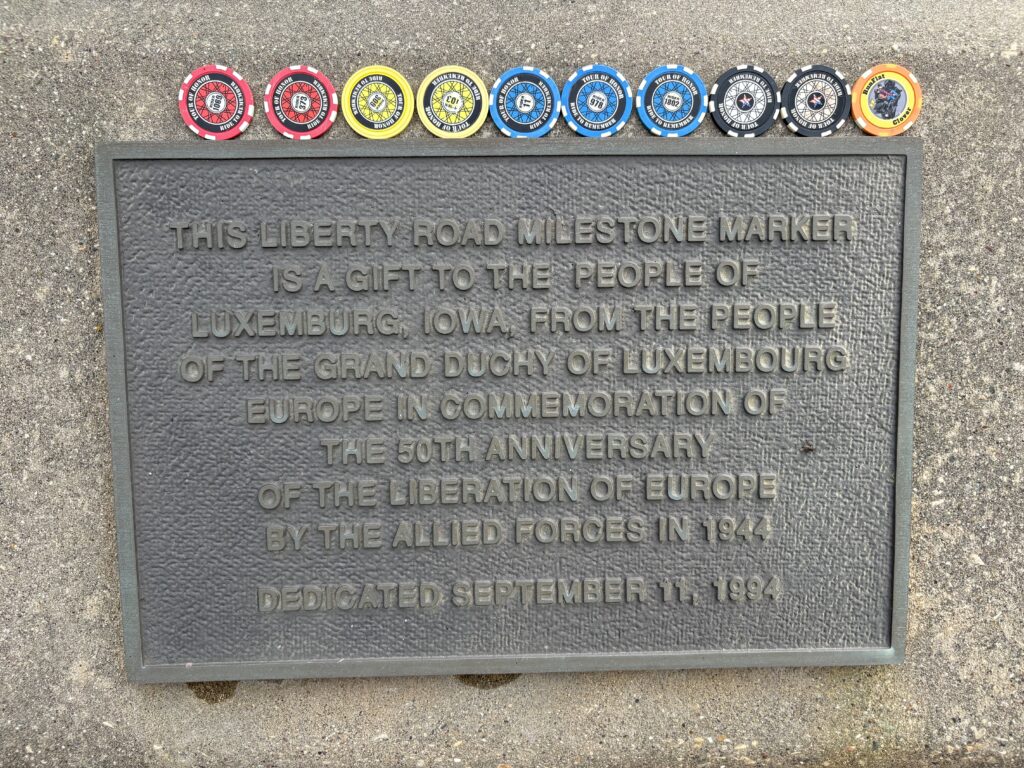
While the Luxembourgish language and the customs of the first Luxembourg immigrants have faded into history in Luxemburg, Iowa, in 1994, a very special event occurred which will forever perpetuate the bond between Luxemburg, Iowa and the Grand Duchy of Luxembourg. The year 1994 marked the 50th anniversary of the liberation of Luxembourg by Allied Forces. In commemoration of this occasion, the Grand Duchy donated and placed three replica Liberty Road markers in the three American Luxemburgs: Luxembourg, Iowa; Luxembourg, Wisconsin; and Luxembourg, Minnesota.
Since 1947, more than 1,100 such Liberty Road Markers have been placed in Luxembourg, France and Belgium to delineate the route of Allied liberators in that region of Europe. How appropriate that replicas of these Liberty Road markers were placed in the three American communities bearing the name Luxemburg.
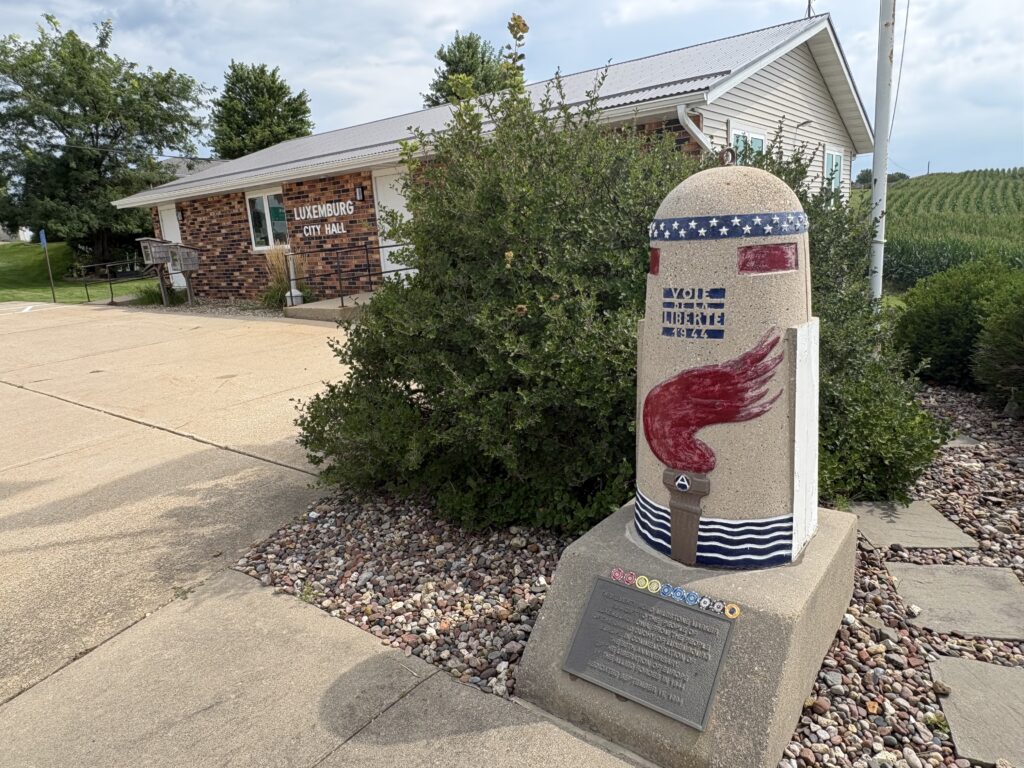
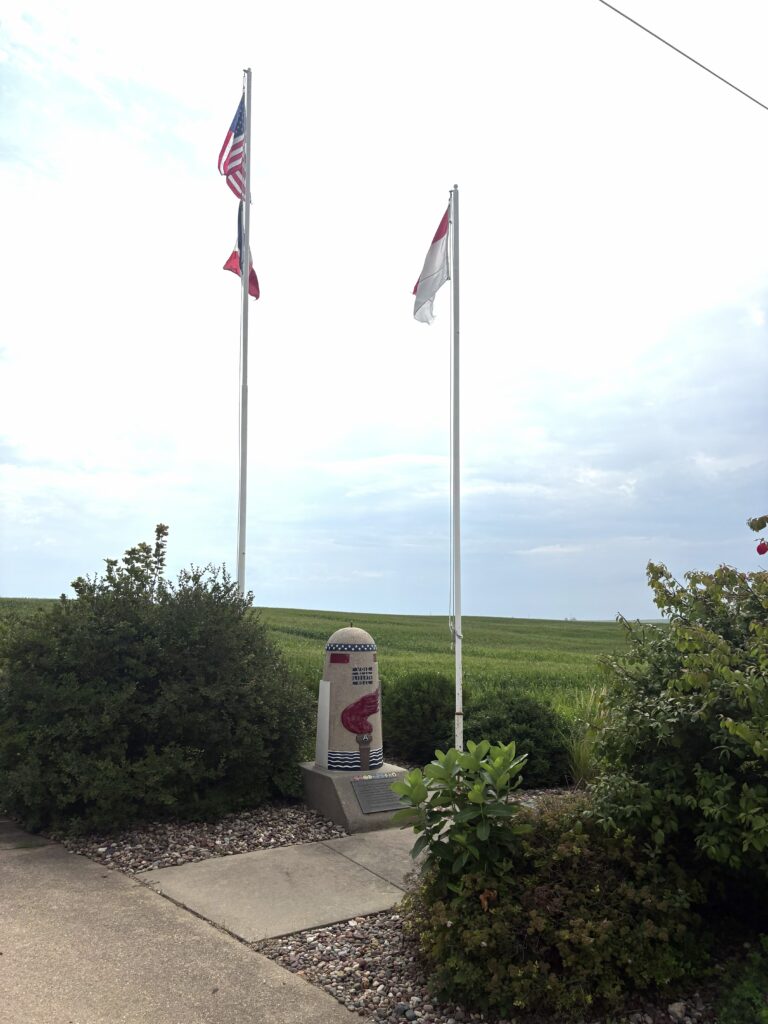
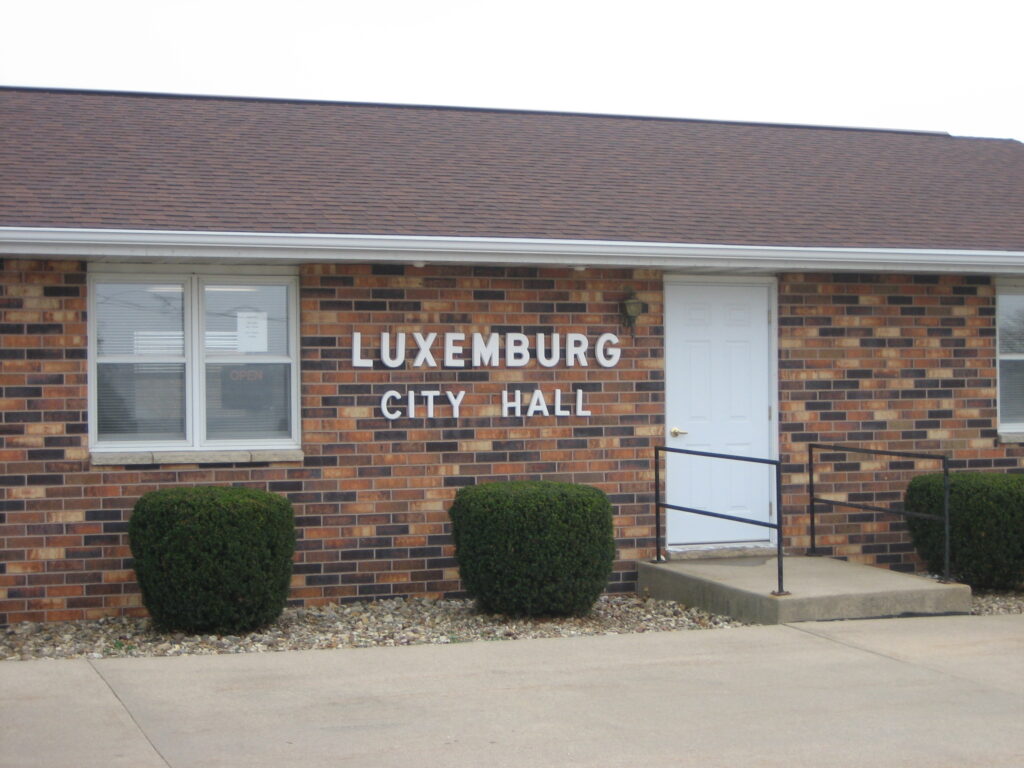
On September 11, 1994, a 900-pound, concrete Liberty Road marker from the Grand Duchy was placed in Luxemburg, Iowa next to the Luxemburg City Hall, in the shadow of Holy Trinity Church and cemetery. Ed Ungs, a lifelong resident of Luxemburg, owner of Ungs Shopping Center and the postmaster of Luxemburg, coordinated the festivities. The residents of Luxemburg graciously welcomed visiting dignitaries Alphonse Berns, Luxembourg ambassador to the United States, John E. Dolibois, retired U.S. ambassador to Luxembourg, and Terry Branstad, governor of Iowa. The Liberty Road marker continues to be flanked by flags of Luxembourg, the United States and the state of Iowa and serves as a perpetual reminder of the bond between the Grand Duchy and the U.S. But it also serves as a source ethnic pride for the residents of Luxemburg who are of Luxembourg descent.
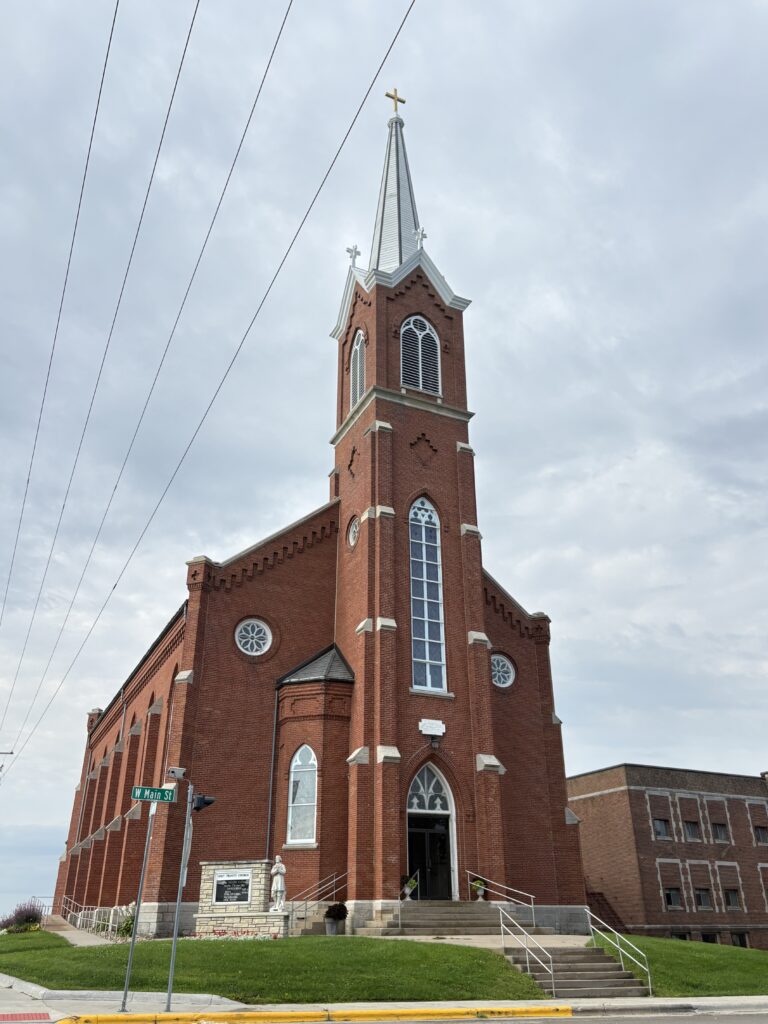
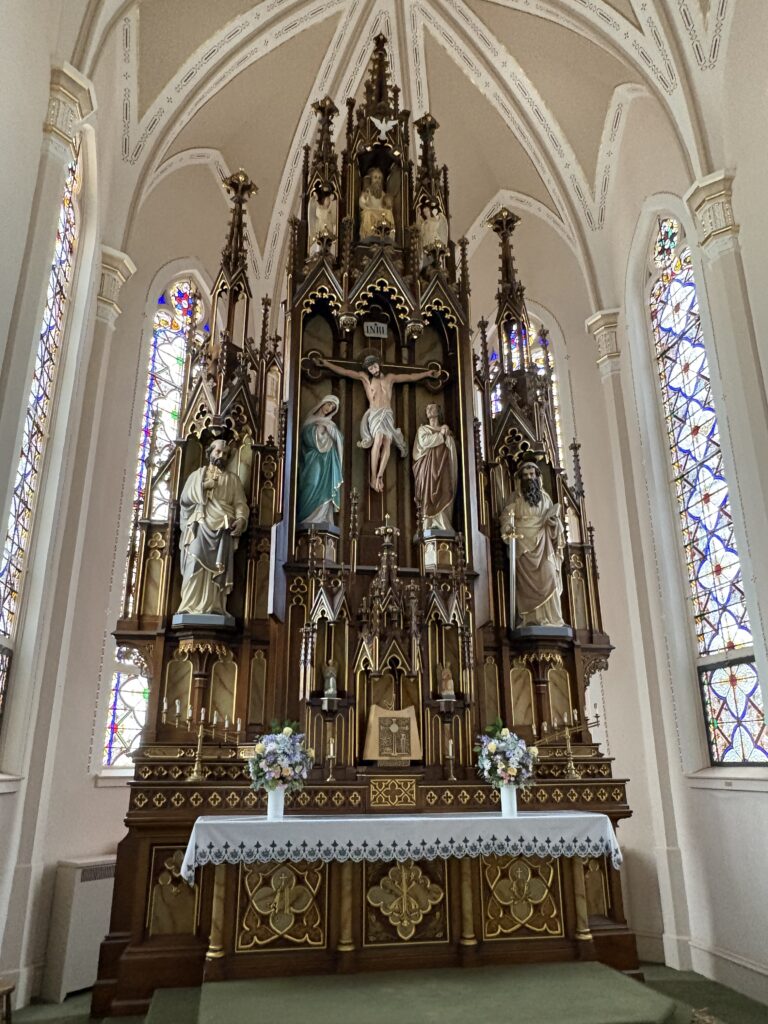
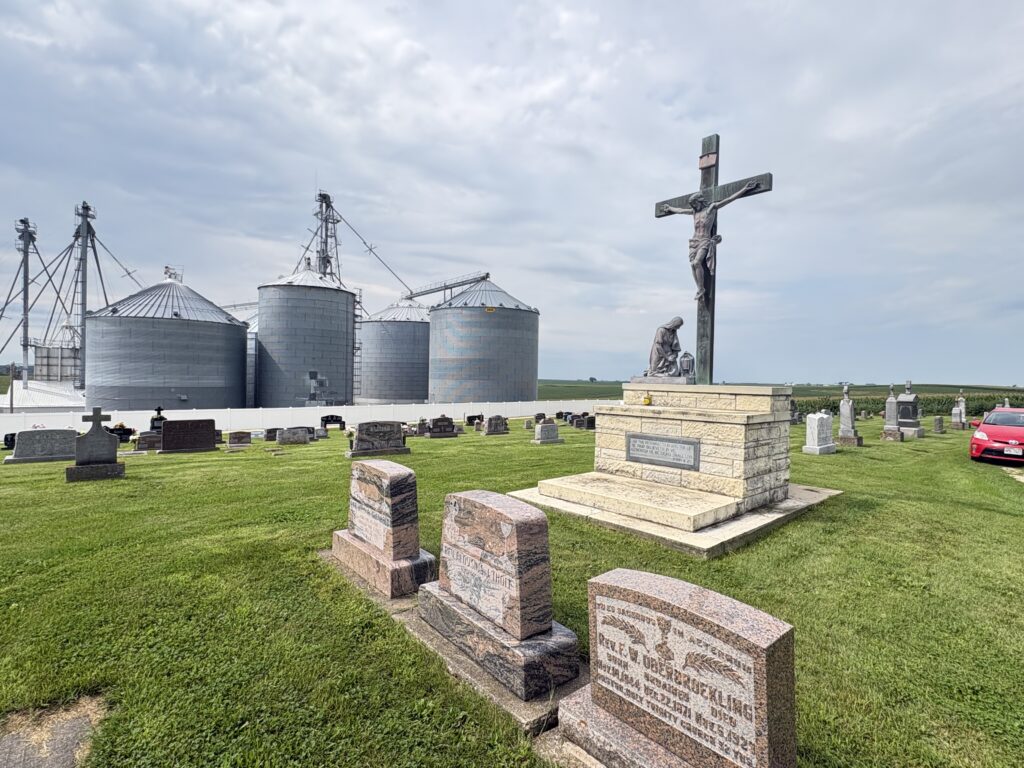
If you visit Luxemburg, Iowa today, you must stop and take in the beauty and history of Holy Trinity Church and walk through the cemetery to note family names of all the Luxembourgers buried there. However, the source of the most activity in town and a destination you do not want to miss is Ungs Shopping Center which is the area’s “mini mall that has it all.” This blast from the past offers a shopping experience that is virtually non-existent in the United States. The Ungs family, which hails from Beaufort, Luxembourg, is in the fourth generation of operating the store. Ungs Shopping Center will be the subject of part three of this series about Luxembourgers in Luxemburg, Iowa.
[1] Luxembourgers in America, Roger Krieps, 50th Anniversary re-edition of his book “Luxemburger in Amerika” with English translations by Fausto Gardini, 2013. Published by Luxembourg American Cultural Society, 45.
[2] City of Luxemburg, Iowa – 1912 – Celebrating 100 Years – 2012, unpaginated.
[3] Krieps-Gardini, 43.
Check out Kevin’s videos from Luxemburg, Iowa:
Exterior of Holy Trinity Church, Luxemburg, Iowa
Interior of Holy Trinity Church, Luxemburg, Iowa
Holy Trinity Cemetery, Luxemburg, Iowa
Liberty Road Marker at Luxemburg City Hall
0 Comments