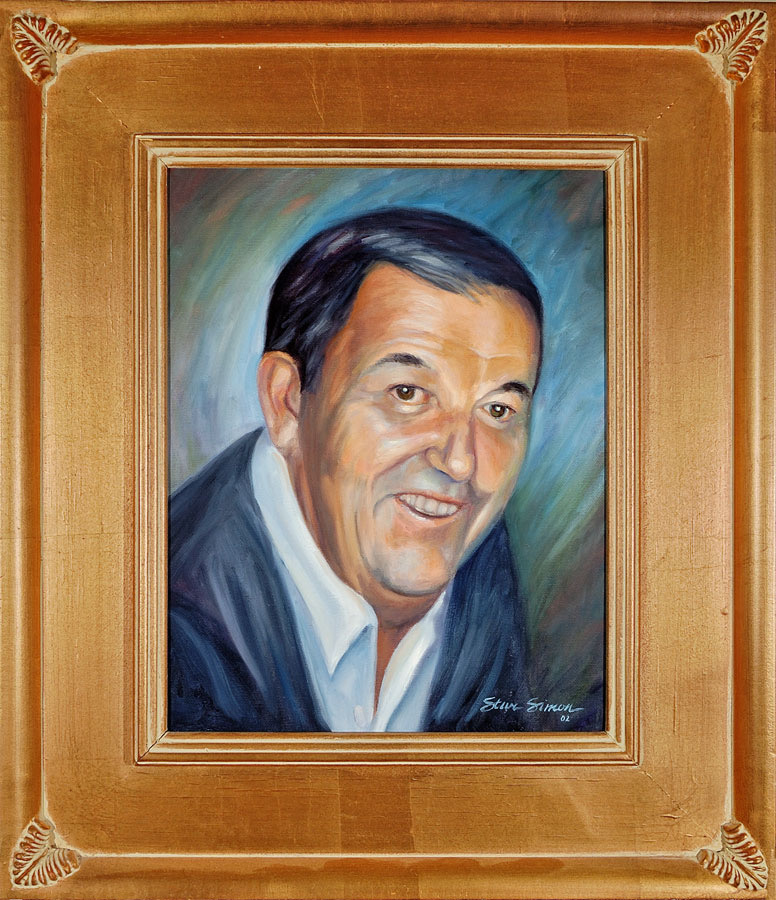
This article is ninth in our series on Luxembourg Americans who have gone through the process of reclamation of Luxembourg nationality to become Luxembourg citizens. These dual citizens, who were assisted in their citizenship journey by Luxembourg Legacy, reflect the passion that new Luxembourgers in America have for all things Luxembourg. This month, we’re featuring Steve Simon, the son of Luxembourg immigrants, who found his true calling: the artful pursuit of peace and harmony.
By Mary Bolich
Facing the grimmest circumstances that humanity can deliver, Steve Simon Sr. found in the depths of his soul the ability to survive. The psychology behind his resolve is something his son, Steve Simon Jr., has reckoned and wrestled with since he was a boy, even prompting him to make a huge pivot in his life.
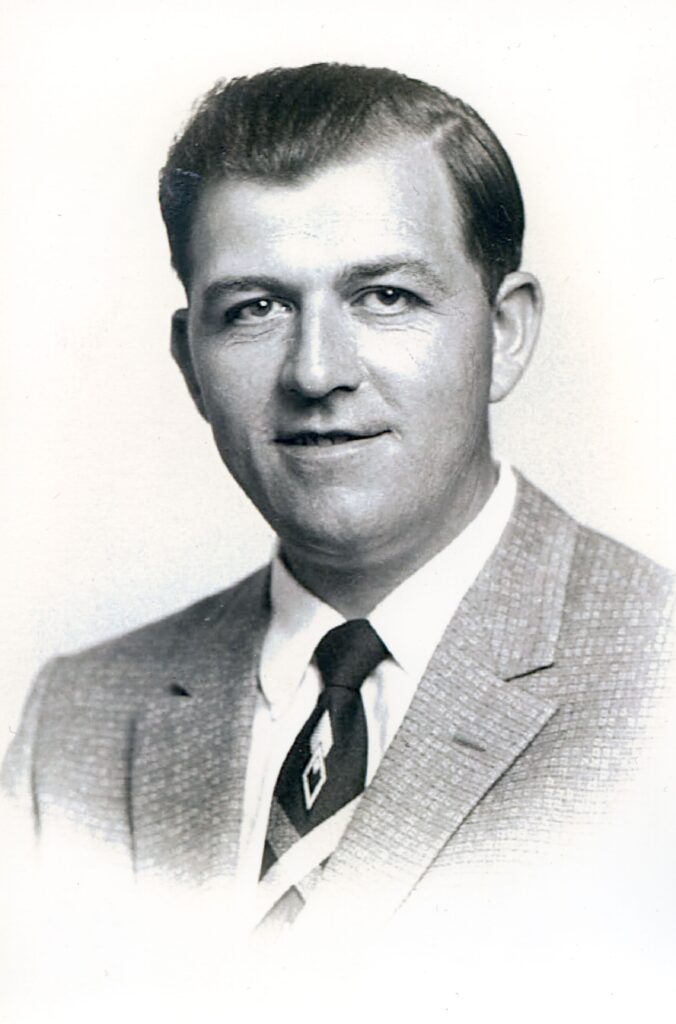
Steve Simon Jr.’s story begins in Morton Grove, Illinois, where he and his older sister Maybelle were raised by their Luxembourg-immigrant parents Steve Sr. and Madeleine (Mausen) Simon, who both hailed from the small village of Binsfeld in northern Luxembourg. Steve Sr. immigrated to the United States in 1954. When he went back to his hometown, he wooed Madeline, and after she immigrated to the states, the two were married in 1959.
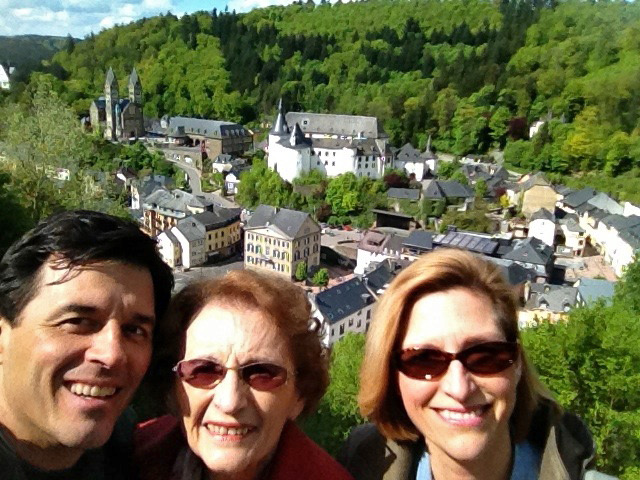
The family lived in the American Legion Post 134 where Steve Sr. was groundskeeper and building manager. He got the job thanks to his poor English skills at the time. Seeking to mail a letter back home, he saw the word “Post” on the building and mistook it for a post office. The Legionnaires sitting around the bar set him straight and then offered him the job that he held for 35 years.
With its constant stream of veterans and an atmosphere of civic pride, living at the legion offered a unique environment and the line between home and work was often blurred.
“Both of my parents were very proud of the United States; not in a creepy nationalistic American way, but just proud,” Steve said. “My dad had a sticker on the back of his car that said, ‘Be proud to be an American. I am.’ And when we would go on our trips to Luxembourg, my dad would put an American flag on the car’s aerial antenna and people thought he was an ambassador or something. But he was just so proud to be an American. That’s the kind of world I grew up in.”
Since his dad worked where they lived, Steve often worked alongside him and the two became very close. The family, led by Madeleine, also ran a catering business out of their home for banquets at the legion—an intense bonding experience, according to Steve.
Discovering his father’s war story
The Simon family returned to Luxembourg every two to three years in the summers, staying in the Binsfeld house where Steve Sr. was born—one of those classic mid-1800s Luxembourgish houses with thick walls and no insulation. It was on one of those trips that Steve, who was 11 at the time, began to learn about his dad’s experience during World War II.
“One night I was in the upstairs bedroom where I slept, and my dad was in the room with me—he was actually born in that bed. I asked him about a crack in the footboard, thinking there might be a story behind it like he and his brother got into a wrestling match or something. But he said, ‘Well, that’s an interesting story.’”
His father told him that during the Battle of the Bulge, the house was occupied alternately by Germans and Americans, while his parents Gabriel and Anna (Weber) and his baby brother Joseph lived in the potato cellar under the living room. Eventually, the Americans took up a machine gun position in his father’s bedroom window and fired at Germans coming into the town from the valley below. The Germans figured out where the shooters were and fired at the house with a 155-millimeter shell from a Tiger tank. It created a huge crater but the only penetration through the wall was a fist-sized hole and the rubble from it cracked the bed’s footboard. The machine gun team fled but, in their haste, left a 30-caliber belt behind. When the noise died down, the family emerged from the cellar expecting their home to be demolished. Gabriel went up to the bedroom and saw the machine gun belt and decided to keep it, much to the displeasure of Anna, who wanted nothing to do with war relics.
Steve said that as his father told him this story he got a 1000-yard stare and said, “Let’s go downstairs.” He started knocking stones out of the garage wall, then pulled out the 30-caliber belt.
“So, I’m looking at this as an 11-year-old and I kind of understood World War II and was interested in it because of how it intersected with Luxembourg and certainly my parents’ life, but I didn’t really get it. So, I asked my dad, “But where were you at the time? And he looks at me and says, ‘Well, that’s a story for another time.’”
Preserving his family history
Back in the states, Steve’s sixth grade class was studying World War II and Steve told his dad that he wanted to interview him for a class presentation. For five nights, he took notes as he listened to his dad’s story.
His dad’s older brother Nicholas was drafted into the Arbeitseinsatz, the forced labor of civilians by Nazi German authorities to fill vacancies in manufacturing operations left by German men called to military service. Eventually, they funneled Nicholas into the Germany army.
“It was kind of an army corps of engineers, they were the tip of the spear, building bridges and doing whatever it took to get the forward operating military to make advances. He ended up on the Eastern Front and never came home,” Steve said.
Steve’s grandmother Anna had baby Joseph during the war and due to gestational diabetes, there were complications that compromised the health of both mother and baby.
“My dad’s older brother was away at the Arbeitseinsatz. His father was working the fields, and he also worked in the iron ore mines, so my dad was the glue that kept the whole family together—nurse to his mom, nurse to his baby brother and helper to his dad.” Steve said.
On Christmas Eve 1944, Steve’s dad, who was 17 years old, went to Christmas Eve Mass alone so that his parents could go to the later mass while he watched his then two-year-old brother. As he was walking back up the hill to his home, he saw a German half-track truck parked on the road and tried to walk nonchalantly by despite a heavy sense of dread. He and nine other Luxembourgers were rounded up and put on the truck. The Germans announced to those within earshot that the captives would be executed on New Year’s Day as reprisal against the underground movement that was committing sabotage in the area against the Germans. The men were taken to a prison in Clervaux where his father heard people leaving their cells and being executed. He counted down the days to January 1.
“On that fateful day, he exits his cell and as the execution team is arraying themselves, a German supply truck came by. The driver stopped and told the commandant, ‘Why don’t we just load these guys up in my empty truck and I’ll bring them back to German to serve as slave labor?’ So, the deal was struck and off my dad went to Germany. He eventually ended up in Hinzert concentration camp where things really started to get grisly and ugly,” Steve said.
“It was very clear to my dad that it wasn’t just his life on the line. He was thinking about what would happen to his family if he didn’t make it back and this became his meaning in life,” Steve said.
His dad eventually escaped and after rehabilitating in an American hospital in Germany, he hitchhiked back to Binsfeld. As he neared his home, he noticed the big crater in the wall. After an emotional reunion with his family, they show him his bedroom and the machine gun belt. His father decided to time capsule the belt in the adjacent barn space of their home, where it stayed until the day in 1976 when he extracted it to show it to his son.
Steve Sr. worked for nine years to earn enough money for passage to America on the Queen Elizabeth. When he returned a few years later, he was treated like a celebrity because he was an American immigrant.
Steve was always amazed by his dad’s resiliency.
“I mean, some of the stuff that he witnessed and experienced, it’s hard to believe that somebody could survive it, firstly, and then secondly, as far as I could tell, come through it relatively unscarred, like psychologically. I never saw my dad incapable of dealing with the situation or looking like he was suffering from PTSD. It’s hard for me to understand, but that’s the way he was. And it’s not like he didn’t have emotion. He absolutely did, and he was a funny guy; not detached or aloof at all. So, it’s one of the great mysteries about my dad, is how did you do that?”
The pursuit of meaning
The psychology of his dad’s resolve and survival—and knowing the horrors he experienced—weighed on Steve. After his presentation to his class in sixth grade, his teacher recommended he read “Man’s Search for Meaning,” by Viktor Frankl, an Austrian psychiatrist and Holocaust survivor. Frankl’s theory was that humans are driven not by pleasure but the pursuit of meaning, even under the most brutal conditions.
“What I got out of my dad’s experience is that it’s very important to have, as Viktor Frankl says, someone or something that you love to get you through this crazy life,” Steve said. “That piece of family history of my dad and my understanding thereafter of Viktor Frankl’s view of the world, did a lot to shape how I was thinking of the world.”
It was this ideology that prompted an abrupt pivot from his mechanical engineering profession to a career as an artist.
“I was doing all these professional jobs, and I never felt like I had a solid ‘why,’” he said, adding that the setting of this epiphany is like a scene in a movie.
Steve was working in Paris with an apartment at the base of Montmartre and the Place de Tetra where artists paint outside as tourists walk by. Steve had loved art and drawing and painting since he was a boy and in Paris, he felt a strong pull to that creativity.
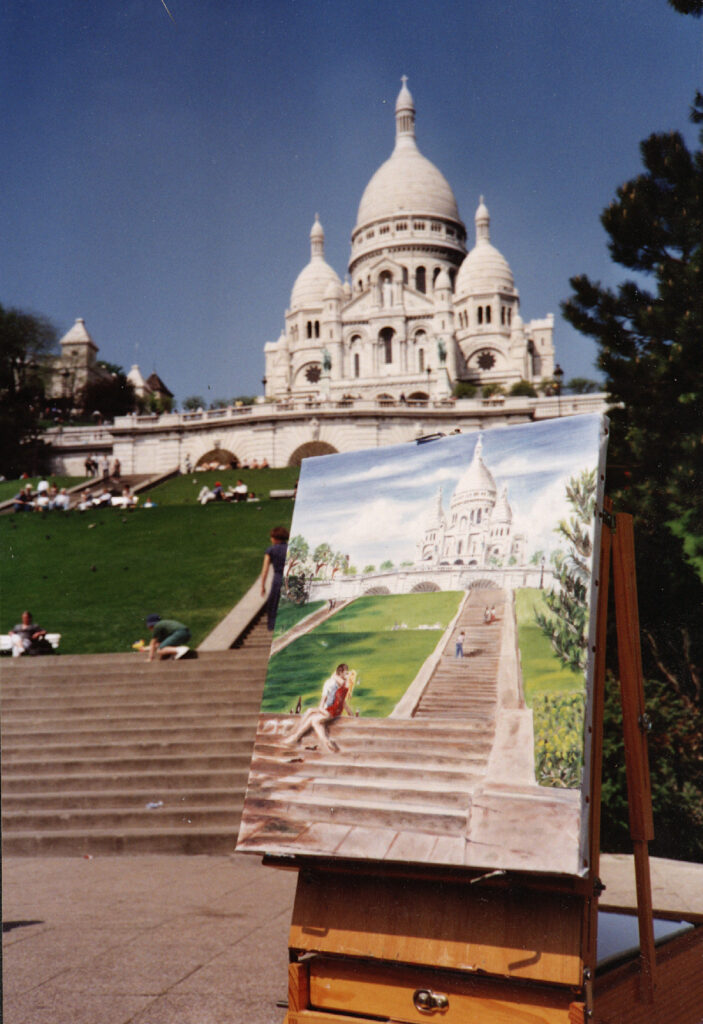
“Everything in my life just kept pointing to art and I kept resisting. Plus, I still had the words from years ago ringing in my ear from the career counselor who said, ‘Make art your hobby and make math and science your profession.’”
The pivotal moment was attending the orchestral performance of Mozart’s Requiem in the Cathedral of Saint Germain des Prés and being completely mesmerized by the passion of the conductor.
“He had a flair for the dramatic and completely unselfconsciously just poured everything he had into the requiem. I’m just watching this guy thinking, ‘Man, I would kill for just one-tenth of that—that passion and commitment to his art.’ I woke up the next morning, and self-consciousness be damned, went out into the street and spent the whole afternoon amongst throngs of tourists and French people and worked on this very sophomoric painting.”
At age 29, with an engineering degree and an MBA, Steve had worked and studied on four continents as a robotics engineer and management consultant. Then, he abruptly decided to move to California and become an artist. The journey had its ups and downs, but the hardest part was his pragmatic parents’ reaction to his choice, thinking it a foolish risk with an almost certain decline in earnings.
“My dad and I were very close my whole life. He was very proud of me. And then this dubious career choice of mine created a real rift between us and there was definitely an emotional distancing that happened. Maybe I’m in my head a bit too much, but my dad never understood how his concentration camp experience affected me psychologically. I never had the time to articulate that to my dad, and I’m not sure he would have gone that deep with me on it or truly appreciated philosophically what all that meant. He was just a very pragmatic person. So, the thing that drove me a little crazy was that my decision to choose the art world—that which was meaningful and passionate for me—really, in a roundabout and ironic kind of way came from my understanding of how my dad found the depth in his soul to be able to survive the grimmest that humanity can deliver.”
When Steve’s art was chosen for the front cover of a regional magazine in Southern California, he sent it to his mom and dad to quell their fears that he wasn’t going to make it as an artist. Sadly, his dad had fallen ill and passed away at age 68 before Steve could fly back to see him.
His mom showed the magazine cover to his dad in the intensive care unit before he died. His response: “Sometimes he can be so smart and sometimes he can be so stupid.”
“I think I understand what he meant by that and he’s right—that our passions in this world make us do some stupid things but stupid in an almost mad-like way. That’s what passion drives you to do.”
The artful pursuit of peace and harmony
Steve, who lives in New Hampshire with his wife Leslie and daughter Alexandra, has produced more than 350 oil paintings, published seven art books of his work and is currently working on his eighth book. He owned and operated his own gallery in California for eight years before moving to Sedona, Arizona, where he worked on landscapes as well as a series of peacemaker paintings, which includes 34 Great Peacemakers—historical figures who “helped bend the arc of the moral universe toward peace. peacebuilders and inalienable rights.” Steve spent seven years researching these leaders to understand how they advanced peace and well-being. His latest project is “The Unalienable Rights,” with a book of images and verse to celebrate the upcoming 250th anniversary of the U.S. Declaration of Independence. The three Art-Nouveau-inspired paintings represent the core American rights: life, liberty and the pursuit of happiness.
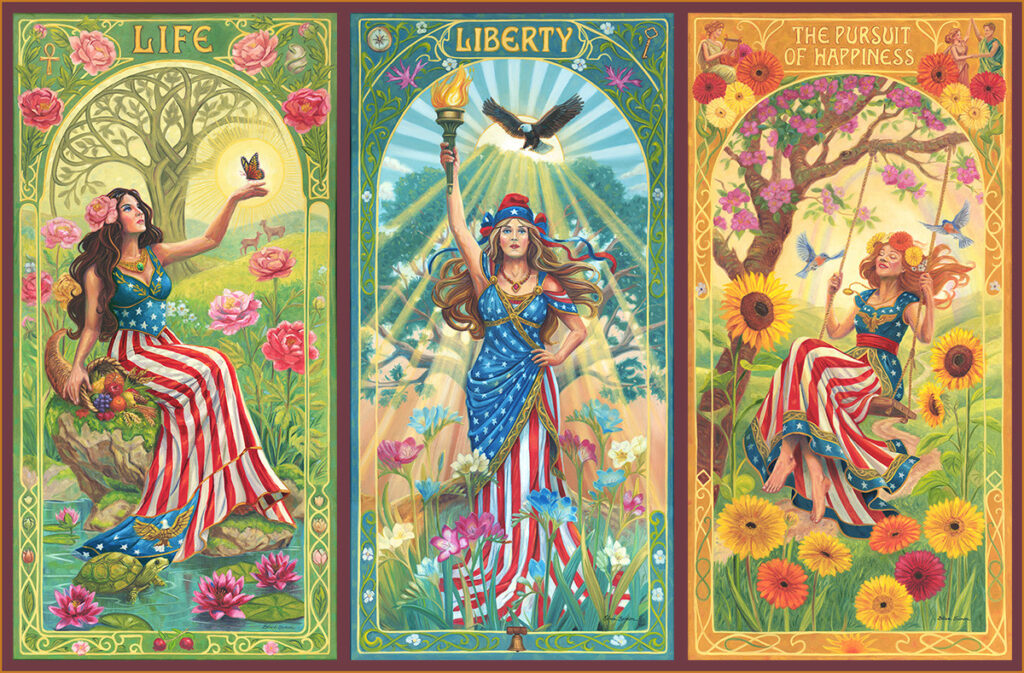
“If you were to ask people what life, liberty, and the pursuit of happiness means to them, I think you would get some wildly different ideas, but I think it’s worth considering. I think it’s a valid question to be confronting ourselves with collectively as a nation now because we’re in such a funk. Regardless of which side of the political spectrum you’re on, I feel like we don’t have any sense of shared purpose anymore,” said Steve.
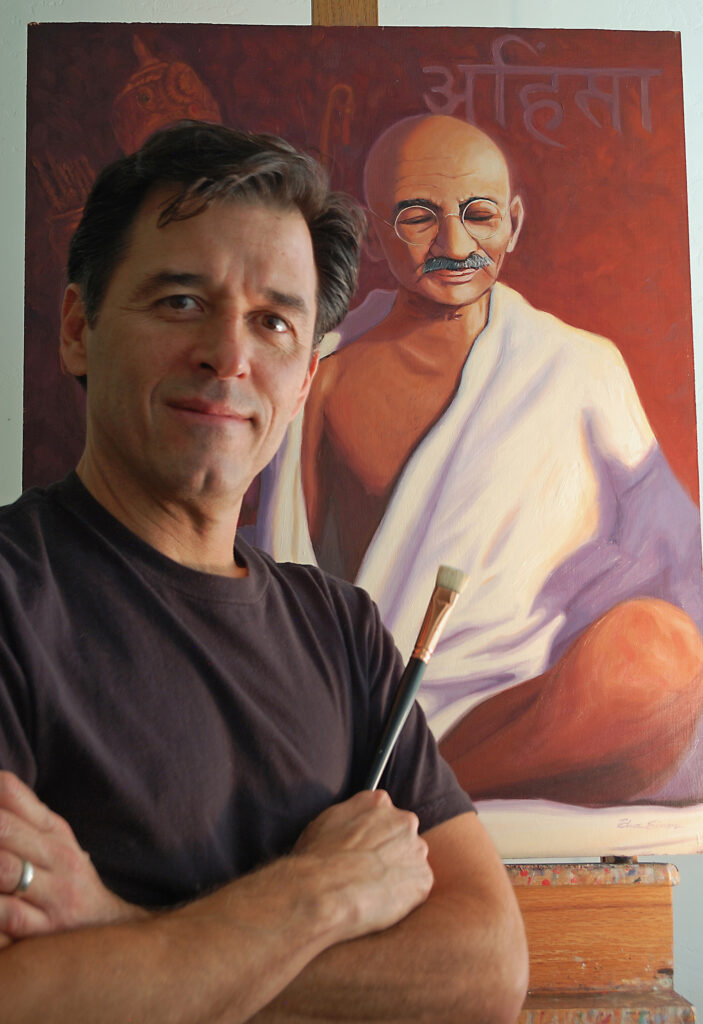
Watch Steve’s video account of his father’s story.
View the Great Peacemakers collection.
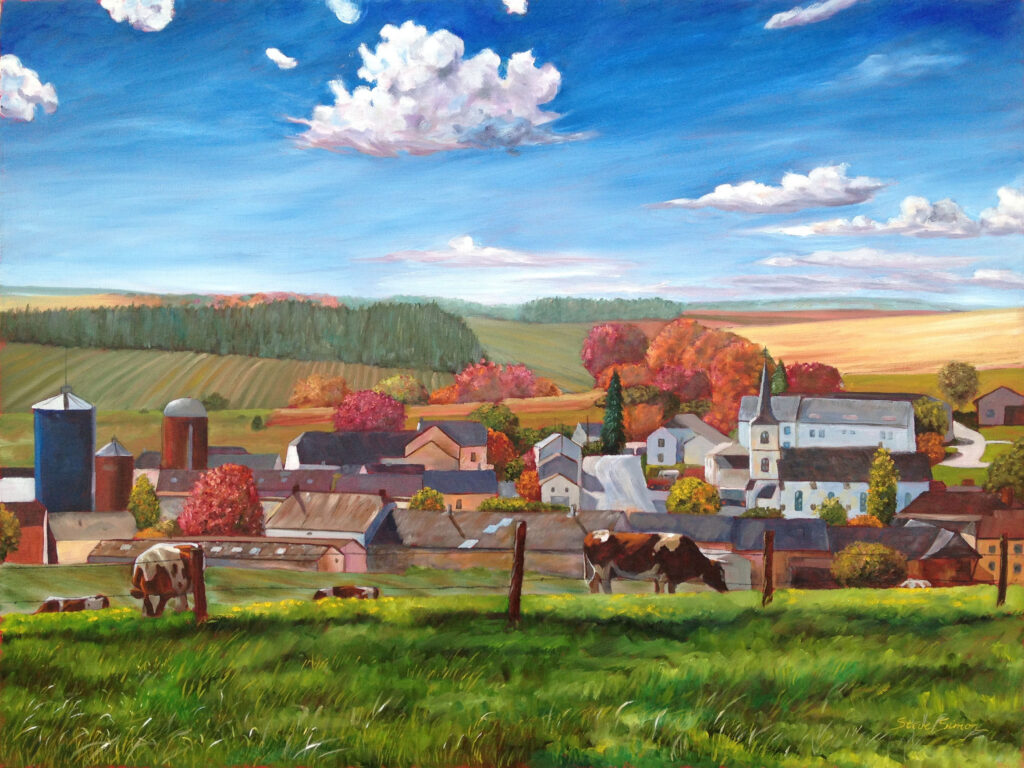
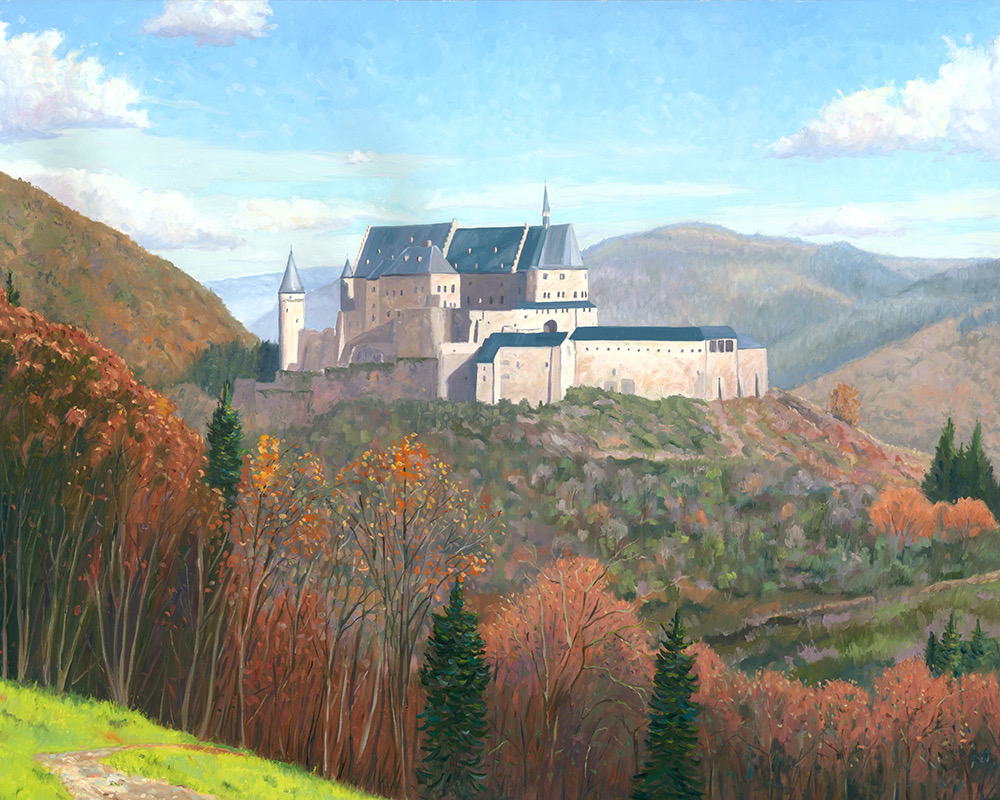
See Steve’s work including paintings of Luxembourg.
Watch Steve’s unveiling of “The Unalienable Rights,” the inspiration, symbolism, color theory and historical references meticulously woven into each piece.
Q & A
Why did you apply for dual citizenship?
I think it boils down to a kind of, “in-case-of-emergency-break-the-glass type of thing, because if you know enough European history, you know there were a lot of people that were trying to get out of Europe prior to what happened when Hitler came to power, they couldn’t get out. So I just want optionality in case stuff really goes sideways.
As a family, we had known Kevin for a long time, and it was pretty clear he knew what he was doing, plus he’s an easy and affable person to work with, so why wouldn’t I, for relatively minimal cost, have that extra optionality to be a citizen of the world if I needed to be. My sister and I are very simpatico in the notion that it’s nice to have an emergency pressure valve.
Culturally, there’s also a certain level of pride—to say, yes, those are my roots. It provides a sense of continuity.
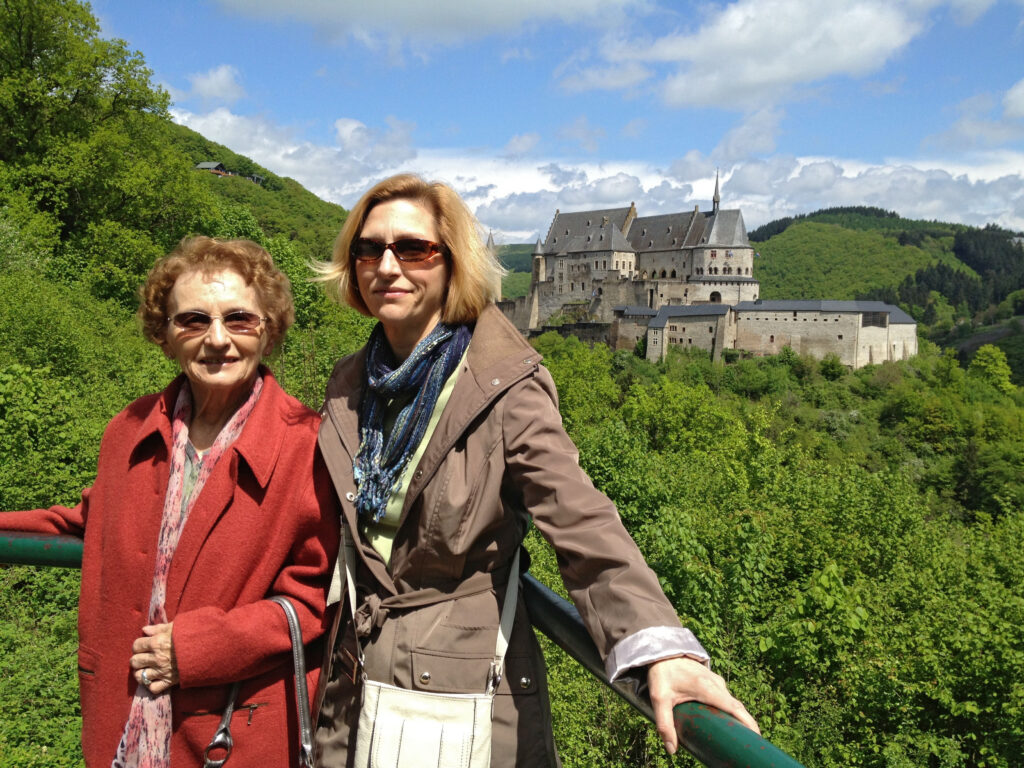
As the son of Luxembourgers, you spent a lot of time in Luxembourg. What comes to mind when you think of the country?
Being from the Éisleck region of Luxembourg is something my parents were particularly proud of and all our trips going back there, the thing that really sits with me is how connected people were to the land. My mom and dad came from subsistence farming families. When you go to Luxembourg and particularly if you’re anywhere outside the city, there’s a real connection with where your food is coming from. You look out and see the wheat, the barley, the rapeseed fields. You see the livestock and you have this notion that people live with their hands in the soil. I palpably felt that sense of morality and connectedness with community and each other when I was in Luxembourg versus suburban Chicago, where you may or may not really know your neighbors and don’t feel nearly as connected to the community and certainly not to the land. I could definitely see how it affected and influenced the way [Luxembourgish] people thought, how they interacted with each other and how they helped each other more.
What was your experience working with Luxembourg Legacy?
As I said, our family knew Kevin, but after I saw that he had a track record and success with helping people through this process, that made it that much more obvious that this is something that my sister and I should do. Kevin was wonderful through it all, although it took longer than we anticipated, because of how long it takes sometimes for bureaucratic wheels to grind in Luxembourg, he made it as painless for us as possible. It was just a very good experience.
Another wonderful story showing the connections of America and Luxembourg. There are so many stories to be told and this one was worth reading. See you in a few miles…roy