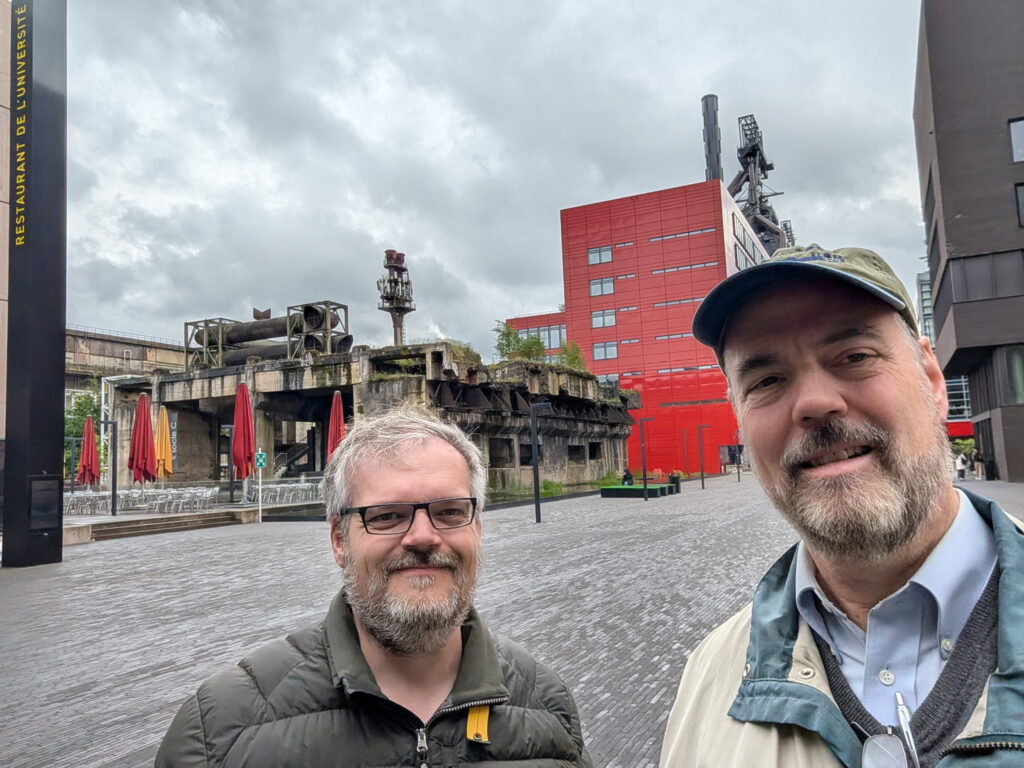
This article is 10th in our series on Luxembourg Americans who have gone through the process of reclamation of Luxembourg nationality to become Luxembourg citizens. These dual citizens, who were assisted in their citizenship journey by Luxembourg Legacy, reflect the passion that new Luxembourgers in America have for all things Luxembourg.
By Mary Bolich
It wasn’t until John Holden’s family moved into his mother’s childhood home that he began to connect to his Luxembourgish roots.
“When I was growing up, there wasn’t really a lot of focus on ethnicity, although on my father’s side, we’re mainly Irish as well as Scottish and English. We grew up initially on the South Side of Chicago in a very Irish neighborhood, where you talked about your Irish side but anything else really didn’t seem to register,” said Holden, the youngest of six. “My mom was a bit fuzzy about her ancestry.”
After the James and Catherine (Goedert) Holden family moved to the beautiful old farmhouse on Northwest Side, they spent more time with his Catherine’s cousins and second cousins.
“I started learning more about the Luxembourgish part of the family, mainly from my mom’s cousin, Ray Goedert, a priest who later became a bishop,” Holden said.
A proud Luxembourg American, Most Rev. Raymond E. Goedert was auxiliary bishop of the Archdiocese of Chicago from 1991 until his death at the age of 96 in 2023. His father John Peter Goedert Sr. was born in Bettborn, Luxembourg, to John Nicolas and Elizabeth Schmidt Goedert, Holden’s great-grandparents.
Today, Holden lives in the Chicago community of Edgewater where he is president of the Edgewater Historical Society—an area where numerous Luxembourg immigrants began to settle in the 1840s, including Holden’s ancestors. One of his second cousins researched genealogy on both sides of the family tree and traced the Goederts back to the early 1700s.
“When I applied for dual citizenship, I had to pull the birth and death certificates from my grandparents and great-grandparents. I had had all this family research for almost 30 years, but I started looking at it more closely and was very compelled by the story. That’s when I learned that my great-grandfather died when he was 50 years old in an apartment building that’s a half block away from where my museum [Edgewater Historical Museum] is located. That really struck me, that a building I’ve been going by for many, many years, has such a close family connection. It made me think about how difficult life was for most of the immigrants who came here and worked like dogs,” he said.
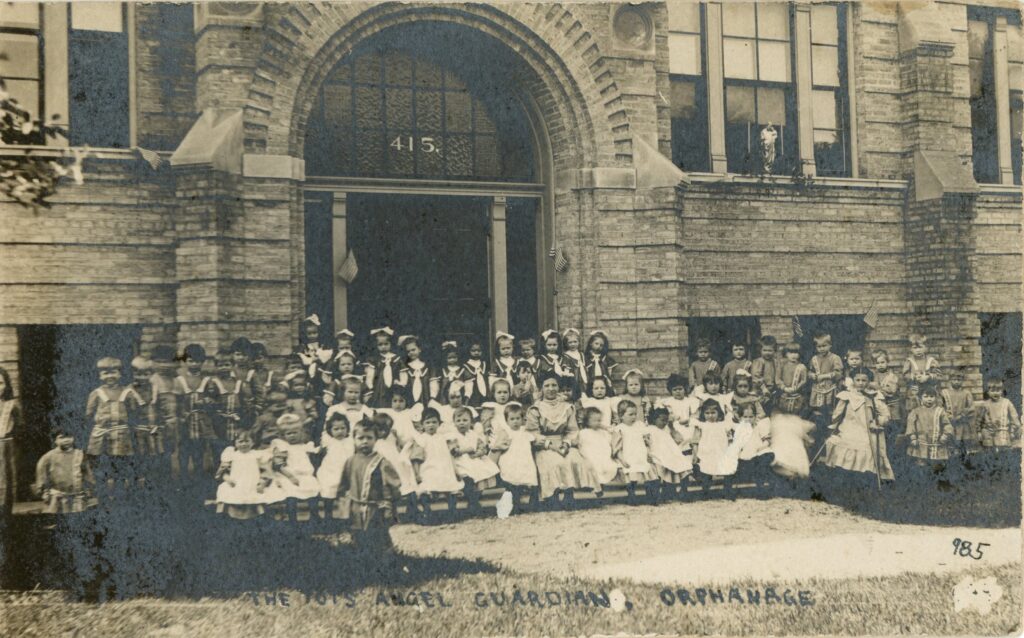
Part of the family’s history of hardship included being raised in an orphanage. Holden’s grandfather, John Joseph Goedert Sr., the youngest of six, was about one year old when his mother died. The children were placed in the Angel Guardian Orphanage, founded in 1865 by German-speaking parishes, including the Luxembourg parishes of St. Henry on Chicago’s Ridge and St. Michael’s in Chicago’s Old Town Neighborhood. The orphanage, which closed in 1974 and is now a residential facility for people with developmental disabilities, is near John’s home.
Preserving Luxembourg settlers’ history
Edgewater Historical Society documents and promotes the history of Edgewater and the area’s earliest Luxembourg pioneers, including Nicolas Kransz, who immigrated in 1848 and established a massive farm in Edgewater that supplied vegetables for Chicago’s South Water Street Market.
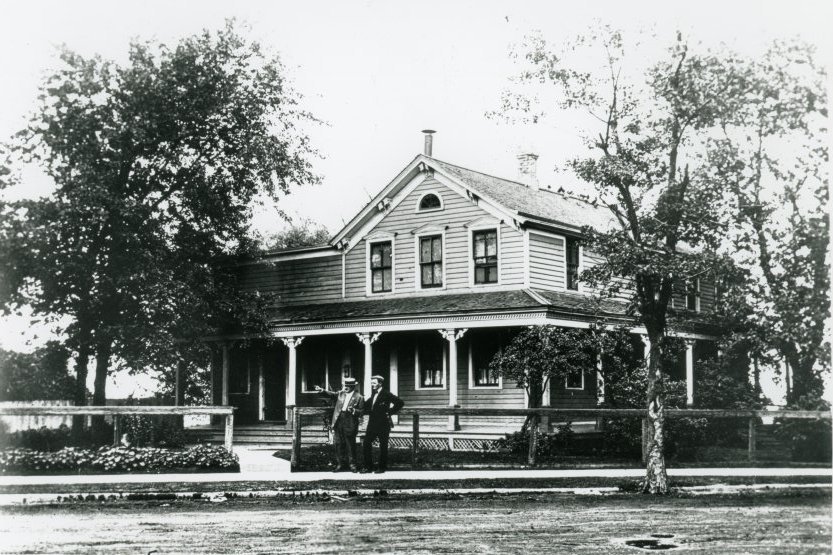
“Kransz was really the guy who got the ball rolling for the Luxembourgers in this area,” Holden said. You can read about the Kransz family on the historical society website.
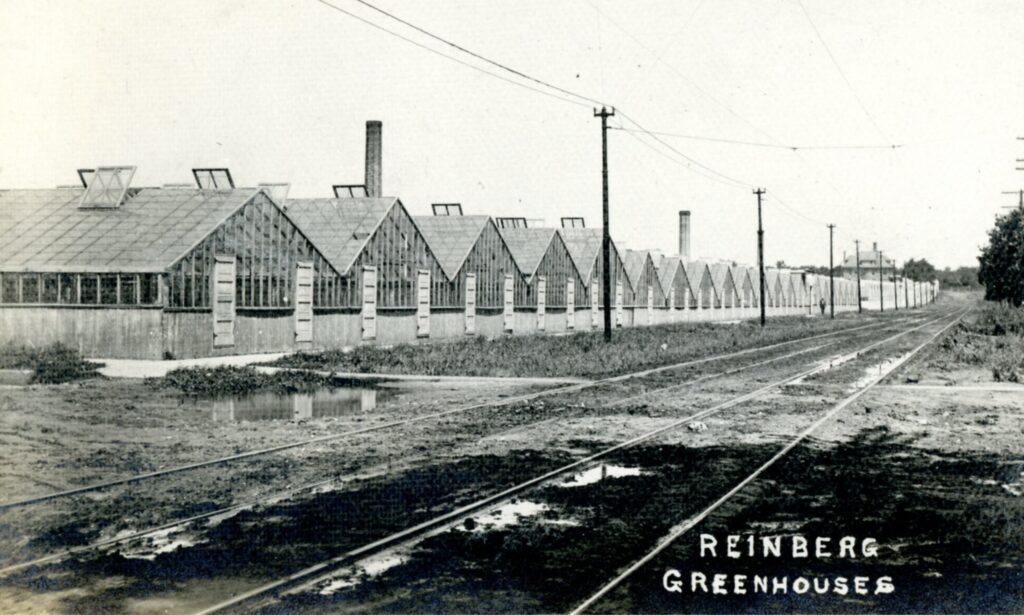
Holden explained that the Luxembourgish settlers, primarily farmers, were known as “truck farmers,” because their produce was trucked into downtown Chicago, and “glasshouse people,” because of their commercial greenhouses.
“The Luxembourg settlers here started out farming and raising produce. The sandy soils were good for root vegetables, and they became especially well known for celery. By the 1850-1860s they were fairly productive and took their produce to the central food markets in downtown Chicago and returned with cartloads of manure to keep augmenting the sandy soil. The land was considered a swamp, but these industrious, enterprising Luxembourgers were turning all that land into the farming territory,” Holden said.
When the Pullman Train Company pioneered the refrigerated train car, cheaper produce from around the country was shipped to the Chicago market. In response, Luxembourgers started building glass greenhouses to allow year-round farming with multiple growing seasons.
“There were millions of square feet of greenhouses constructed, probably in the space of 10 to 20 years, but then after the advent of the refrigerated train car, most of the Luxembourgers started pivoting from produce to flowers, which had higher margins and fewer competitors, so most of them became florists. There are still some of the original Luxembourger families in that industry still in business today.” Holden said. One of the largest, he said, is the Pesche family, which has run a commercial greenhouse and floral business since 1924.
Along with researching and preserving Edgewater’s history—including Luxembourg immigrants—Holden has been involved in an educational exchange program headed by Marc Zimer, a teacher in Luxembourg. Zimer is also vice president of the Root and Leaves Society, a Luxembourg-based organization that works in partnership with the Luxembourg American Cultural Society, Belgium, Wisconsin, to preserve Luxembourgish heritage and foster relationships between the Grand Duchy and the United States. When Zimer was visiting Chicago years ago, Holden took him on a tour of historical points of interest, which Zimer turned into his “Luxembourger Heritage Trail in Chicago.” Holden’s connection with Zimer also resulted in a Luxembourg immigrant exhibition created by a group of Loyola University history students. The exhibit was featured in the Edgewater Historical Society Museum last year and will be displayed at educational institutions in Luxembourg this year. The two hope to collaborate more in the future. View the museum’s Luxembourgers in Edgewater presentation.
“The Edgewater Historical Society was probably the only institution to do any kind of focused research on the early Luxembourgers in the Edgewater area,” said Holden, adding that its website features numerous news articles, including an interview with Nicolas Kransz’s great-granddaughter.
“We have an amazing amount of information on the site. If you type Luxembourg in the search box, it will give you link to stories about Kransz and his truck farm at Clark Street and Ridge Avenue and his Seven Mile House along with all kinds of other articles.”
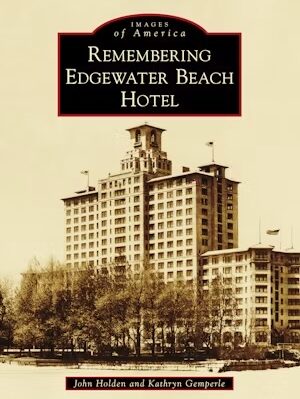
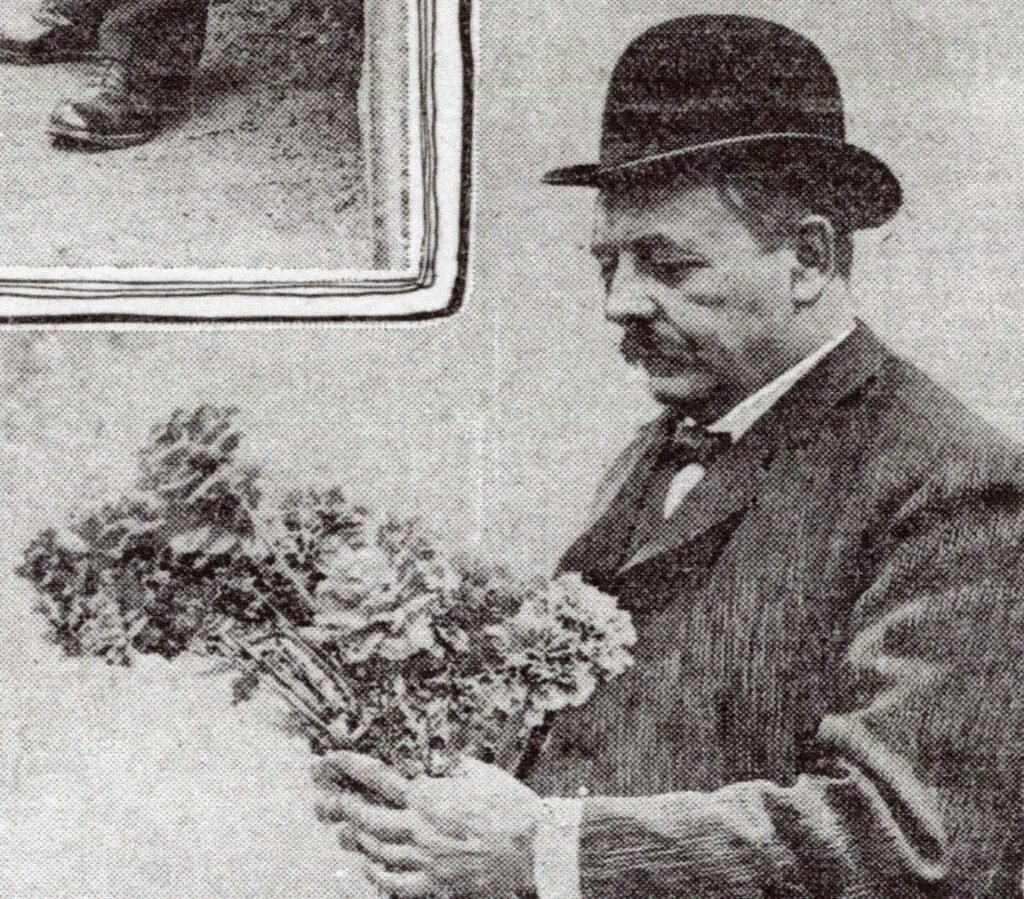
A longtime journalist and public relations professional, Holden co-authored the book “Remembering Edgewater Beach Hotel,” which is available at the historical society or from online book sellers, and is currently working on a book about Edgewater. One of the Edgewater Luxembourg Americans he has researched is Peter Reinberg, the son of Luxembourgish immigrants, who started a floral business at age 20 that became the largest rose-producing operation in the world. Known as Chicago’s “Rose King,” Reinberg also became a prominent civic leader.
“Reinberg was probably the most prominent Luxembourg American in Chicago 100 years ago and his family was the largest rose and carnation producer in the world. He was a very progressive guy in his day and became the president of the Cook County Board of Commissioners who got programming in place to establish the Cook County Forest Preserve System, a green belt around the city of Chicago. He should be better known in Chicago history than he is,” Holden said.
Avid European traveler and dual citizen
Holden began travelling extensively after graduating from the University of Illinois Champaign-Urbana with a degree in accounting.
“I made my first journey to Europe right after college, and it was love at first sight and I’ve since been there 21 or 22 times. I made my first visit to Luxembourg in 1984 and I’ll never forget taking a bus in from somewhere in Germany and as soon as we got on one of the main streets of Luxembourg City, I saw a sign on a large store with my grandfather’s name, Goedert, on it and I thought, ‘Well, I’m in the mother country now.’”
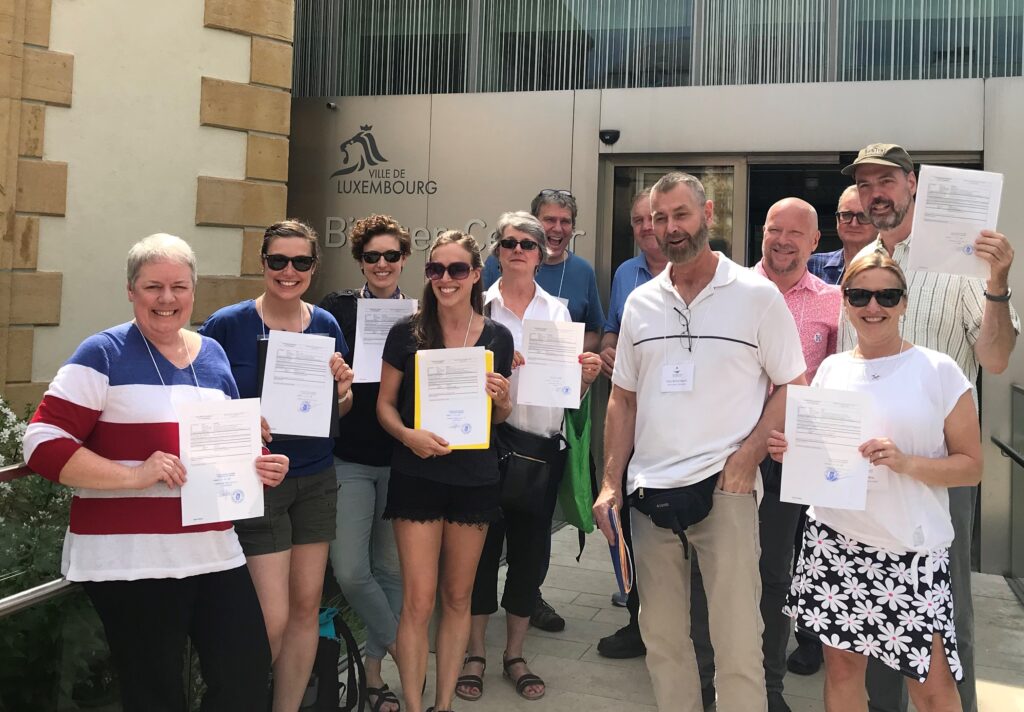
Becoming a dual citizen in 2019 strengthened Holden’s appreciation for history and his ancestors’ homeland.
“I was very honored and privileged to get the Luxembourger citizenship. When I go back and look at this chain of ancestors that produced me and my family, it makes me very aware of the great difficulties prior generations had to endure to get to this point in history where we are now. Luxembourg is a lovely country, one of the most beautiful places I’ve seen in Europe, and the whole history of how it remained an independent country and how it had been battered around during all the various royal battles that went on in Europe over the centuries, is an extraordinary story.”
Holden took the Luxembourg Legacy (formally Luxembourg Adventures) tour in 2019 and like many participants on Kevin Wester’s tours, connected with people he found out were relatives.
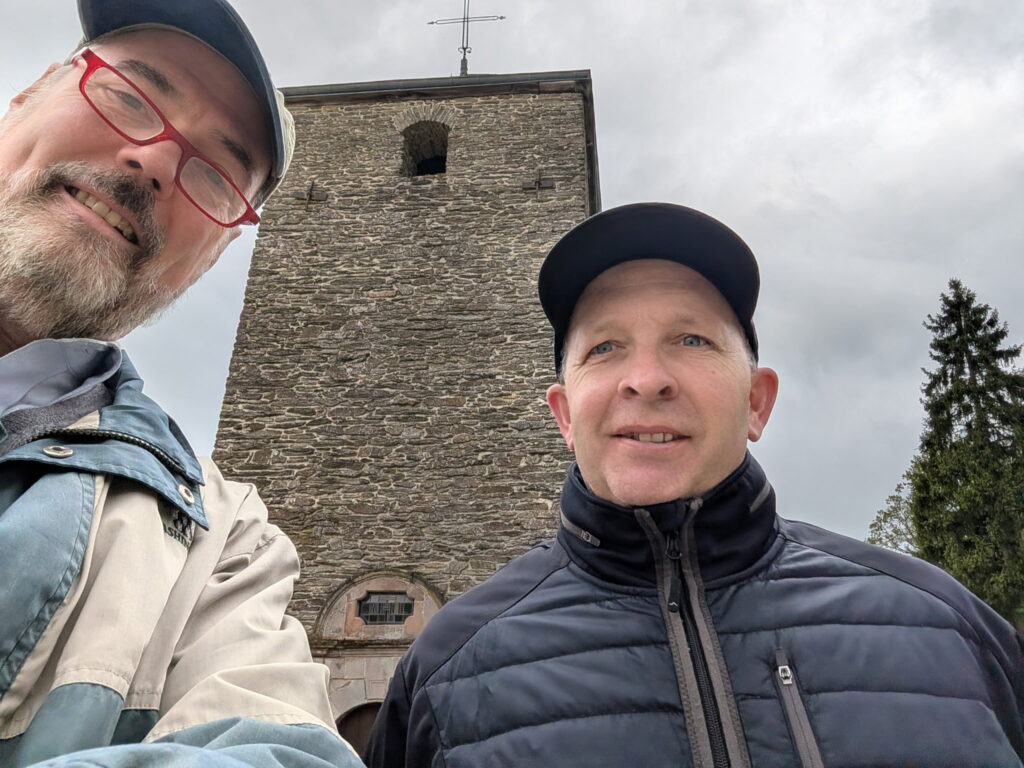
“One of the most interesting aspects of Kevin’s tour is that he found out where our ancestors came from and then connected us with local people from those areas to spend a day with. That part of the tour for me was brilliant. One of the three guides for the day turned out to be a fifth or sixth cousin of mine. His name is Louis Delia and he’s an accomplished amateur genealogist, who lives in Mertzig. We found a common ancestor who was both of our great-great-great grandfathers. We’ve become good friends and I stayed at his home when I was over there a couple months ago, and he showed me around some of the more off-the-beaten-path, interesting and curious places in his area around Luxembourg.”
Editor’s note:
If you’re interested in learning more about Luxembourgers in Chicago, join us for the next Luxembourg Legacy Presents webinar on Sunday, September 27, at 1 p.m. CT. Kevin Wester will present a historic overview of Luxembourgers in Chicago. Register today!
I’m half Luxembourger (my mom’s side) and grew up in Edgewater. My grandparents emigrated here in the late 1800s and lived in Rogers Park. I worked in Catholic schools for 30 years but never knew Bishop Goedert was of Luxembourg descent. Fascinating article—thank you.
Thanks for this interesting article! I was on Kevin’s 2019 tour. I have fond memories of that visit to Luxembourg. Health reasons have kept me from going back there again, but, in the future, I plan to go back and get my Luxembourg passport, see more of my ancesteral home in Dalheim. I’m so proud of my Luxembourg heritage!