
By Kevin Wester
The Stearns County region in central Minnesota was one of the largest settlements of Luxembourg immigrants in Minnesota. Within this region, Luxembourgers settled in the communities of St. Cloud, St. Joseph, St. Augusta, Luxemburg, St. Nicholas, Jacobs Prairie, Rockville, Cold Spring, Marty/Pearl Lake, Sartell, Eden Valley, Watkins, Avon, Albany and others. In his 1889 book “Die Luxemburger in der Neuen Welt” (Luxembourgers in the New World, re-edition in English, 1987, page 177), Nicholas Gonner, Luxembourg immigrant to Dubuque and editor of the “LuxemburgerGazette” weekly newspaper, wrote:
The first Luxembourgers arrived in and near St. Cloud in 1856 and their number was increased in the two subsequent years. They had moved into the area not only from Europe but also from Ohio, Wisconsin and Iowa.They did not procrastinate in building churches; by 1871 the county could already boast 12 German parishes of the Catholic Church.
Gonner also wrote (1987 re-edition, page 176):
In and around St. Cloud, there are 16 pure and 18 mixed Luxembourger families. The large parish of Cold Spring has 14 pure and 14 mixed Luxembourger families. Most Luxembourgers, however, belong to St. Nicholas parish [in St. Nicholas, Minnesota] which has 63 families of them among its members.
Luxembourgers from St. Nicholas, Minnesota
The focus of this settlement spotlight is a community in the Township of Luxemburg in Stearns County named after one of Luxembourg’s favorite patron saints, St. Nicholas. St. Nicholas, Minnesota, actually had two historic locations: the original St. Nicholas settlement established in 1857 and the second, current St. Nicholas, Minnesota, established nearby in 1891.
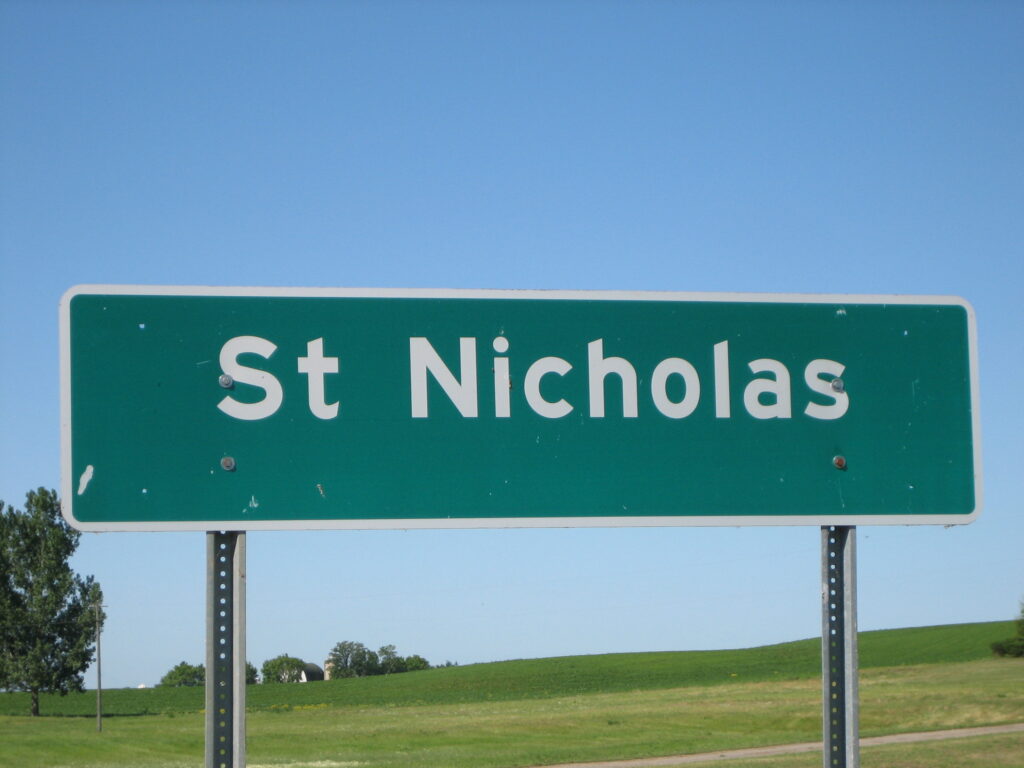
The original community of St. Nicholas was settled by a group of Luxembourg immigrants, who relocated from Dubuque, Iowa, in the mid-1850s when land in that region of Minnesota became available. While Luxembourgers were in the majority, they were joined by settlers from Germany. In 1857, St. Nicholas Parish was founded with early Masses celebrated in parishioners’ homes by Benedictine priests from the nearby St. John’s Abbey in Collegeville. As with so many 19th century Luxembourg settlements in America, the history of the settlement is inseparable from the history of the Catholic parish established by the immigrants.
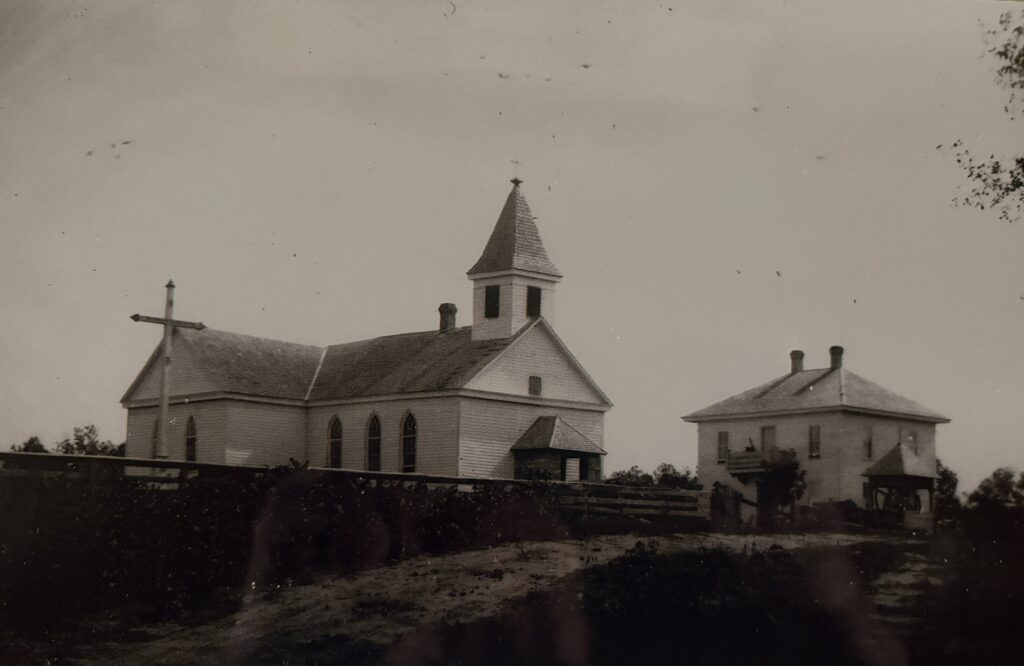
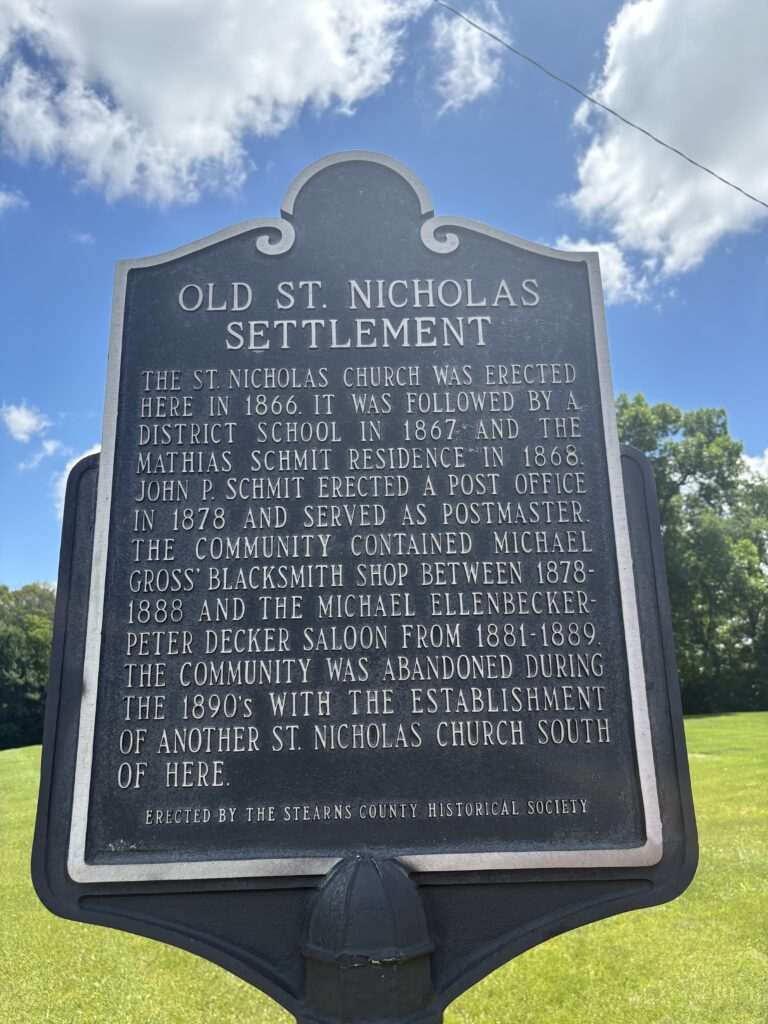
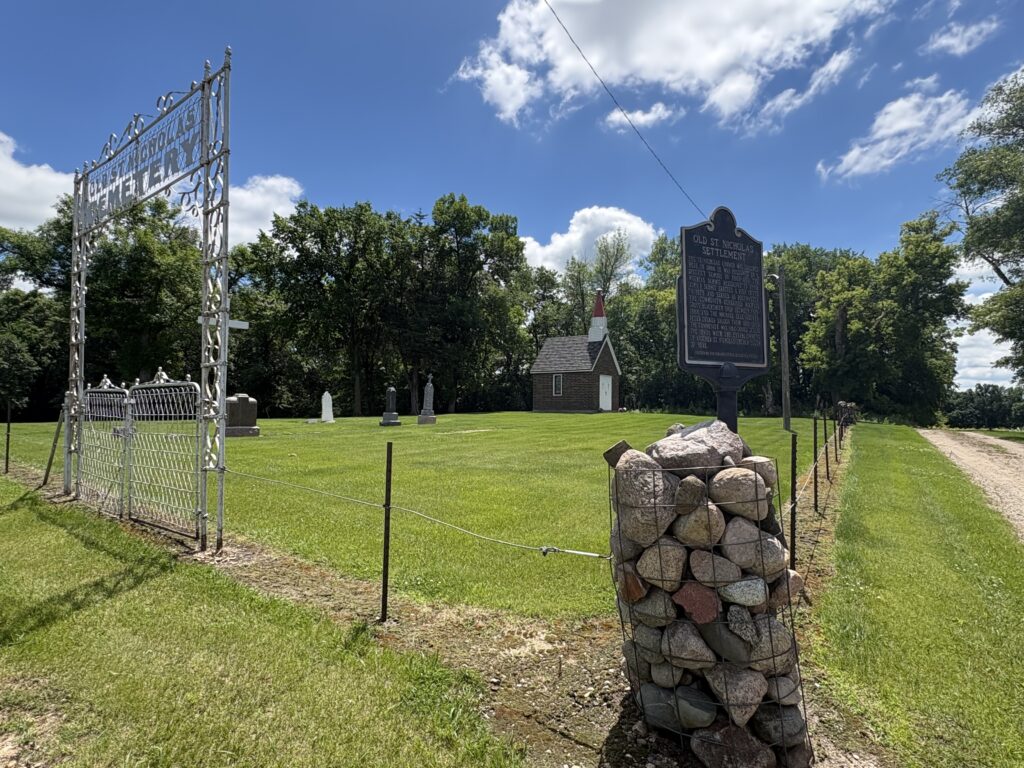
Parishioners built their first frame St. Nicholas Church in 1866. A historic marker on the original St. Nicholas site states:
The St. Nicholas Church was erected here in 1866. It was followed by a district school in 1867 and the Mathias Schmit residence in 1868. John P. Schmit erected a post office in 1878 and served as postmaster. The community contained Michael Gross’ blacksmith shop between 1878-1888 and the Michael Ellenbecker-Peter Decker saloon from 1881-1889…
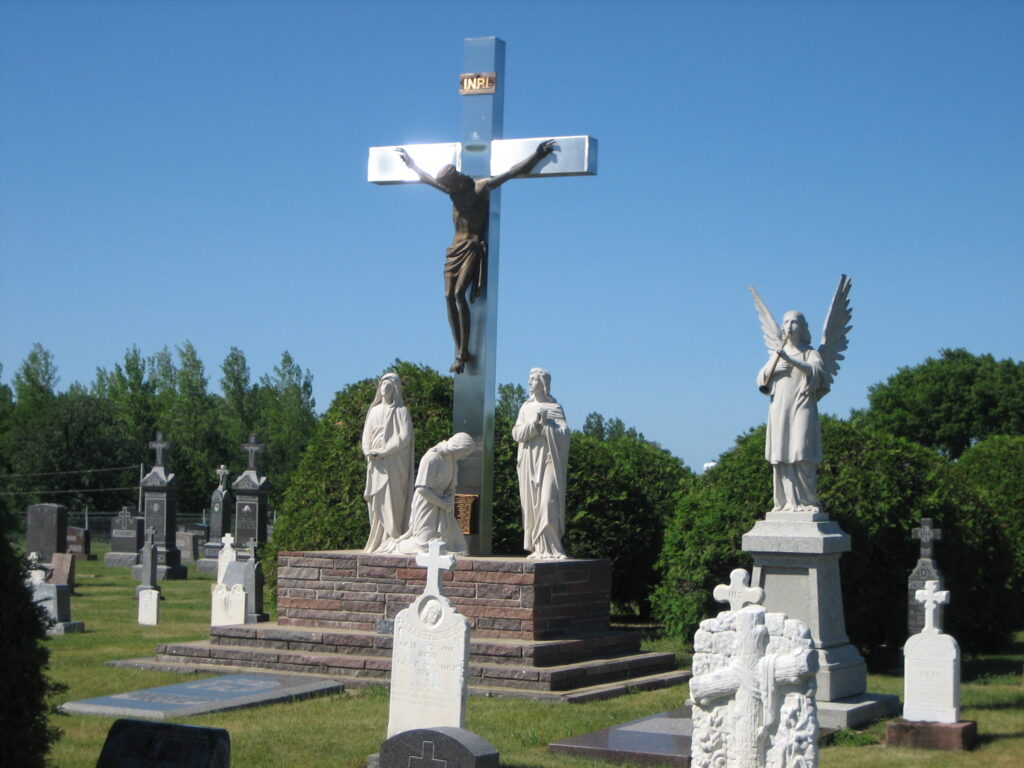
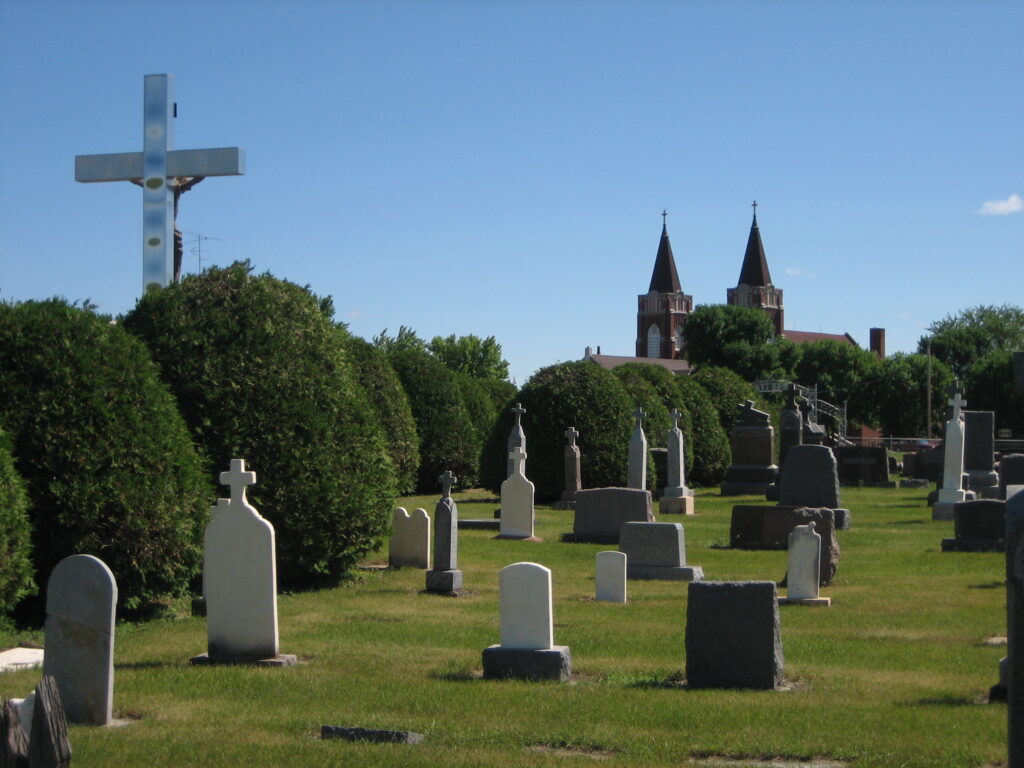
In addition to the frame church, the parish also established St. Nicholas Cemetery next to the church.
A new St. Nicholas Church and community
While St. Nicholas had become a thriving small community, it was evident by the late 1880s that the frame church was too small for the growing parish. Parishioners decided to build a new, larger church, which led to a colorful chapter in the community’s history. After much debate, two opposing factions developed. One faction wanted the new church to be built on the present St. Nicholas site, while the other wanted the new church to be more centrally located within the parish boundaries. Bishop Zardetti of the newly formed Diocese of St. Cloud sided with the latter and on September 10, 1890, seven acres of land were transferred to the bishop. The new St. Nicholas site was located about three miles south of the original site.
This decision did not end the dispute, which lasted another five decades. Many longtime parishioners have stories of events passed from generation to generation about this challenging time in the parishes’ and community’s history.
The new St. Nicholas Church was completed in 1891 and dedicated by Zardetti. After the church was completed, a saloon was built across the road from the new church. This led to further development, including a blacksmith shop, dance hall, feed and grain store, grocery store and acreamery. Many of these original buildings still stand today. The parish also organized a new St. Nicholas Cemetery in the growing village. The new community of St. Nicholas came to life.
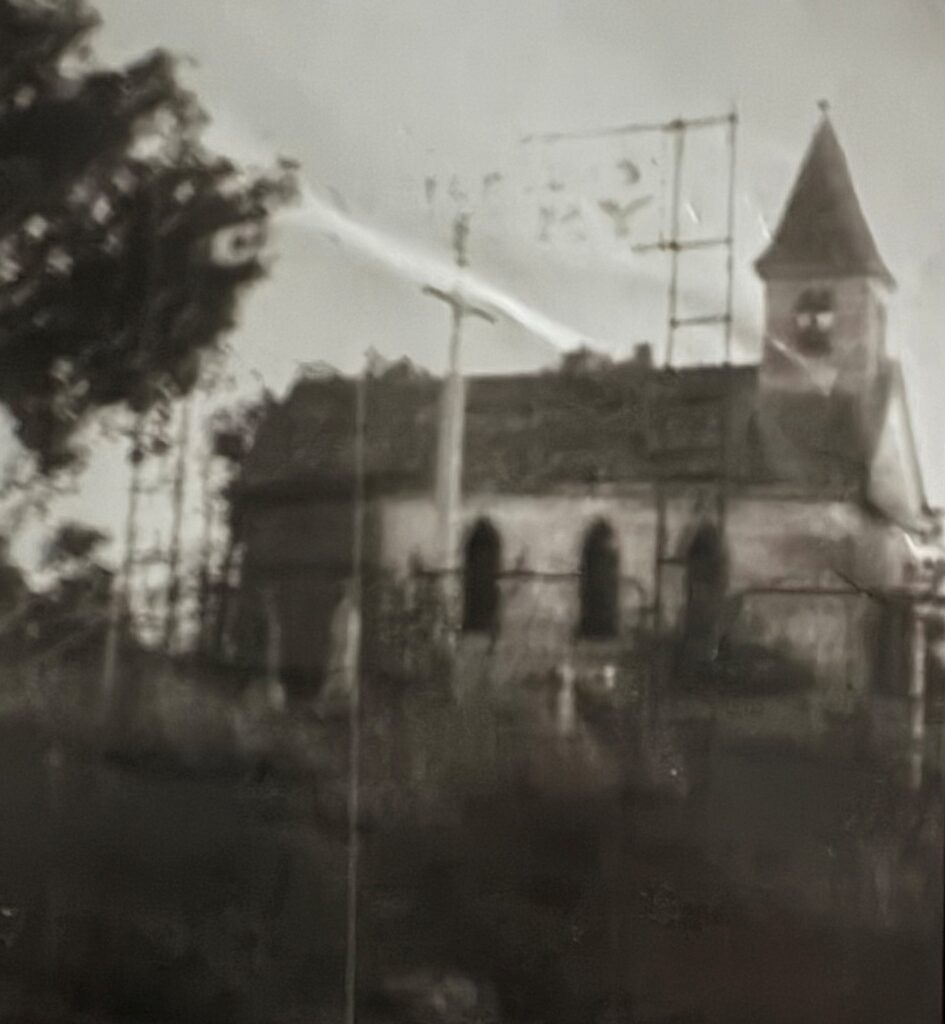
Unfortunately, this led to the demise of the original St. Nicholas site, now referred to as “Old St. Nicholas.” Over time, the old church fell into disrepair and was torn down. The property was eventually sold to a private individual and the bell from the original church was placed in the former St. Anthony’s Church in nearby St. Cloud.
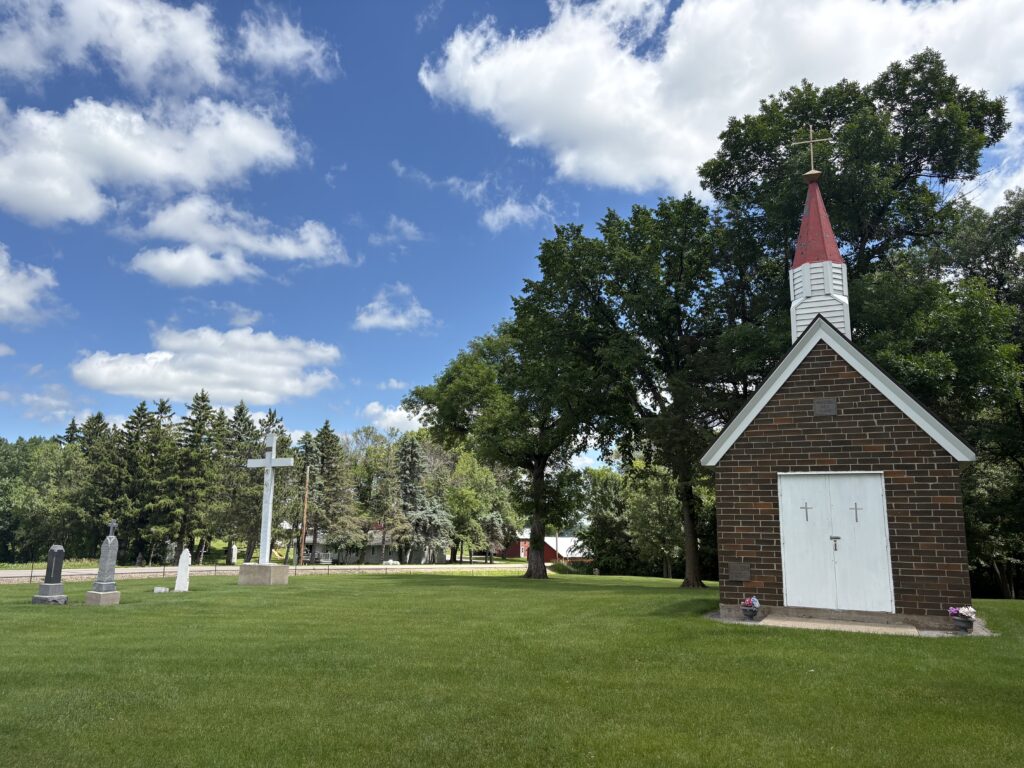
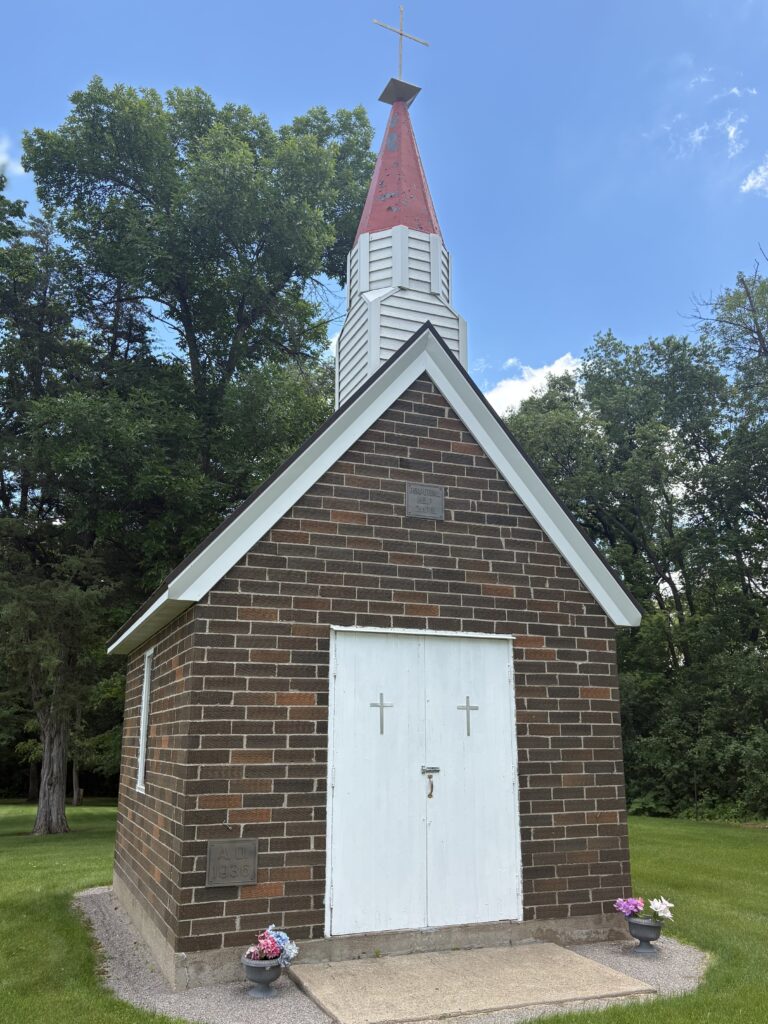
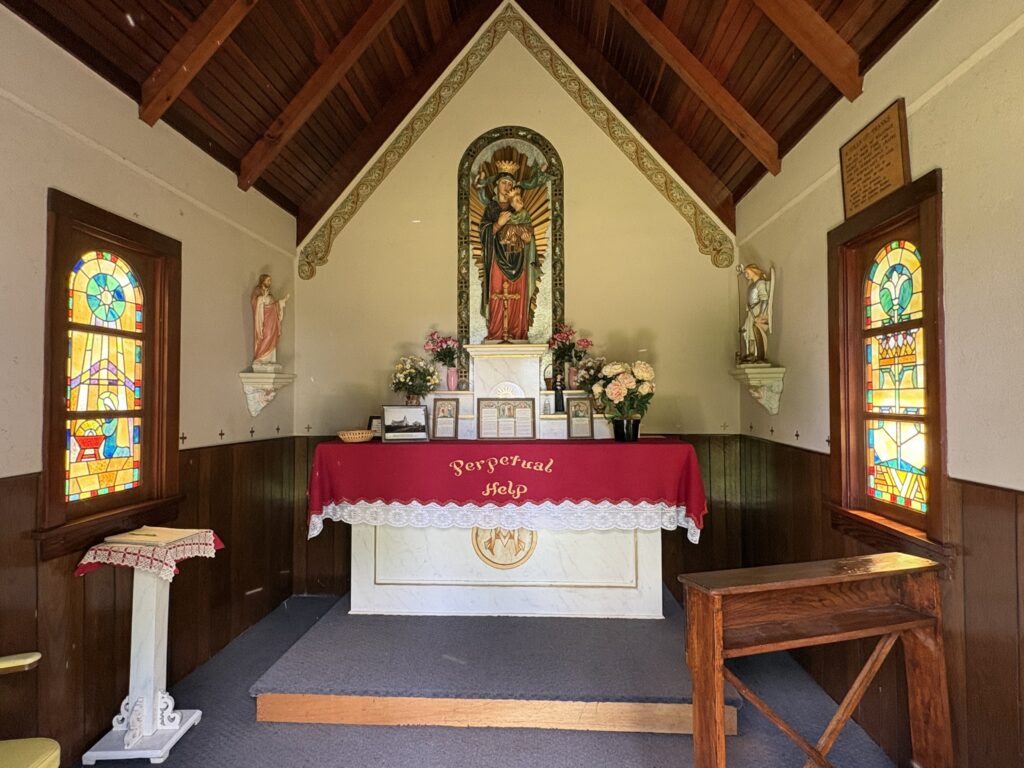
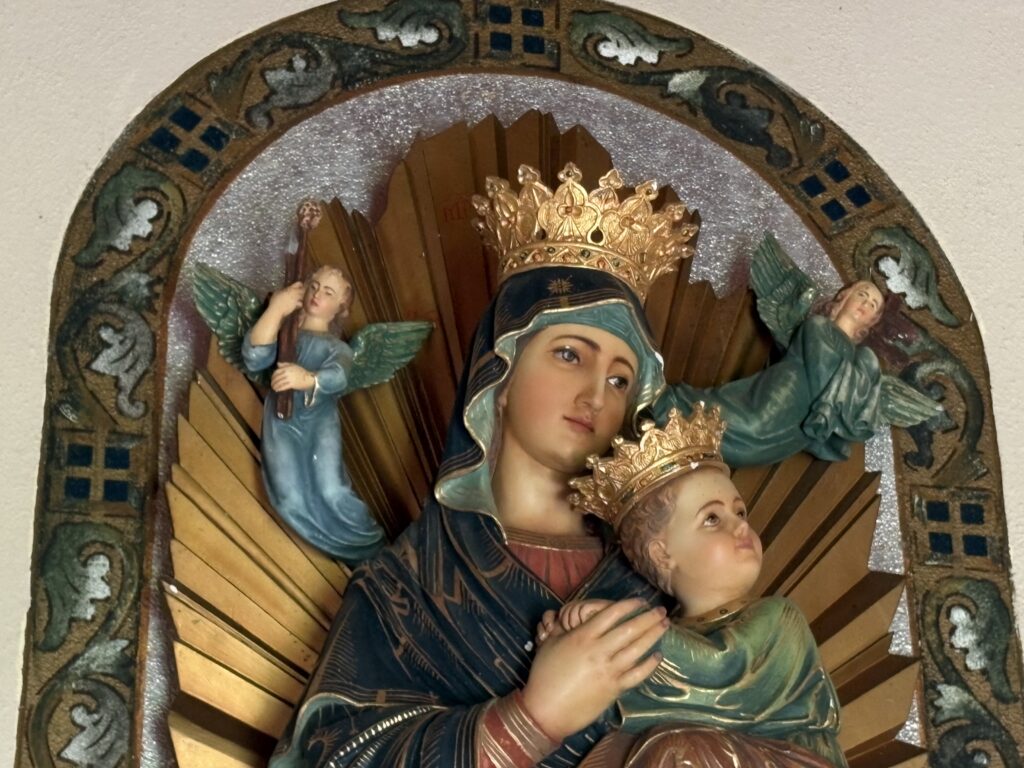
In 1936, a moment of healing unfolded when a small chapel in honor of Our Lady of Perpetual Help was erected on the original St. Nicholas site. The chapel was built to memorialize the pioneer parishioners of St. Nicholas. Today, the site is a bit of a spiritual park featuring a few old gravestones, the 1936 chapel and a historic marker. The Old St. Nicholas site is located at 14789 200th Street, Cold Spring, Minnesota, and the current St. Nicholas Church is located three miles away at 15862 County Road 165, Watkins, Minnesota.
A new church and St. Nicholas today
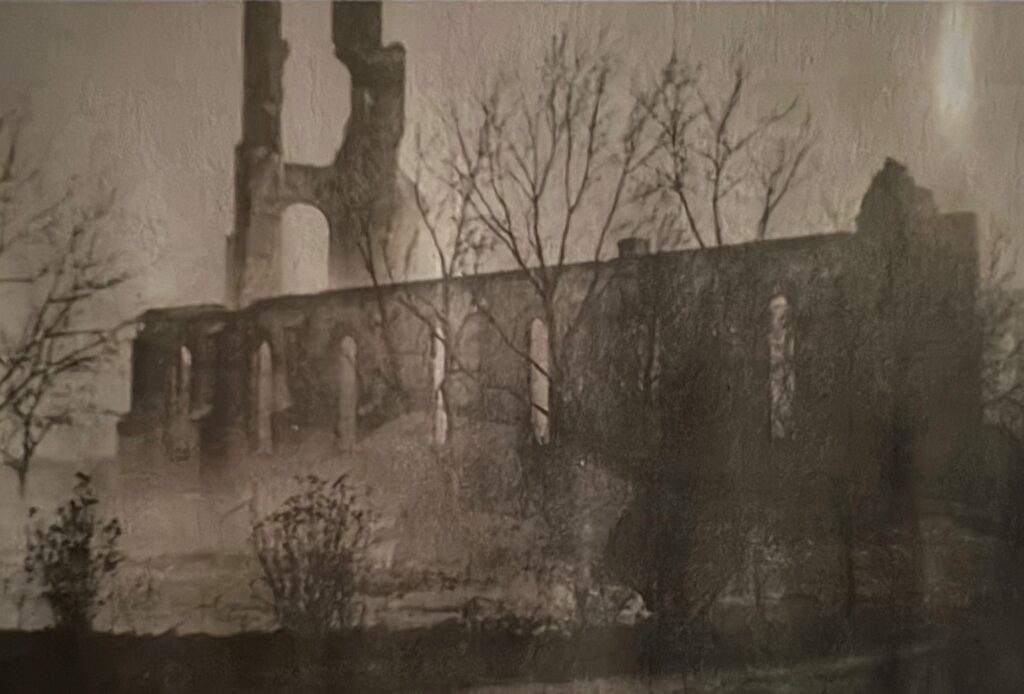
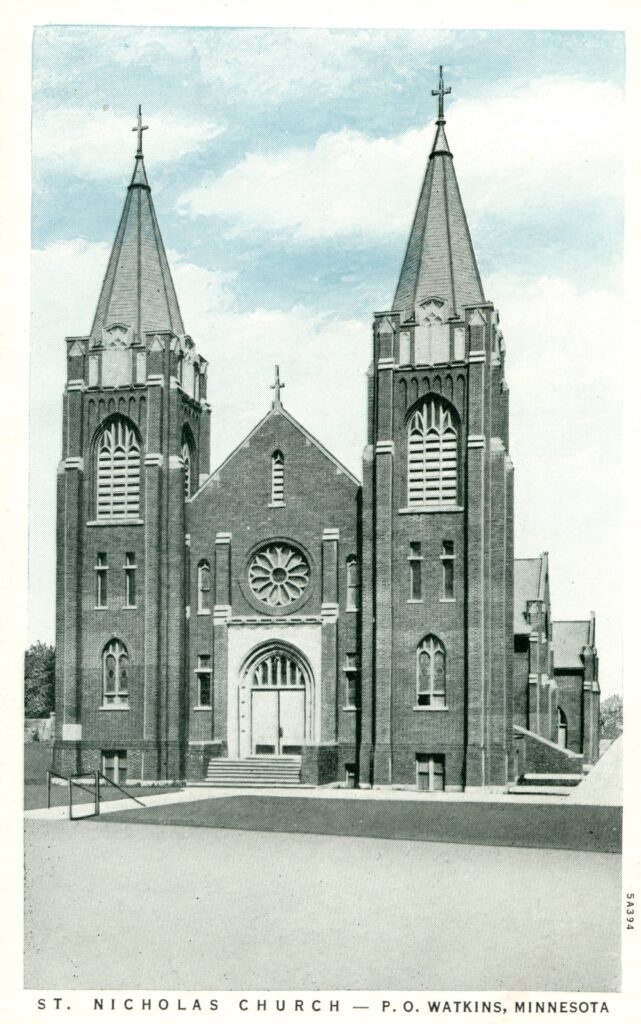
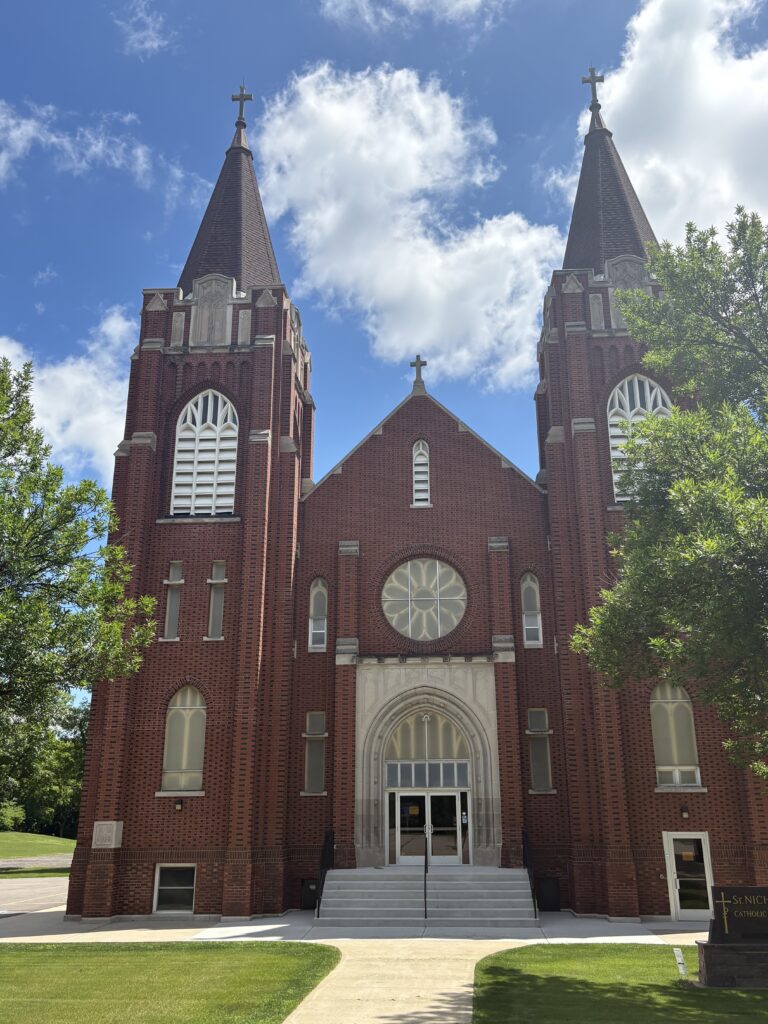
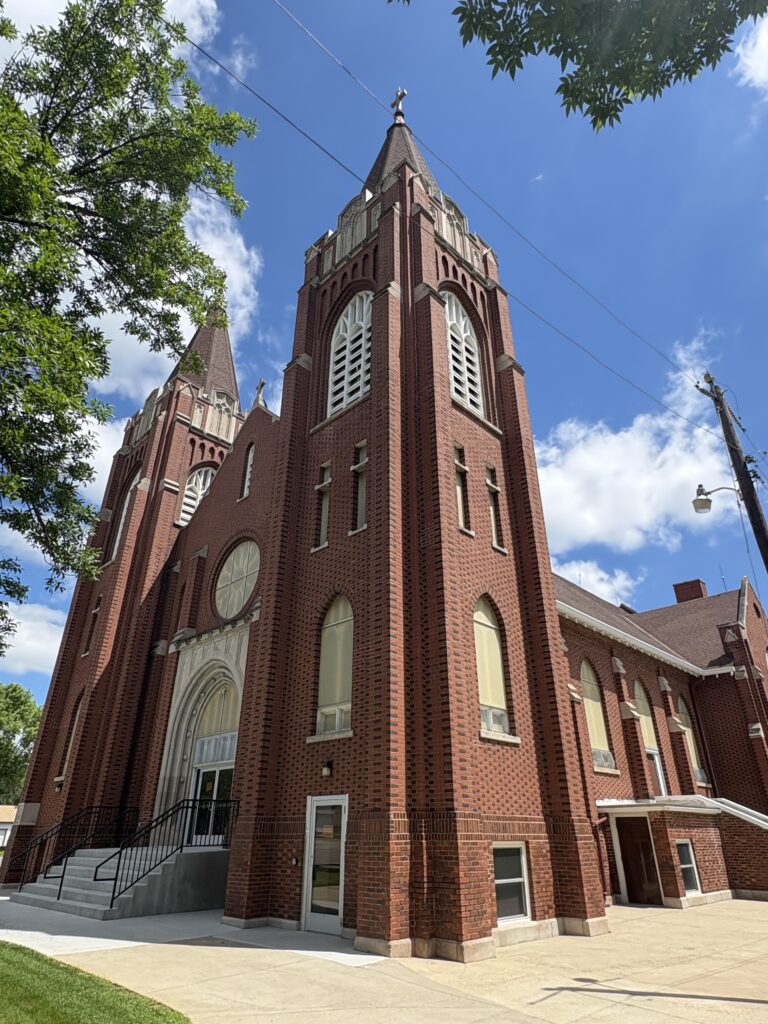
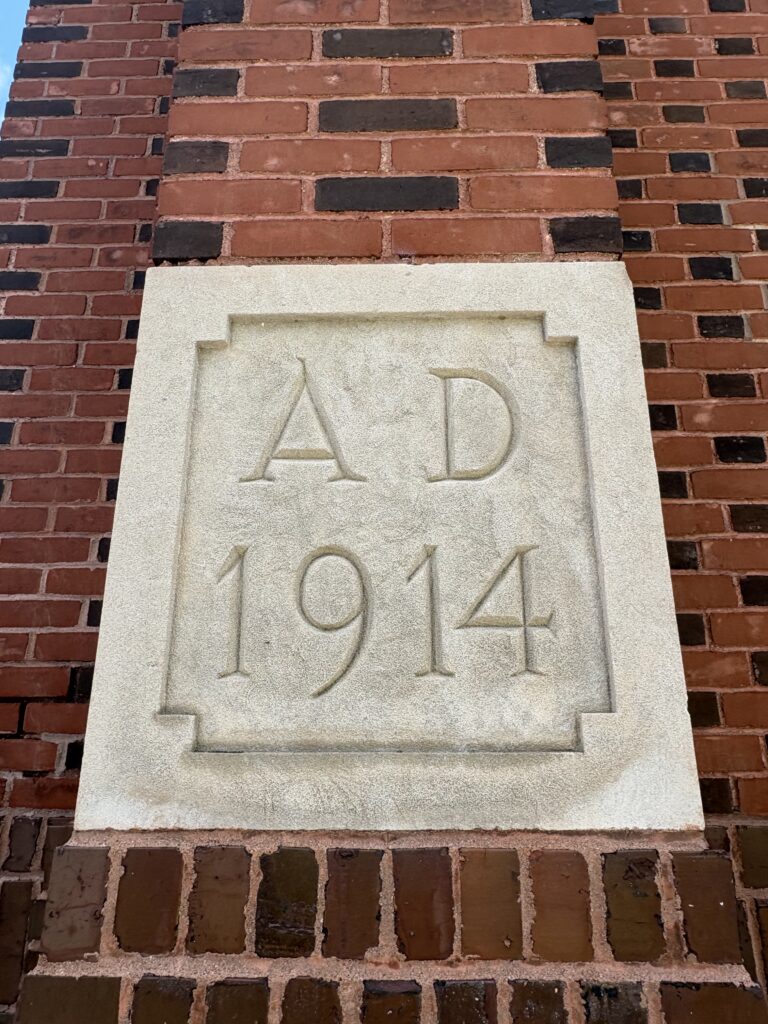
The parishioners of St. Nicholas enjoyed their new 1891 church for only 23 years. On May 17, 1914, the church caught fire and was destroyed. This event was heartbreaking for many parishioners but celebrated by some. Work began immediately on an even more substantial brick church. The present St. Nicholas Church with its two impressive 110-feet steeples was dedicated on November 4, 1915. It also suffered a fire in 1965, which destroyed its ornate interior high altar.
With the current shortage of Catholic priests, St. Nicholas Parish shares a pastor with St. Anne’s in nearby Kimball. Each August, an annual “Old St. Nick Mass” is celebrated outdoors at the original Old St. Nicholas site. In recent years, the parish has also sponsored an annual “Nicktoberfest” each September.
The current population of St. Nicholas is about 50 residents. While the parish and cemetery remain active, along with the community’s baseball fields and the local baseball team, the St. Nicholas Nicks, many of the businesses in the small town have faded into history.
Below is a list of some of the early Luxembourg settlers of St. Nicholas, Minnesota, and behind each family name is their village of origin in Luxembourg. This is not an exhaustive list of the Luxembourg families in St. Nicholas.
Bauler (Bettendorf/Gilsdorf)
Beckius (Beyren)
Biesenner (Niederfeulen)
Binsfeld (Echternach)
Braden (Mamer)
Burggraff (Hachiville)
Decker (Folscheid)
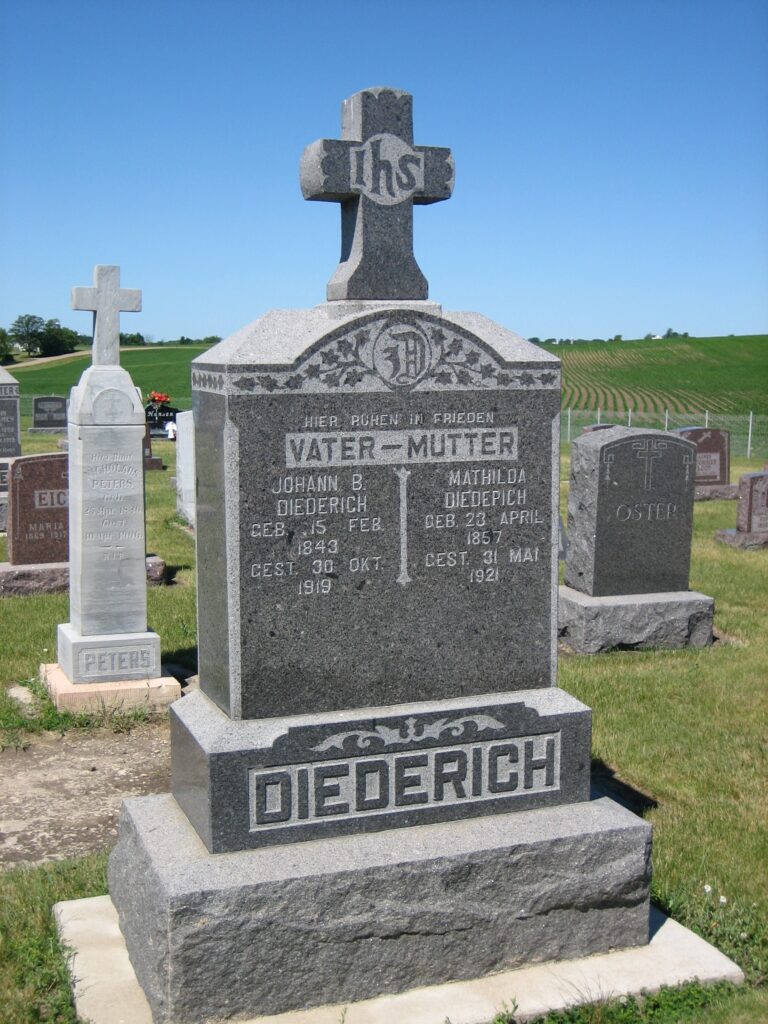
Diederich (Echternach)
Dumont (Rambrouch)
Ellenbecker (Kehlen)
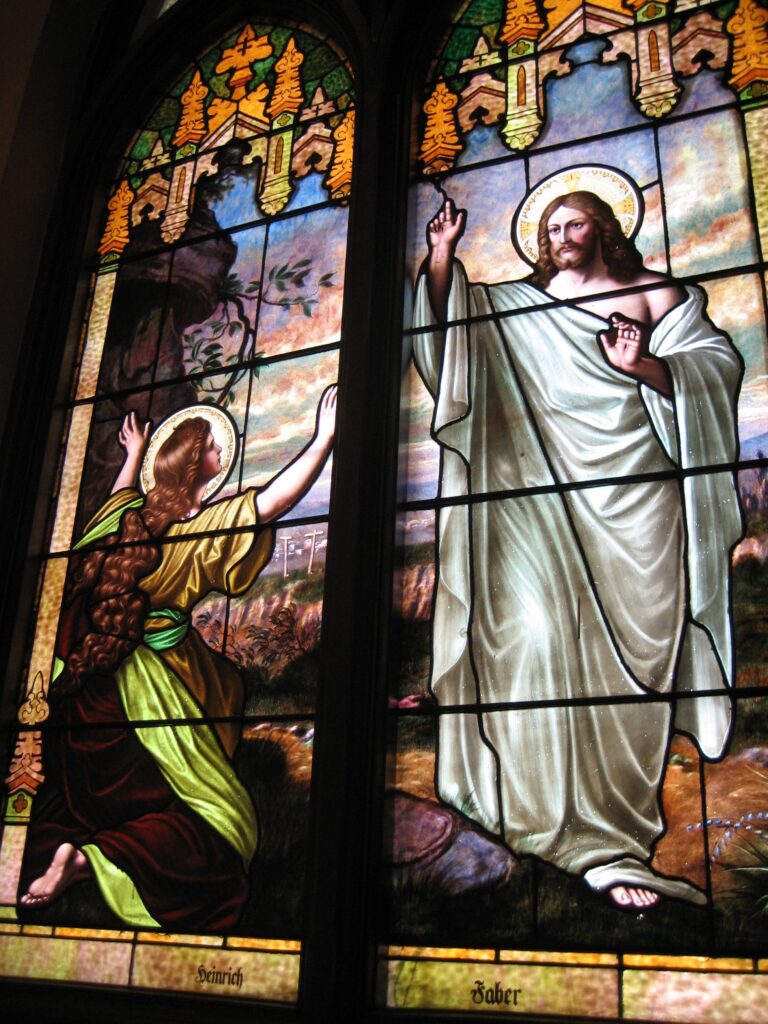
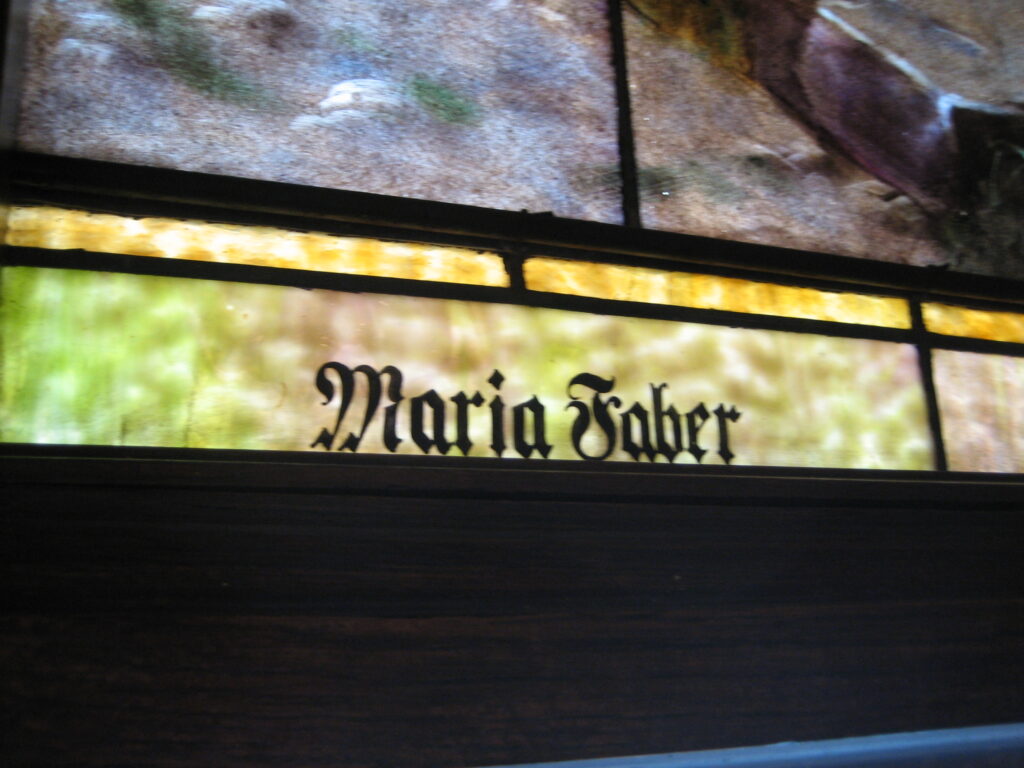
Faber (Canach)
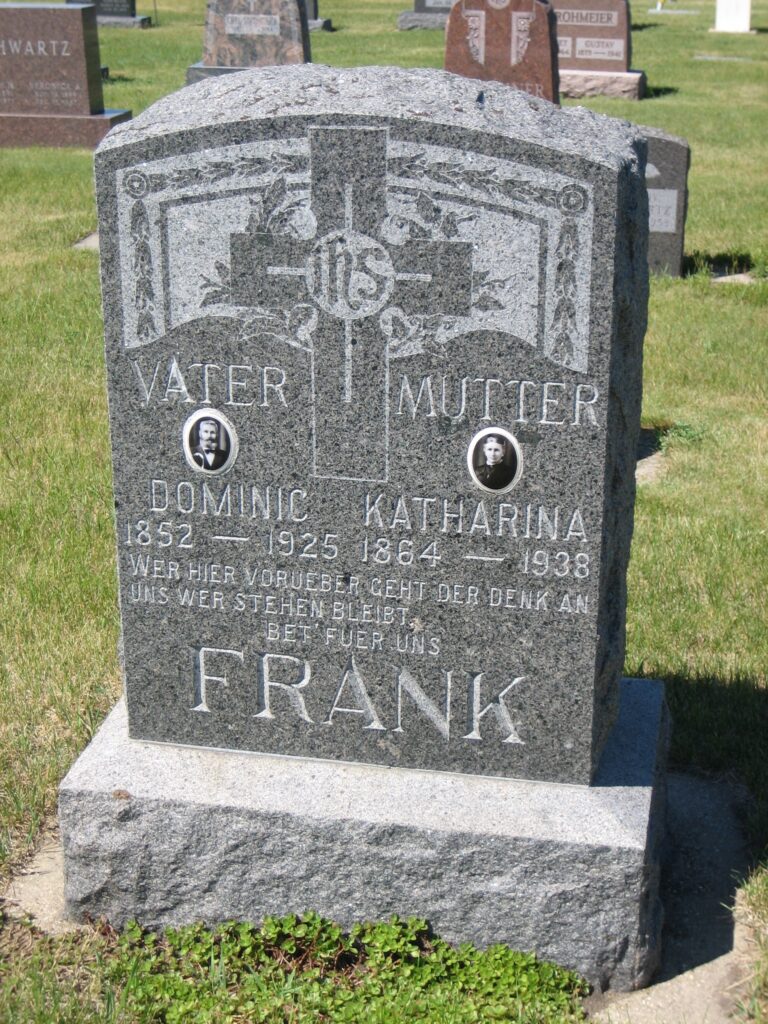
Frank (Bauschleiden)
Grein (Messancy, Province of Luxembourg, Belgium)
Hengel (Niederanven)
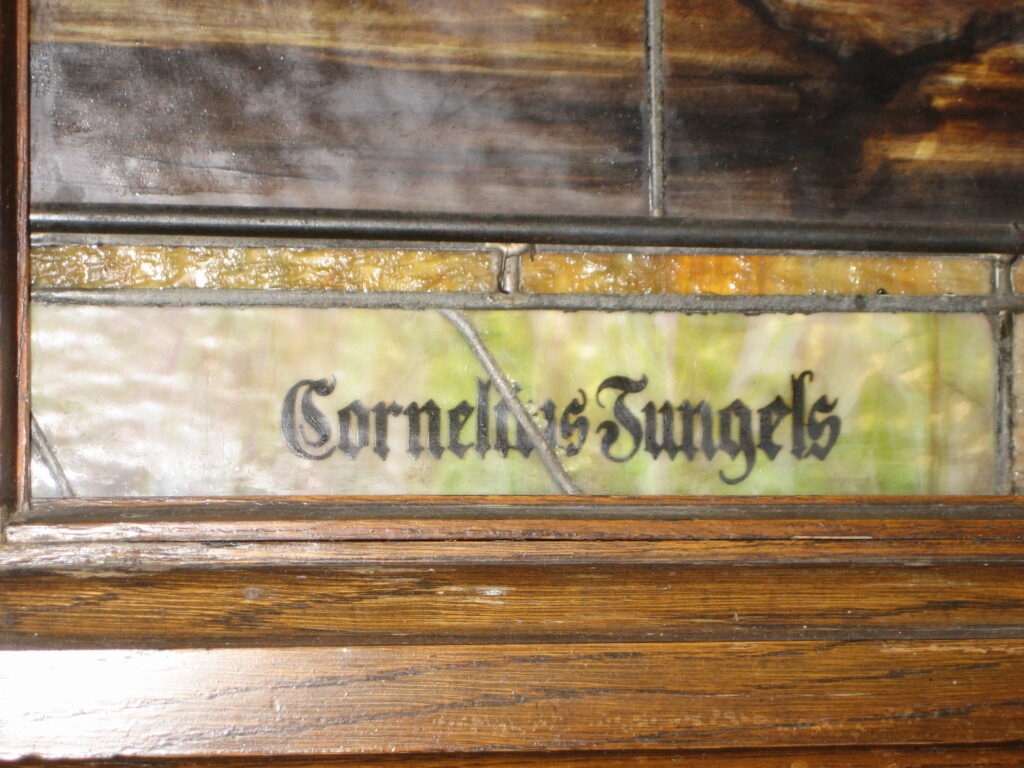
Jungels ( Waldbillig)
Klein (Nospelt)
Kremer (Mamer, Gonderange)
Lahr (Manternach, Haller, Herborn)
Loesch (Moestroff)
Lommel (Petange)
Lutgen (Tarchamps, Liefrange)
Pallansch (Habergy, Province of Luxembourg, Belgium)
Post (Folschette)
Rausch (Vianden, Beaufort, Moestroff)
Schmit (Gostingen, Herborn)
Schmitz (Bissen)
Schwinden (Toernich, Province of Luxembourg, Belgium)
Simon (Medernach)
Steichen (Kehlen)
Steil (Osweiler)
Stein (Diekirch)
Theisen (Rosport)
Wagner (Mensdorf)
Wampach (Medernach)
Weidert/Weydert (Lellig, Hollerich)
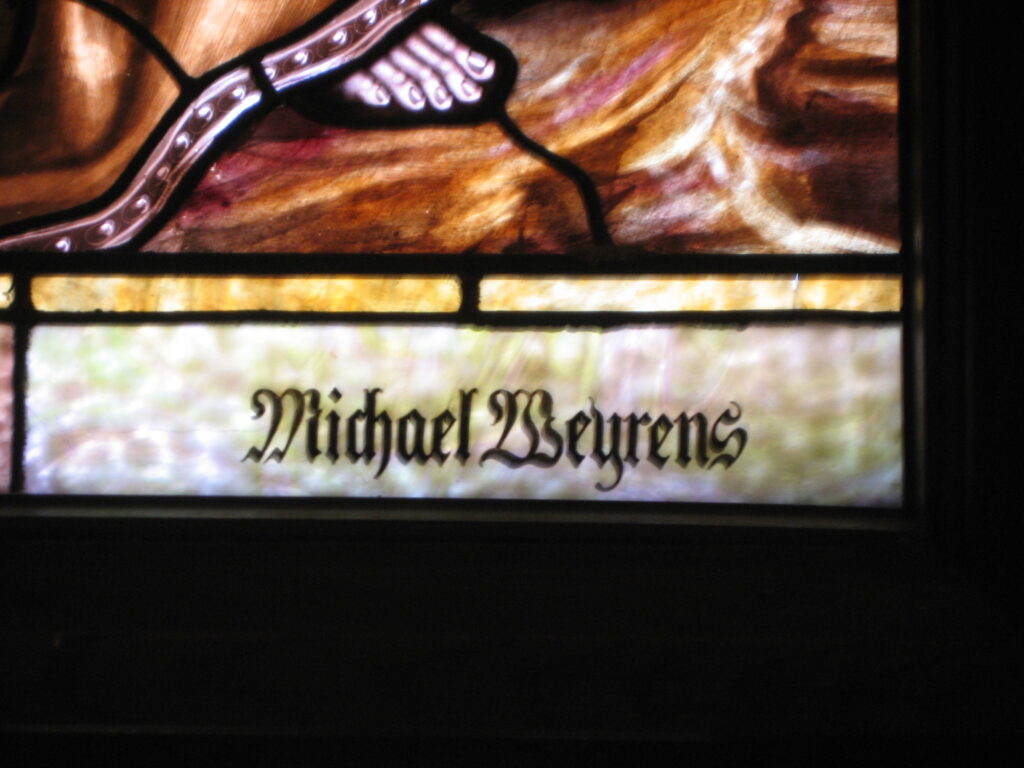
Weirens/Weyrens (Osweiler)
Weiler (Clervaux)
While the St. Nicholas community has seen many changes over the years, it continues to take great pride in its Luxembourgish roots and the deep tradition of faith begun at the original St. Nicholas site and continued through the current St. Nicholas Parish.
Check out Luxembourg Legacy’s videos showing Original St. Nicholas Site and Current St. Nicholas Site.
Original site video
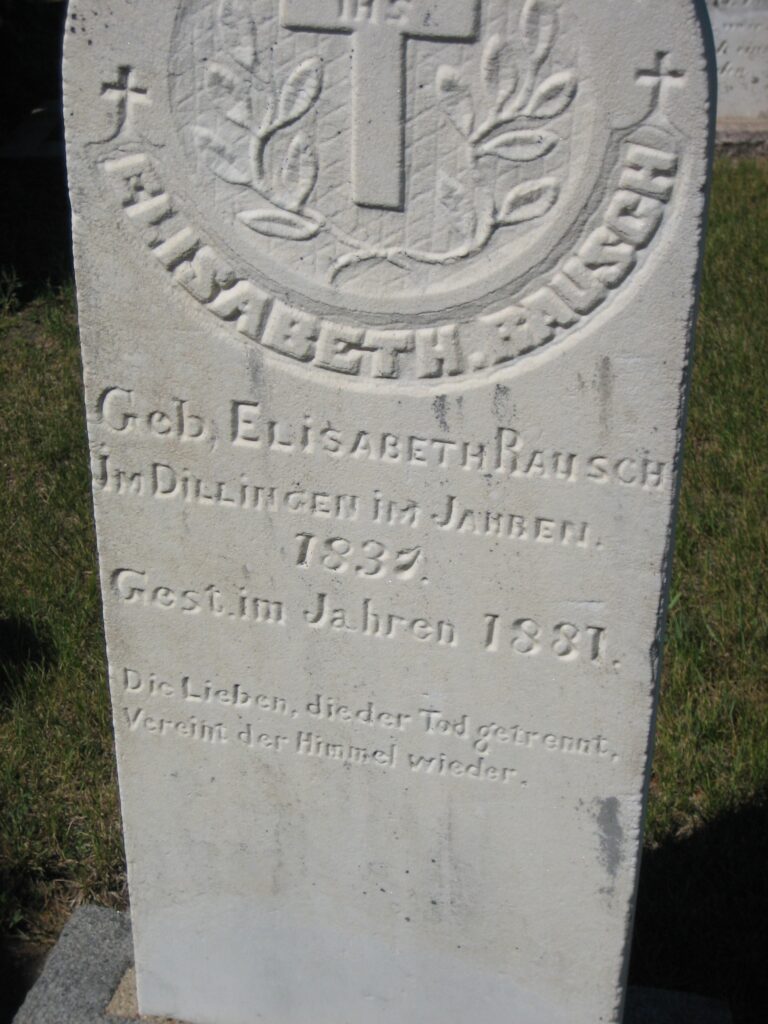
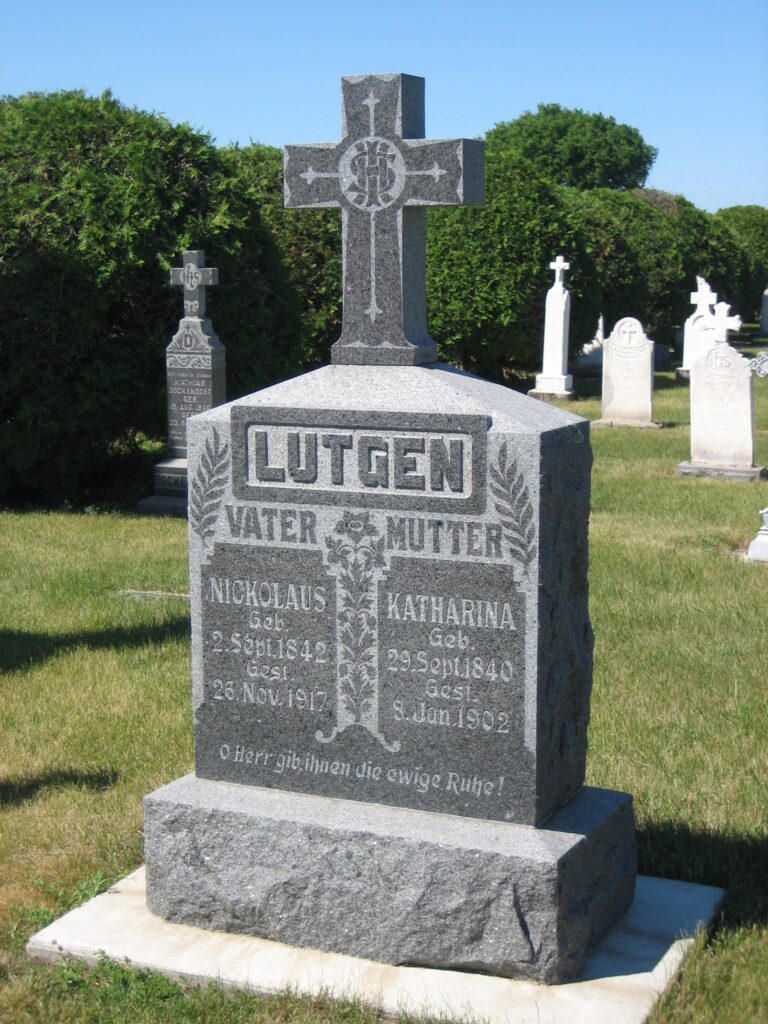
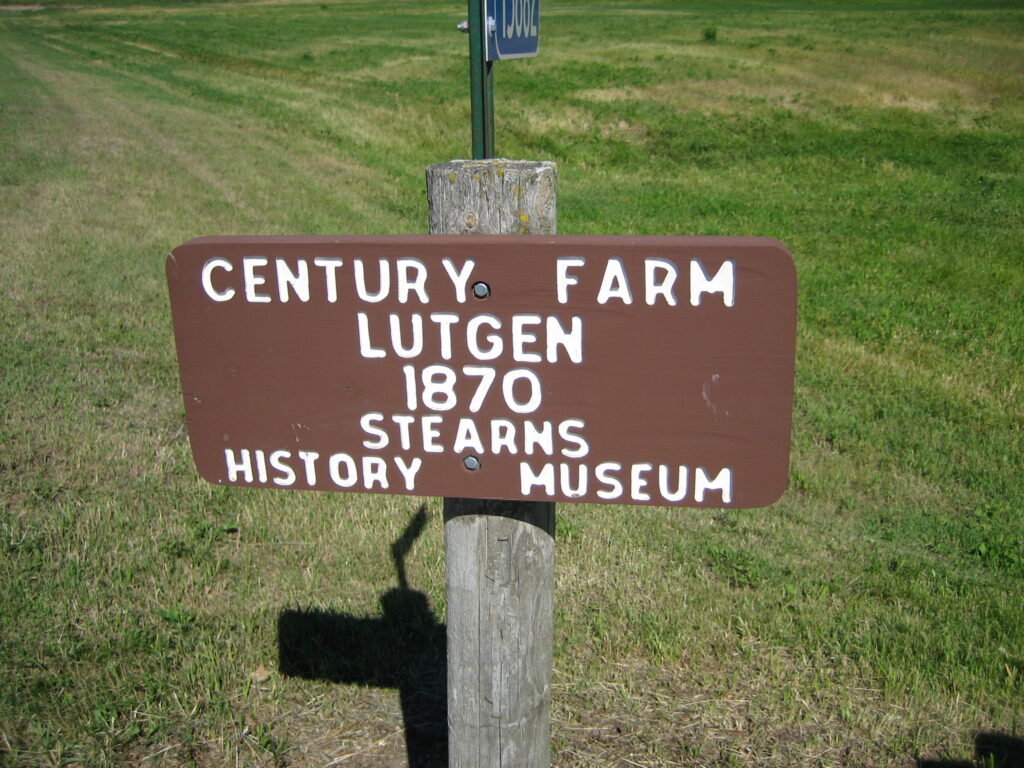
My gtgrandfather was Cornelius Lutgen. I have a lot of information on this family. Also, I have worked with Gretchen Leisen on the families of Stearns County. Susanna Lutgen Rausch, my grandfather’s youngest sister, admonished me for touching my cousin Bennie’s erector set. I was 5 years old in 1950.