
By Kevin Wester
While it is commonly agreed upon that St. Nicholas was a 4th century Catholic bishop in Smyrna, Turkey, known for his love of children and generosity to the poor, there various stories about his life and different depictions of him.
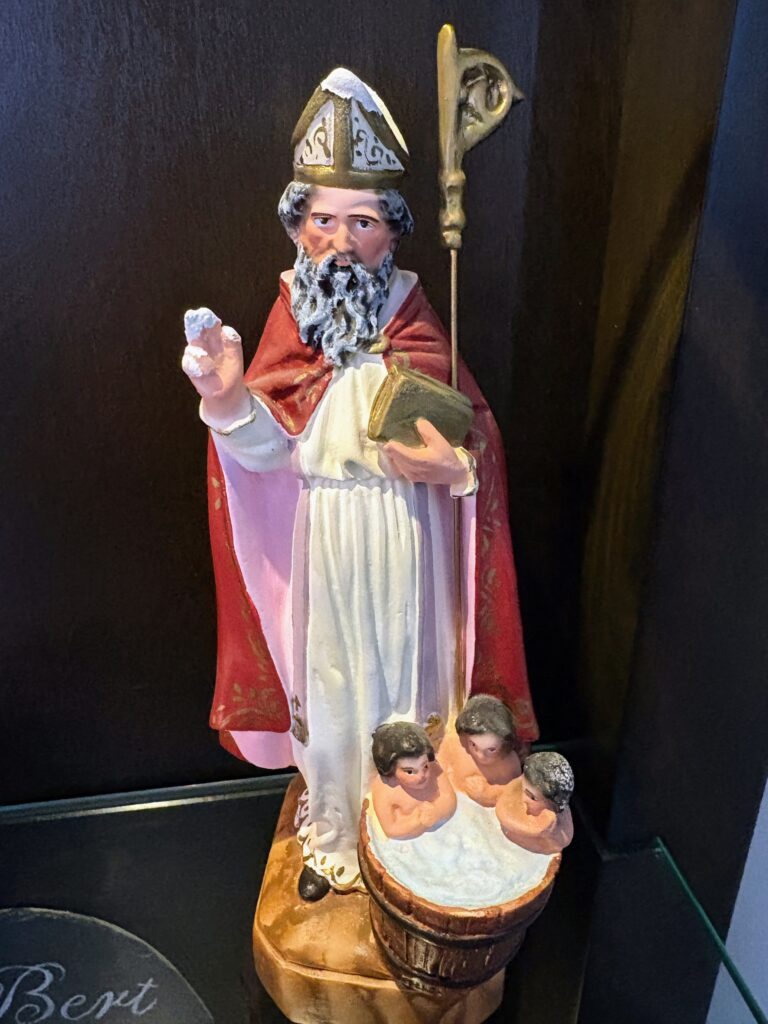
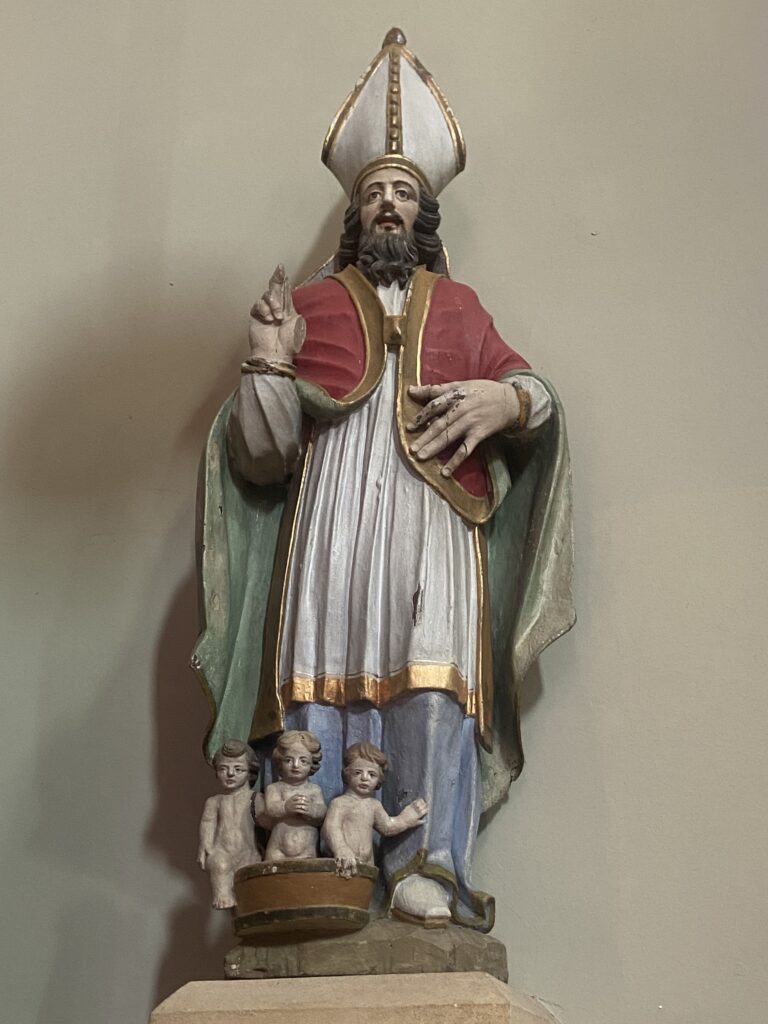
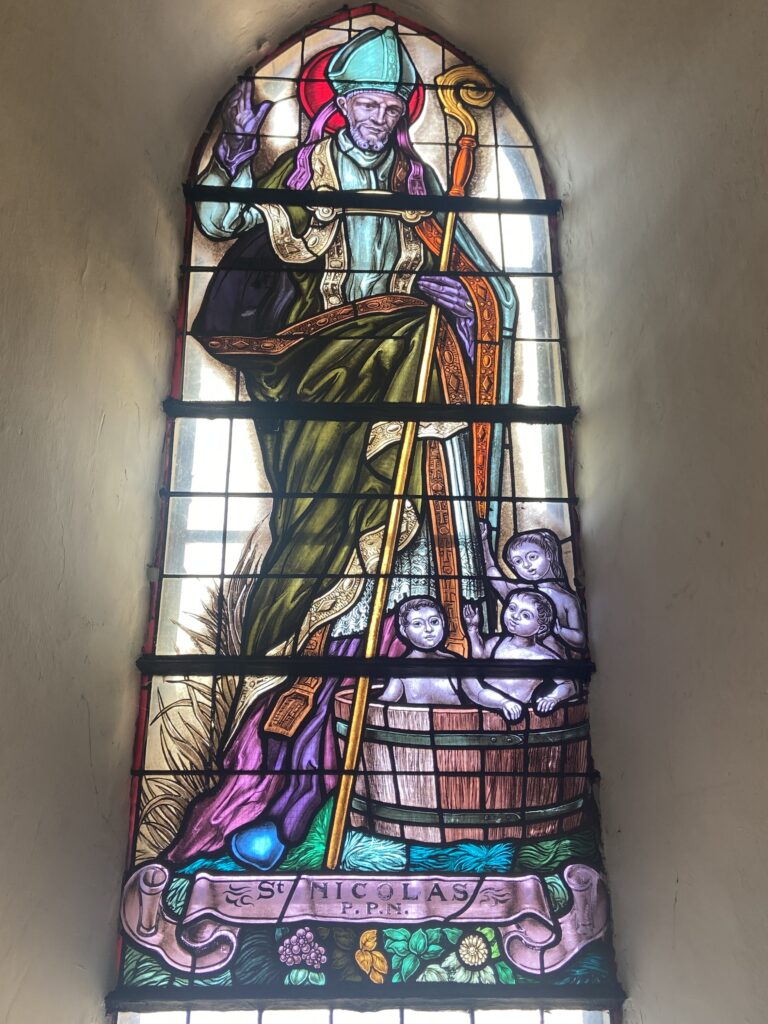
St. Nick is often depicted as a bishop with his mitre (bishop’s hat) and crozier (bishop’s staff) with his hand extended in blessing. He is also frequently depicted holding a candle, a book or with a child kneeling before him. My favorite depiction of St. Nick shows him as a bishop with three little boys in a salt barrel at his feet.
This image reflects one of the most colorful stories about St. Nick; one you don’t necessary want to share with young children—especially at bedtime. The story holds that in Smyrna, where Nicholas was bishop, was a mean butcher. Every day, three young homeless, orphaned boys would go to the shop and beg the butcher for something to eat. Day after day, the butcher refused to feed the boys, yelling at them to go away. Finally, one day, the butcher had enough of the three begging boys. In his anger, he murdered them and put them in a salt brine barrel in the butcher shop cellar.
The next day, Bishop Nicholas went to the shop to purchase meat. He had a spiritual sense and a vision of the horrible thing the butcher had done and confronted him. The butcher finally confessed to the horrific act. Bishop Nicholas, known for his miraculous powers, raised the three boys back to life, and ordered that the butcher become a ghoul who would assist him in deeds of kindness for all eternity. Known as Black Peter, the butcher-turned-ghoul accompanied St. Nicholas, handing out sticks or coal to children who had misbehaved.
In modern times, many countries, schools and societies no longer allow Black Peter to be part of the St. Nick celebration, not only because he is scary and often overshadows St. Nick, but due to the perception of his character seeming racist.
While the story is rather ghoulish, the ultimate message is one of St. Nicholas’s goodness and devotion to children, especially those who are troubled or suffering.
0 Comments