
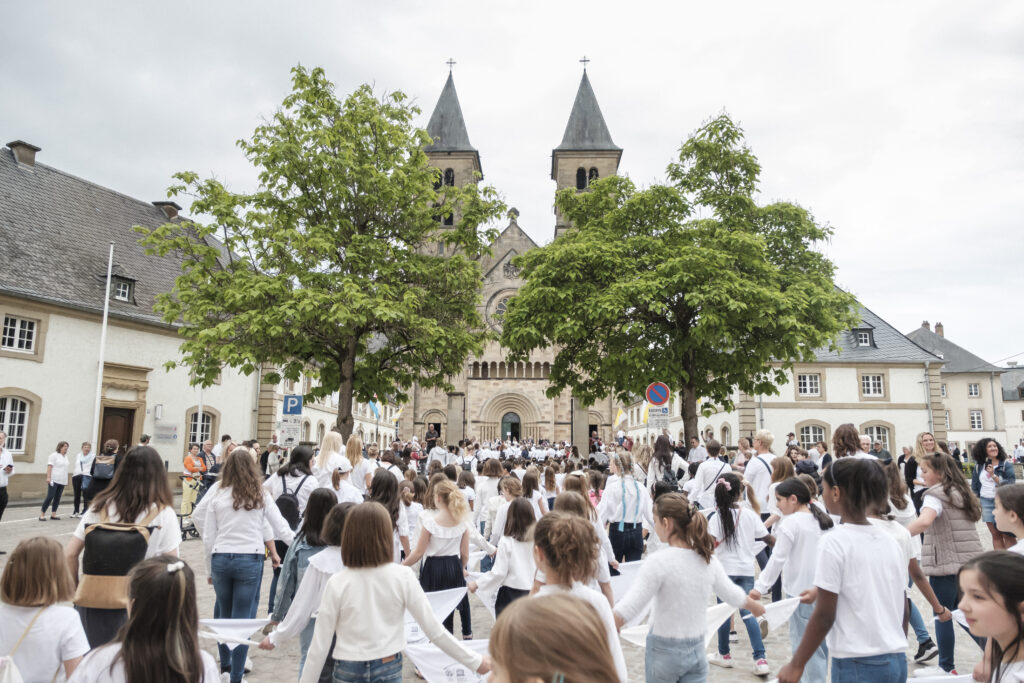
Every year on the Tuesday after Pentecost, or Whit Tuesday, Luxembourg people celebrate a spring dancing procession, the hopping procession of Echternach (Echternacher Sprangprëssioun).
Later this month, members of the Luxembourg Legacy tour will be participating in the world-famous hopping procession.
The procession in the medieval town of Echternach, Luxembourg’s oldest city, has roots in the early Middle Ages, and is held in honor of St. Willibrord, an Anglo-Saxon monk who brought Christianity to this region of Europe. Willibrord founded a monastery in Echternach, died there in 739 A.D. and is buried in the crypt of the basilica which bears his name. He is the official patron saint of the Grand Duchy. Read Geoff Thompson’s interesting article on Willibrord and the saint’s connection to Carlow County, Ireland.
Initially, the procession was not accepted by all because it was seen as being pagan in nature. It was felt, however, that the dancing may have helped prevent or heal people from the numerous epidemics at the time. Willibrord was credited with curing people with epilepsy and nervous diseases in children.
Originally, people in the procession may have danced to any popular music but in the 20th century, Max Menager composed the three-minute tune that is still used today. Dancers, who wear dark trousers or skirts and white shirts, are grouped five or six to a row and are linked by handkerchiefs, which were added to the event to help reduce the spread of disease.
The participants advance through the town, making small hopping movements to the rhythm of a Sprangprëssioun melody. Approximately 12,000 -14,000 pilgrims take part in the procession through the town to the tomb of St Willibrord, including about 8,000-9,000 hoppers
The Echternach Hopping Procession was added to the UNESCO List of Intangible Cultural Heritage of Humanity on 16 November 2010.
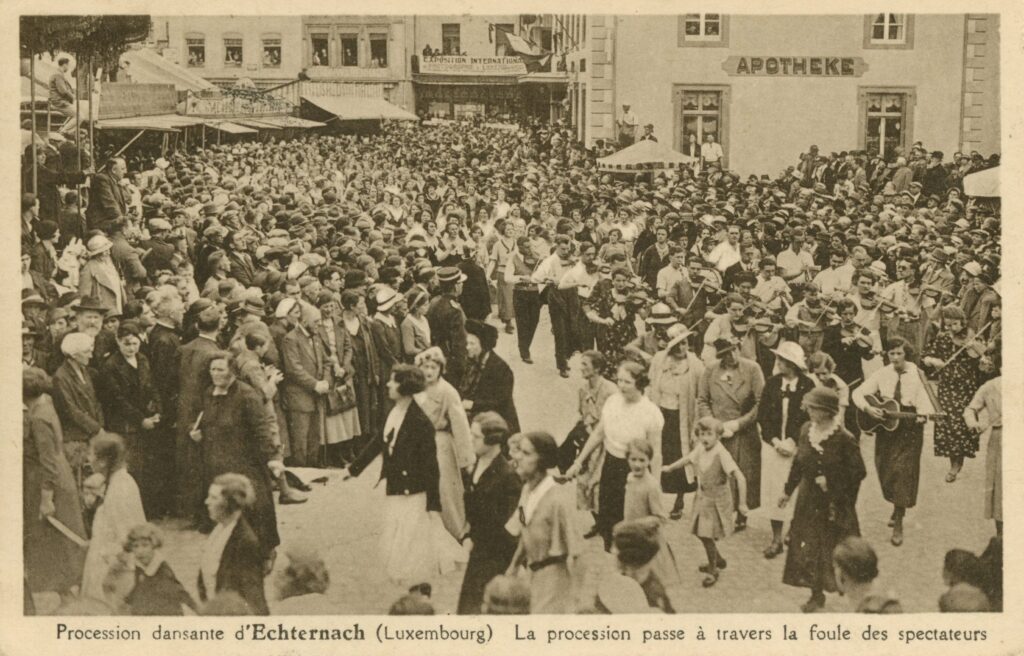
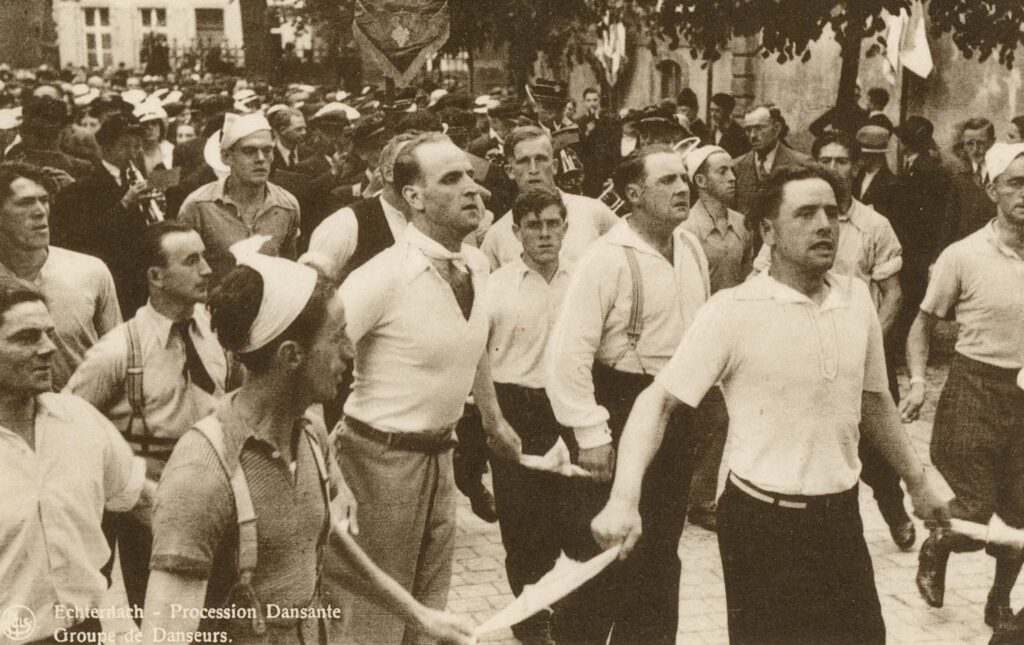
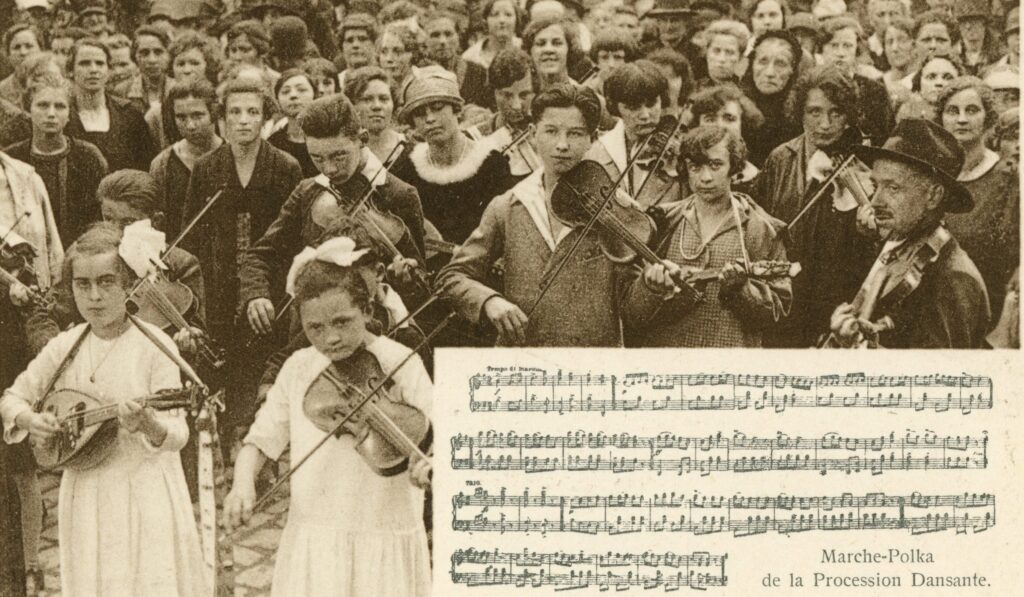
Circa 1920 postcards depicting the hopping procession.
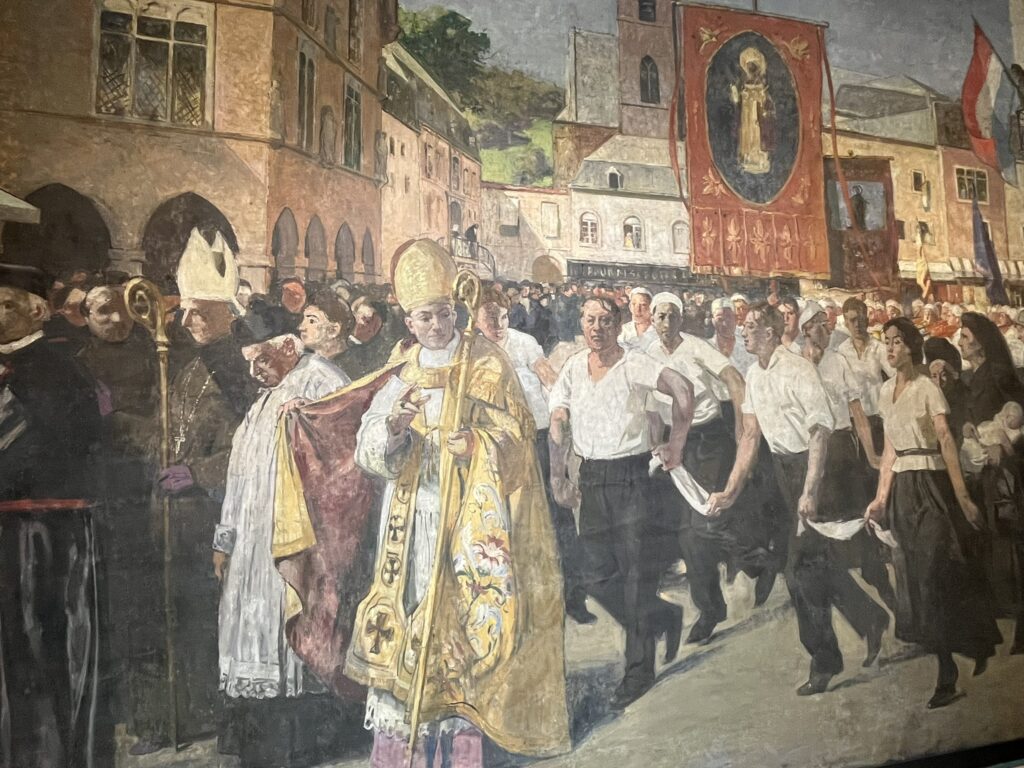
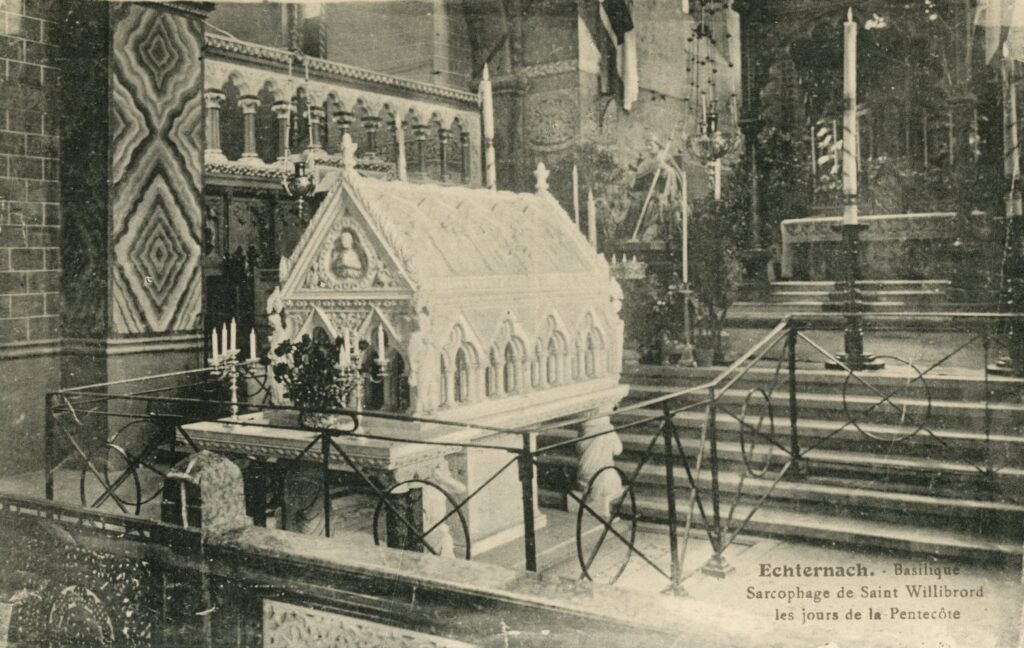
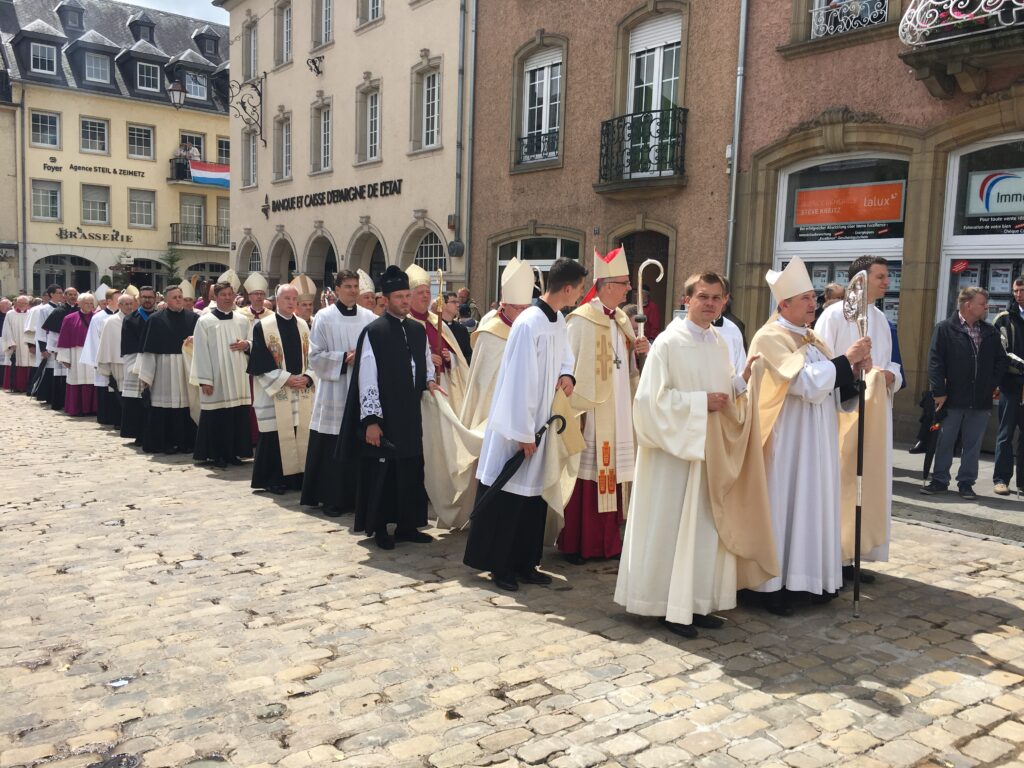
Painting of procession Tomb of St. Willibrord in upper basilica circa 1910. Clergy in procession
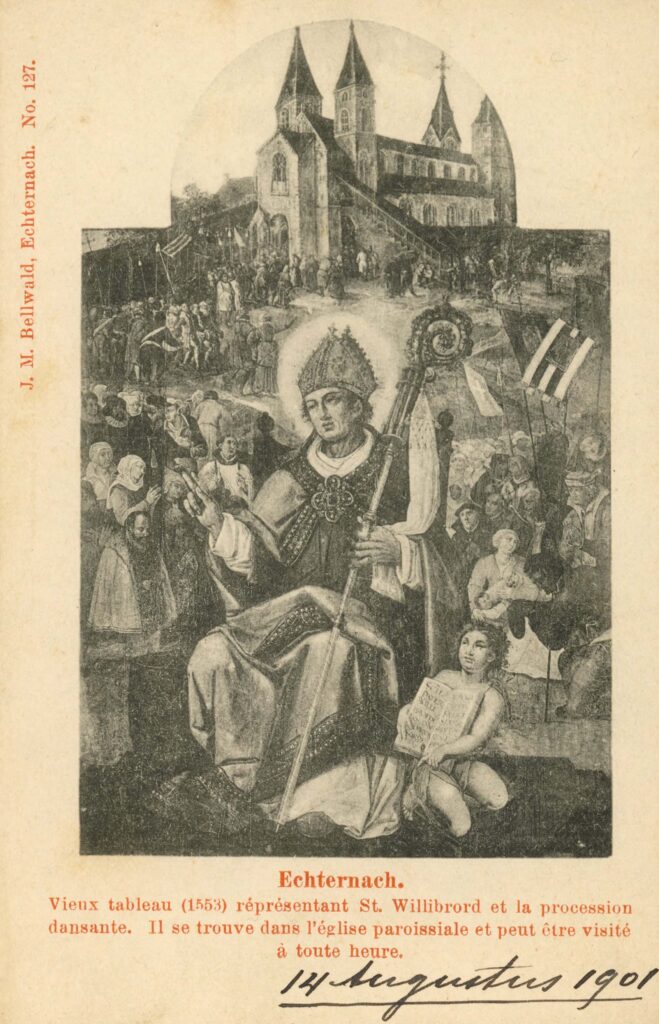
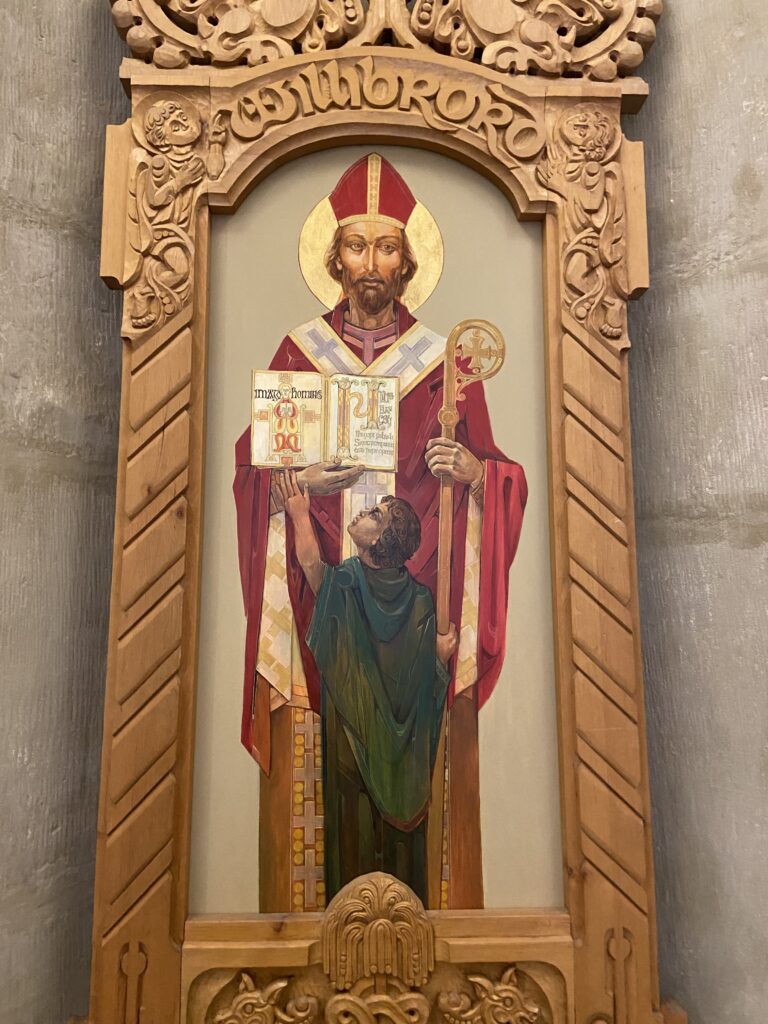
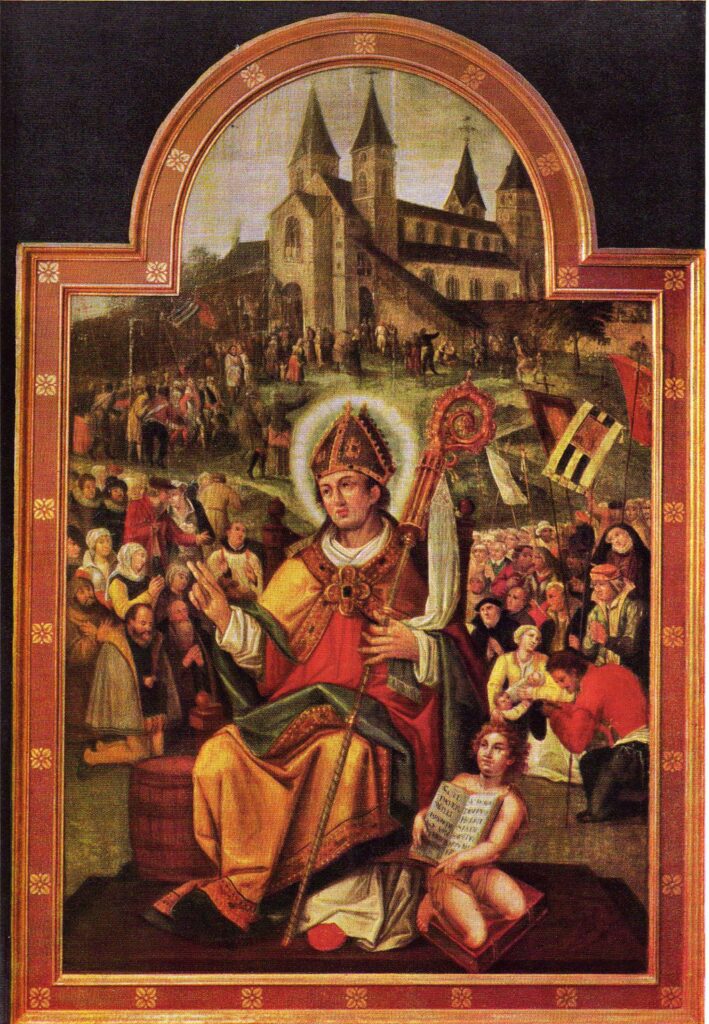
1901 image of St. Willibrord St. Willibrord Image of St. Willibrord and basilica
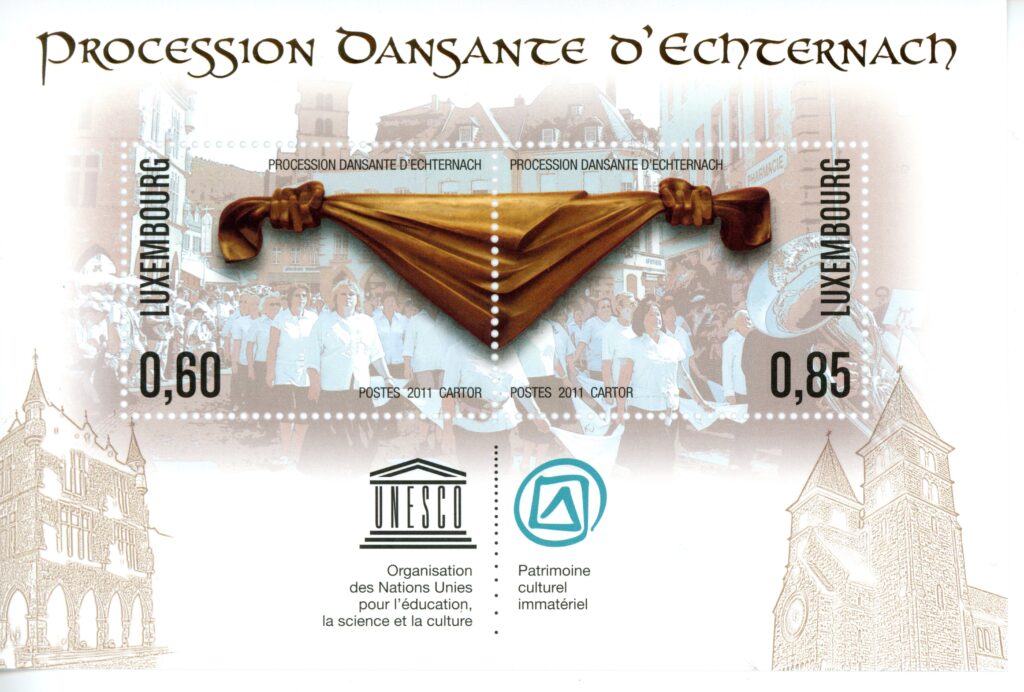
Commemorative stamp recognizing UNESCO listing of Dancing Procession – 2011
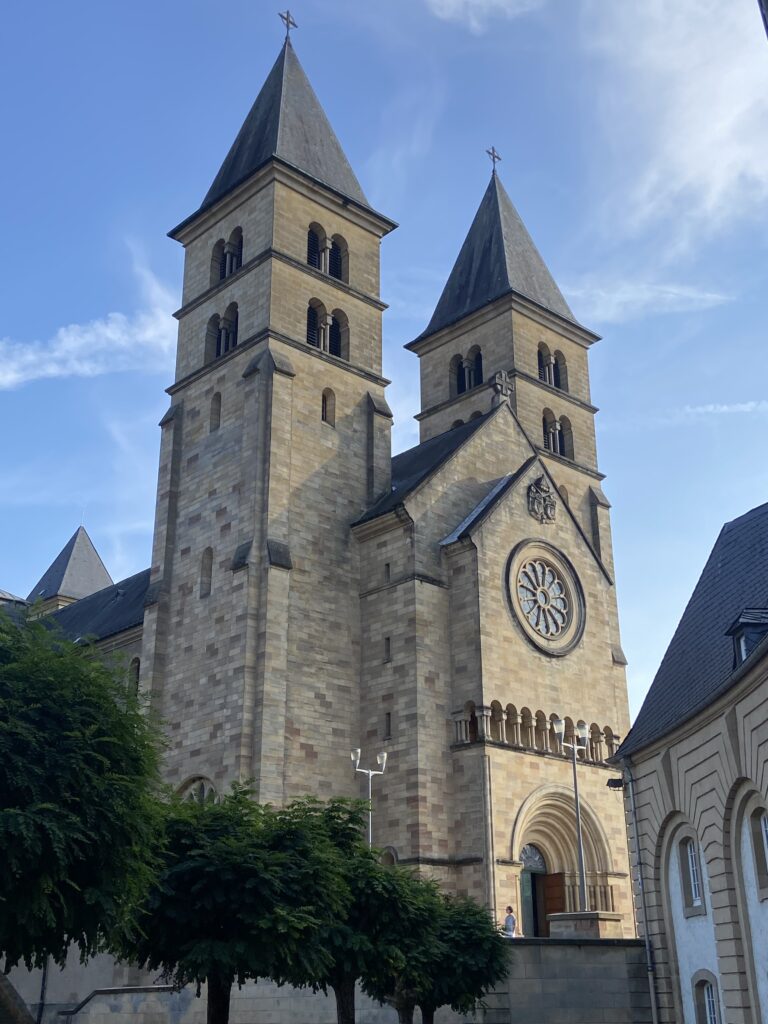
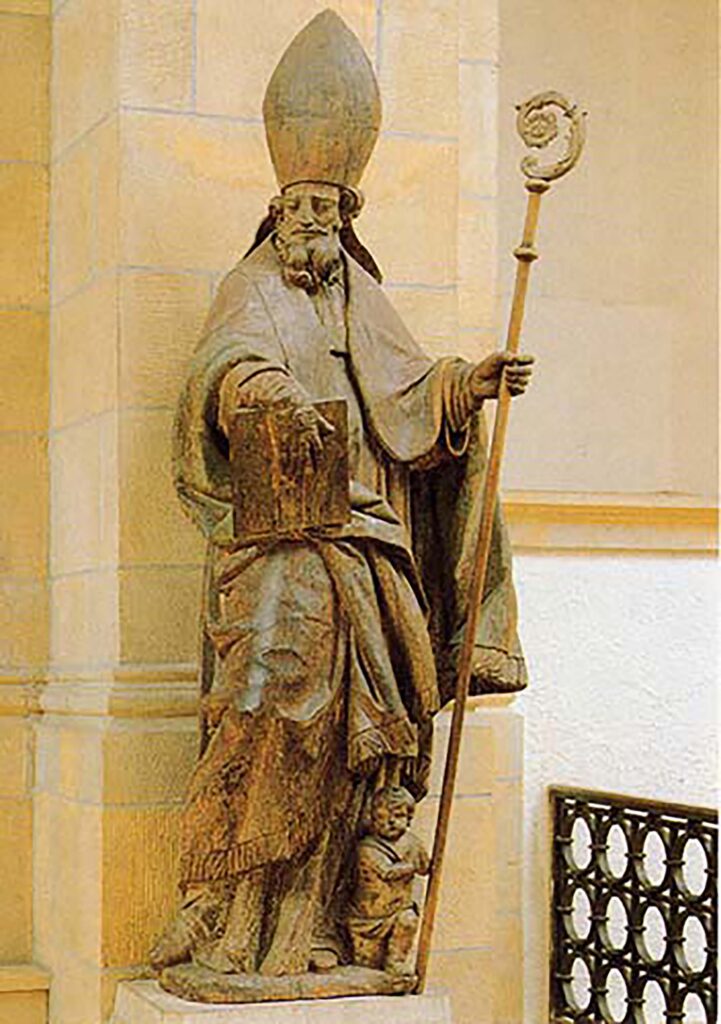
St. Willibrord Basilica St. Willibrord statue
0 Comments