Am I a Luxembourger?
“My ancestor was born in such-and-such town, but I googled it and it’s in the country of Belgium. I always thought we were Luxembourgers, but are we actually Belgians?”
We at Luxembourg Legacy often get comments like these from individuals researching their Luxembourg ancestors.
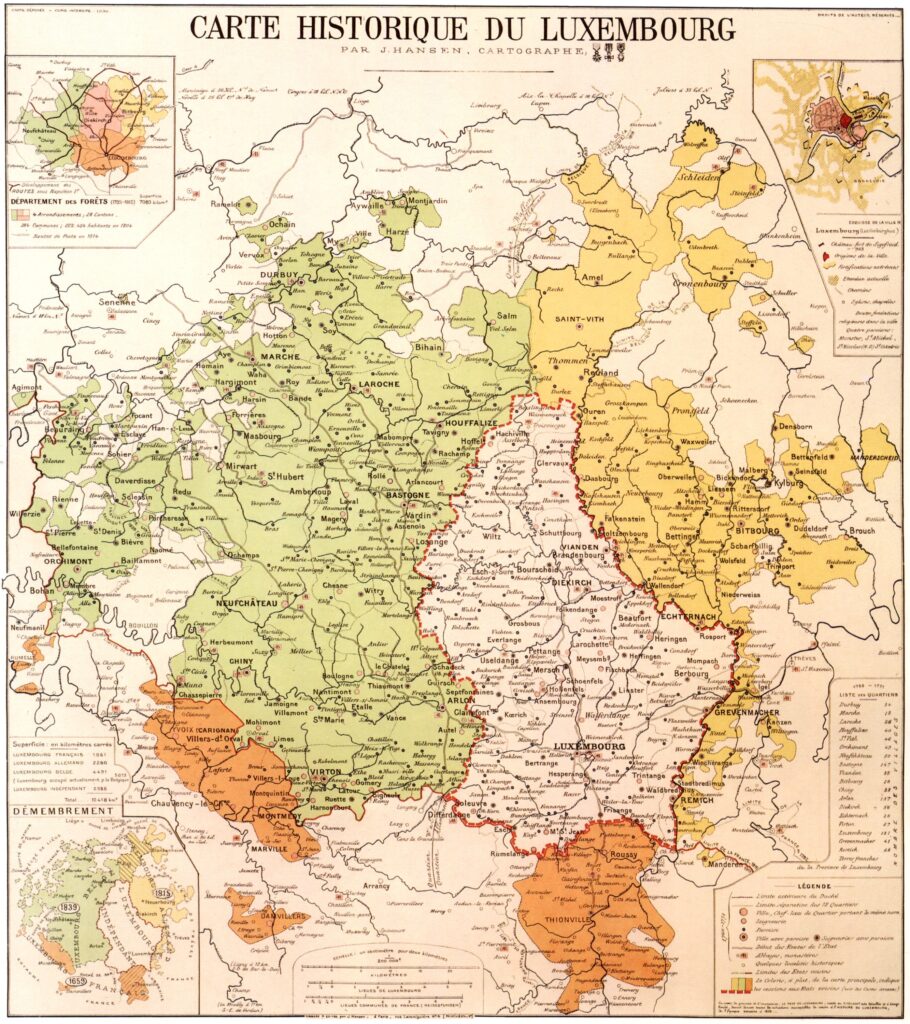
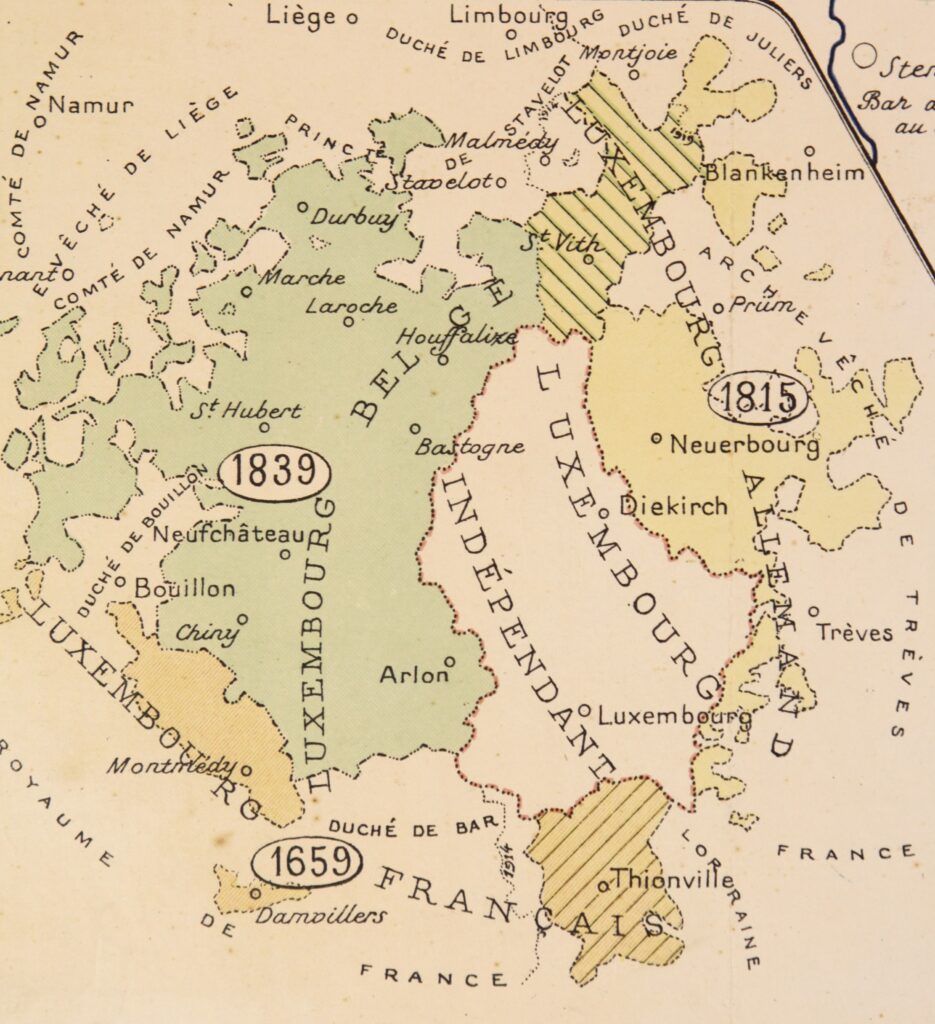
It’s important to remember that Luxembourg experienced three historic partitions: 1659 (land accessioned by France), 1815 (land accessioned by Germany) and 1839 (land accessioned by Belgium). The final 1839 partition creates the most ethnic confusion for people because a large section of the former Duchy of Luxembourg was partitioned to help establish the new Kingdom of Belgium. This partition, larger than the current land mass known as the Grand Duchy of Luxembourg, was named the Province of Luxembourg in Belgium. This region of Belgium still bears that name today.
While part of the Province of Luxembourg given to Belgium was originally French-speaking, the region around Arlon (known in Luxembourgish as the Arelerland) was Luxembourgish-speaking. This includes villages including Hachy, Sampont, Fouches, Hondelange, Turpange, Selange, Messancy, Battincourt, Tontelange, Metzert, Attert, Heinstert and Parette, to name a few. Many immigrants from the Belgic-Luxembourg towns were the first to immigrate to America. They settled in Luxembourgish settlements including Sheldon, New York; Frenchtown and Alvada, Ohio; Leopold, Indiana; Belgium, Wisconsin; and Bellechester, Minnesota. One of the best resources to learn about this Luxembourgish region of today’s Belgium, known as the Arelerland, is “Luxembourg on My Mind” by Fausto Gardini.
“I pride myself on being 100% Luxembourgish, but I had immigrant ancestors who came from the Luxembourgish towns Attert, Battincourt and Halanzy, all which today are in the Province of Luxembourg in Belgium,” said Kevin Wester, founder/CEO of Luxembourg Legacy. “This kind of shocked me when I first learned about it. But I also learned that while these towns are technically Belgian since 1839, the people living there at that time, including my ancestors, saw themselves as thoroughly Luxembourgish, which they had been for generations. They spoke Luxembourgish as their first language and practiced all the cultural and religious traditions of Luxembourg. While their towns became Belgian, they were culturally and ethnically Luxembourgers. This helped me work through my surprise that some of my ancestral villages are today in Belgium.”
Check out the attached partition maps to visualize the three historic partitions of Luxembourg. If you find that any of your ancestral villages are currently located just over the border of Luxembourg, they were likely part of the 1815 or 1839 partition. While they technically became French, German or Belgian, they were Luxembourgers for generations, so you can continue to be proud of your Luxembourgish roots!
0 Comments