During the Easter season in Luxembourg, Catholics traditionally attended Mass on Holy Thursday (Gréngendonneschden), Good Friday (Karfreiden), Holy Saturday (Karsamsden) and Resurrection Matins Easter Sunday (Ouschtersonnden).
Families celebrate Easter by painting boiled eggs and finding treats lefts by the Easter Bunny (Ouschterhues). Before eating the eggs, children traditionally play a game called Técken, tapping their painted egg against their opponent’s. The child whose egg remains intact is the winner.
Another Luxembourgish tradition this time of year is Klibberen when children take to the streets from Holy Thursday to Easter Sunday with small wooden instruments (Klibberen) and sing the ratchet song (Klibberlidd). On Easter Sunday, the children receive Easter eggs, sweets and money from the locals. According to tradition, the church bells travel to Rome to confess their sins during these days, so the wooden instruments replace the ringing of bells for morning, noon and evening prayer times.
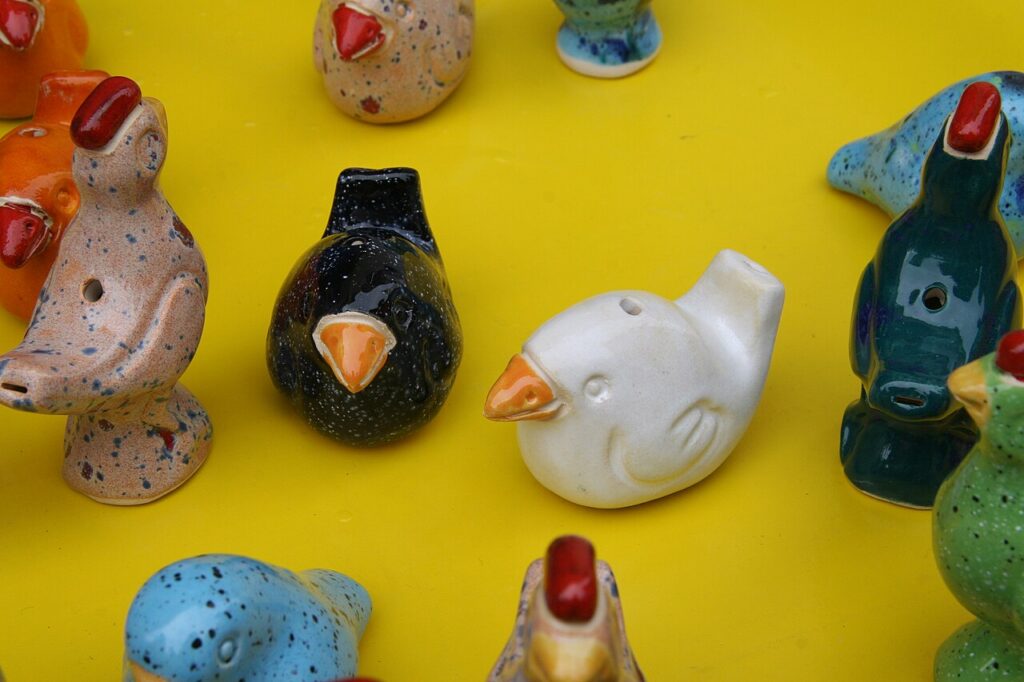
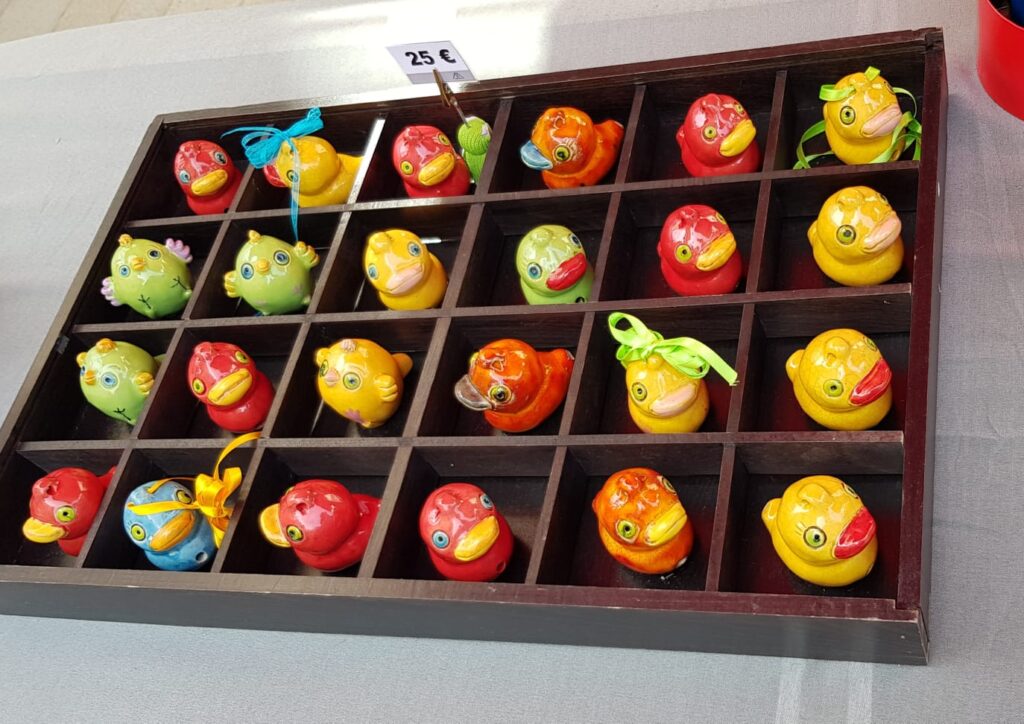
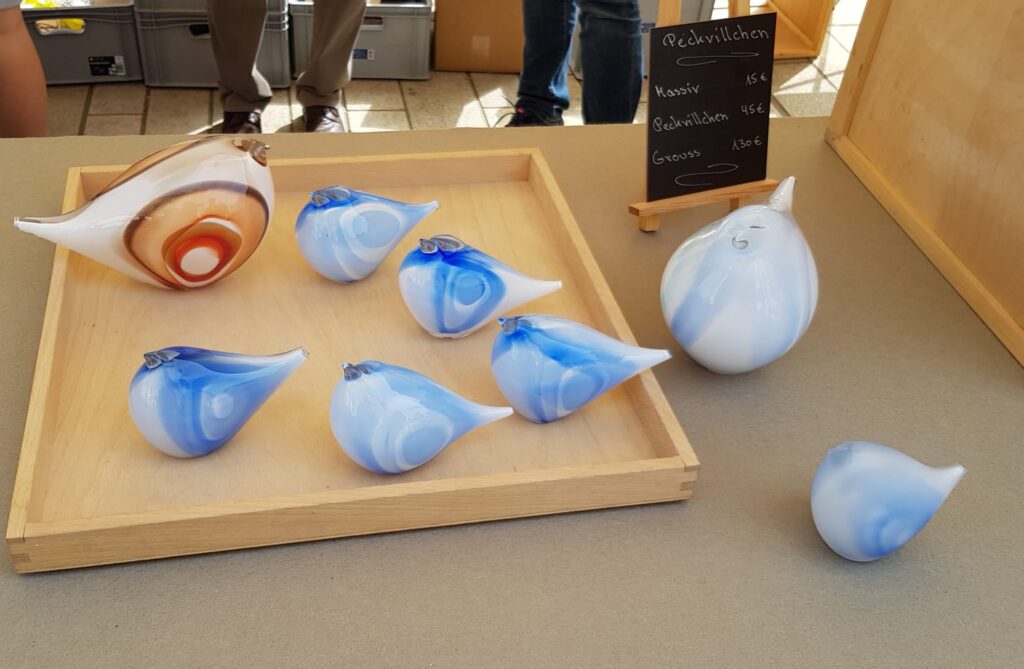
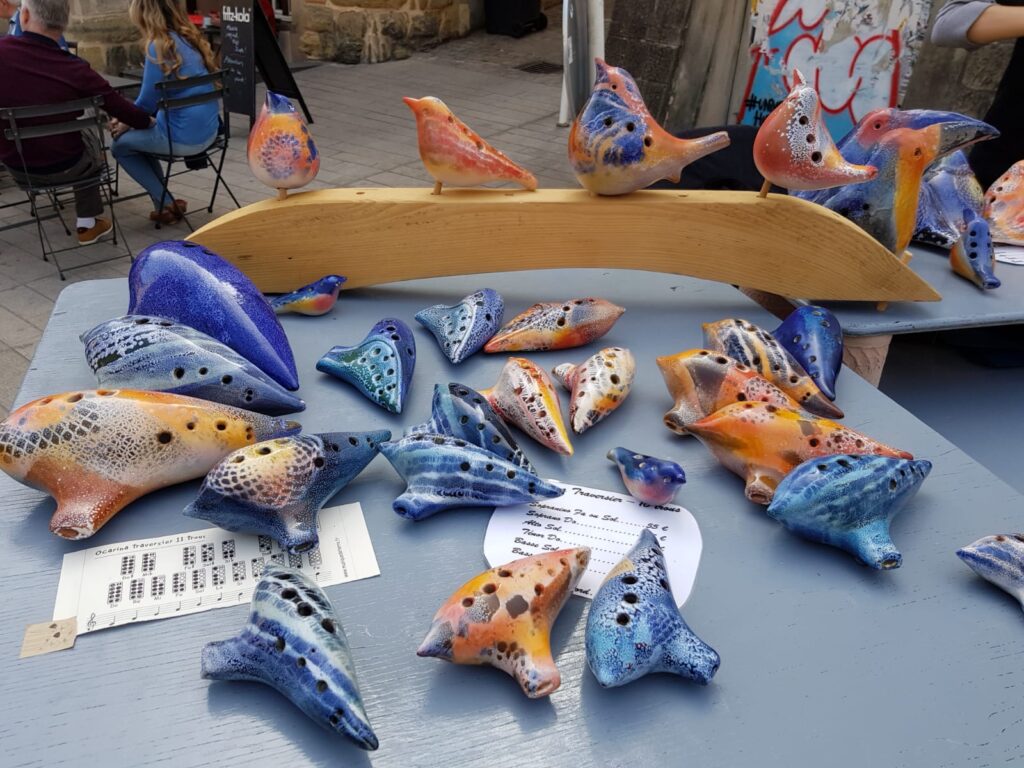
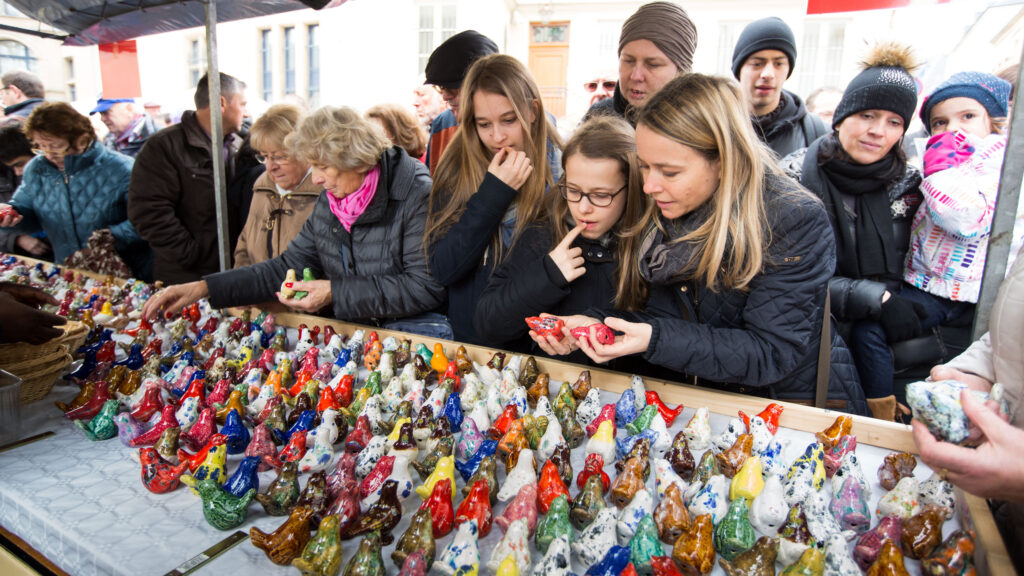
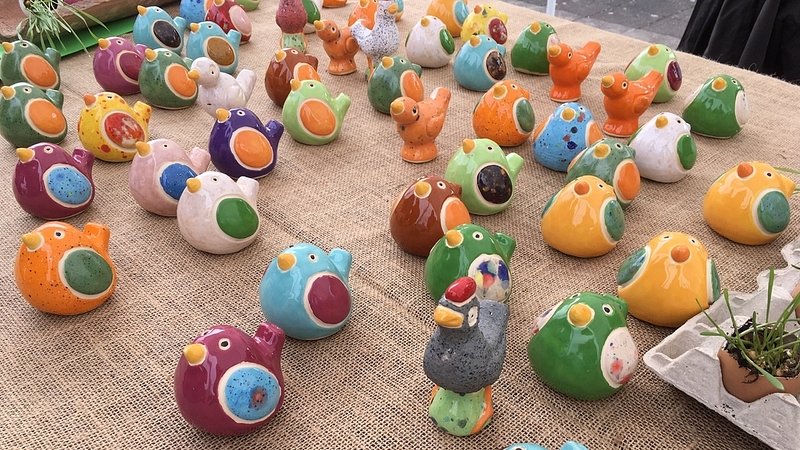
Easter Monday, or Éimaischen, is celebrated at a market in the Old Town Luxembourg and in the Village of Nospelt. Éimaischen, the Feast of Emmaus (the village mentioned in the Bible where two disciples met the resurrected Jesus on Easter Sunday) is celebrated with a traditional pottery market. Potters from all over Europe sell ceramic bird whistles called Péckvillercher, which symbolize the return of spring. Vendors also sell other crafts and sweet treats like nougat and grilled almonds and there are children’s games, entertainment, music and folk dancing.
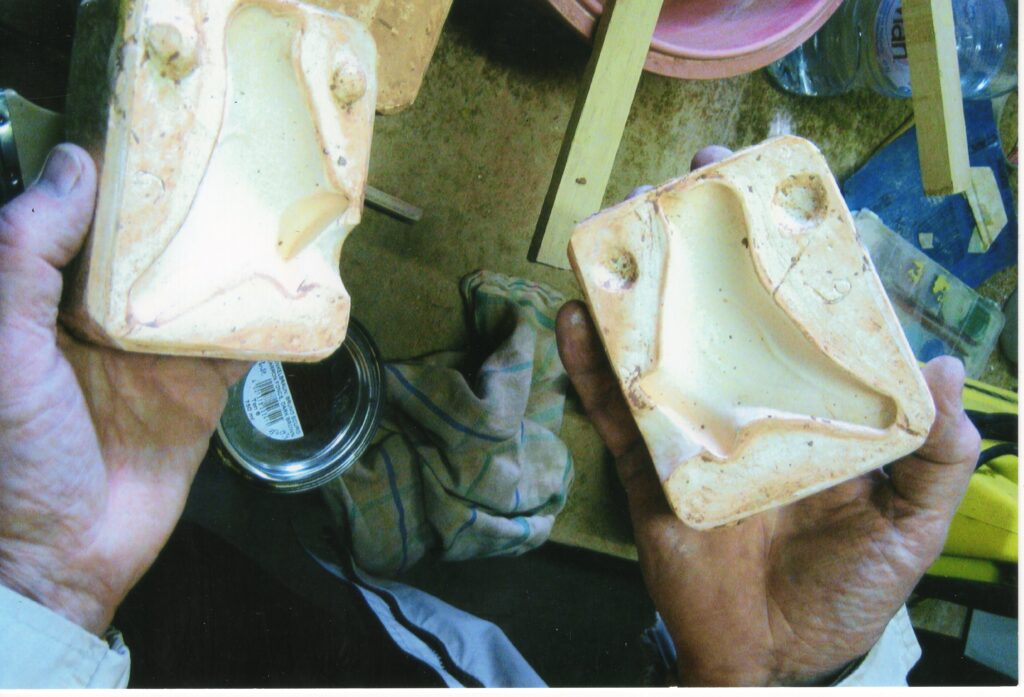
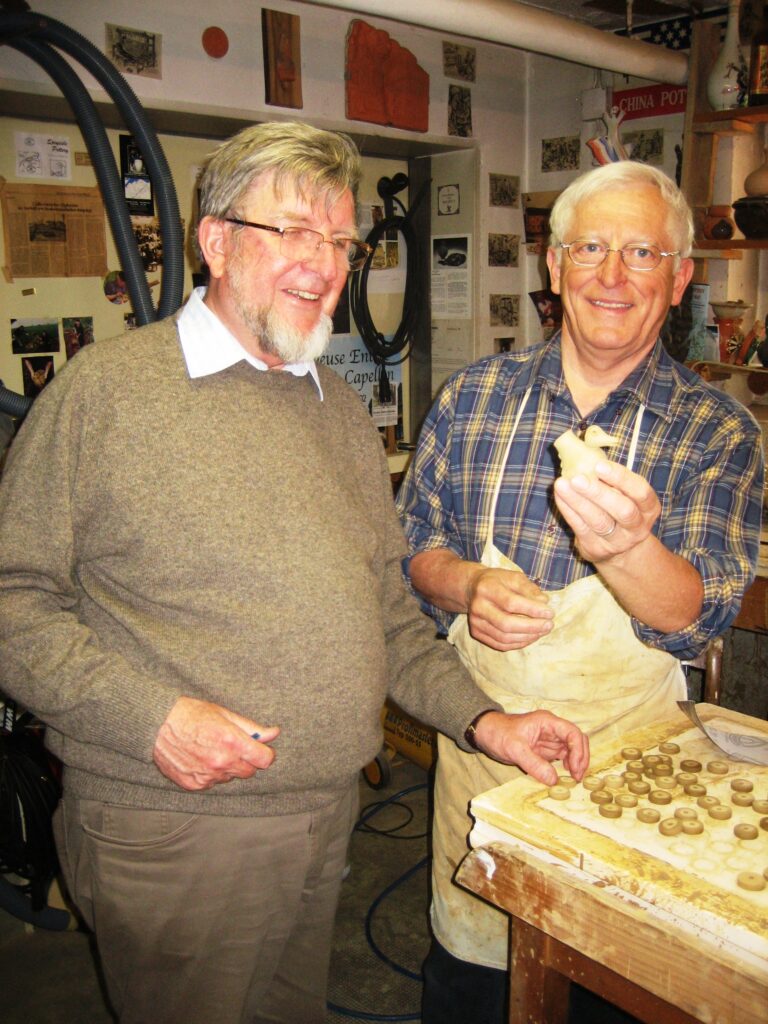
Nospelt began as a potter’s village and the town developed around it. It is said that the potters used leftover clay from plates and crockery to fashion little earthenware bird whistles. Today, Péckvillercher are created in new shapes and glazes each year. If they are from Nospelt, they are stamped on the bottom with the village name and year.
In our article about Bretzelsonndeg last month we shared how men give their sweethearts a pretzel on Pretzel Sunday. On Easter Sunday, women can reciprocate by presenting the man with an Easter egg (or an empty basket if she is not interested in his affections). The roles are reversed in leap years.
Oktav of Our Lady of Luxembourg
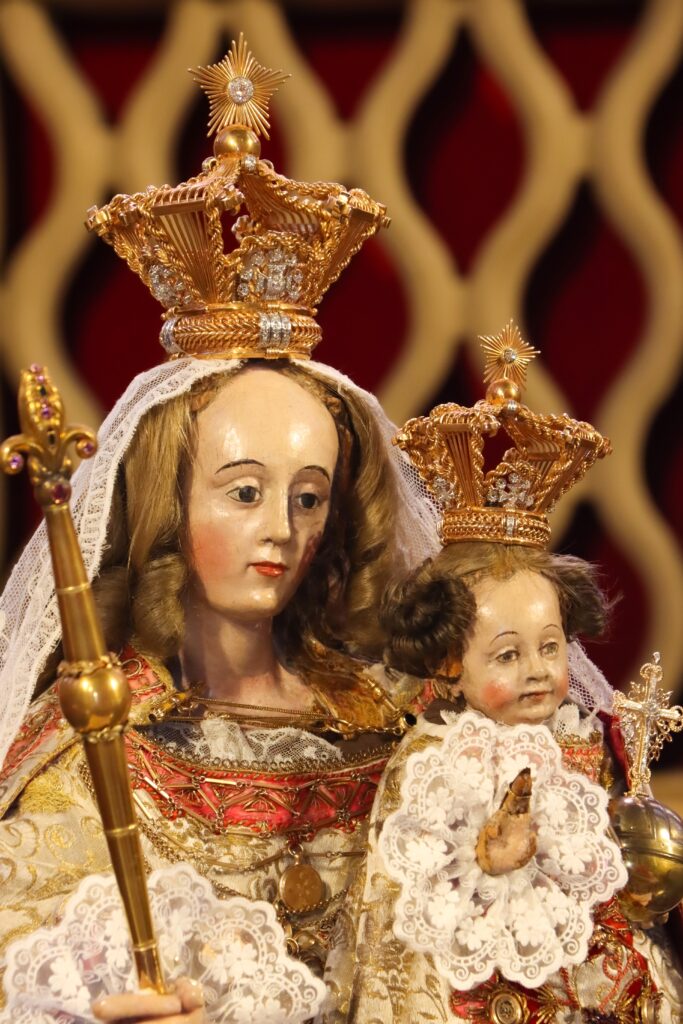
The traditional Oktav of Our Lady of Luxembourg will be celebrated in Luxembourg April 19-May 3 at Notre-Dame de Luxembourg Cathedral in Luxembourg City. Devotion to Our Lady of Luxembourg and the annual Oktav with its closing procession have deep roots in the Grand Duchy’s history.
Devotion to Our Lady of Luxembourg (Maria, Mater Jesus, Consolatrix Afflictorum) dates to 1624 and Jesuit priest Jacques Broquart. At that time, life in Luxembourg was miserable due to poverty, war and the plague. Broquart obtained a three-foot, wooden statue of Mary, Consoler of the Afflicted and held a procession with the statue through the fortress of Luxembourg City on December 8, 1624. Within a short time, devotion to the Consoler of the Afflicted took hold throughout Luxembourg and Broquart built a pilgrimage chapel on the site of the current Glacis in Luxembourg City.
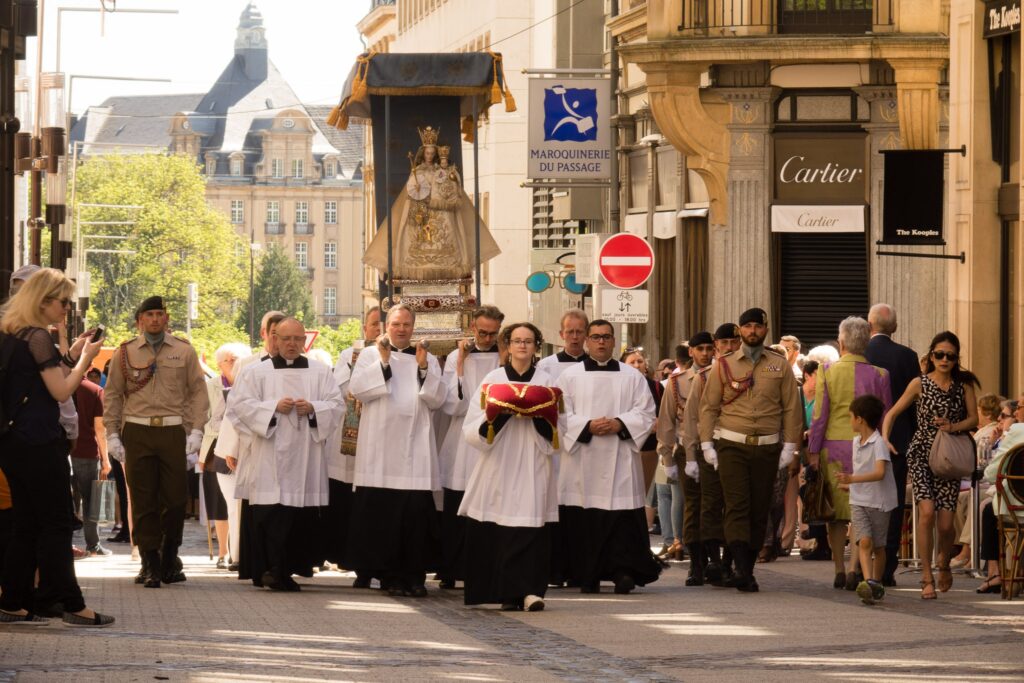
Since then, processions with the statue of Our Lady of Luxembourg have been held annually in Luxembourg. The most famous celebration in honor of Our Lady of Luxembourg is the Oktav of Our Lady held annually from the Third Sunday of Lent to the Fifth Sunday of Lent.
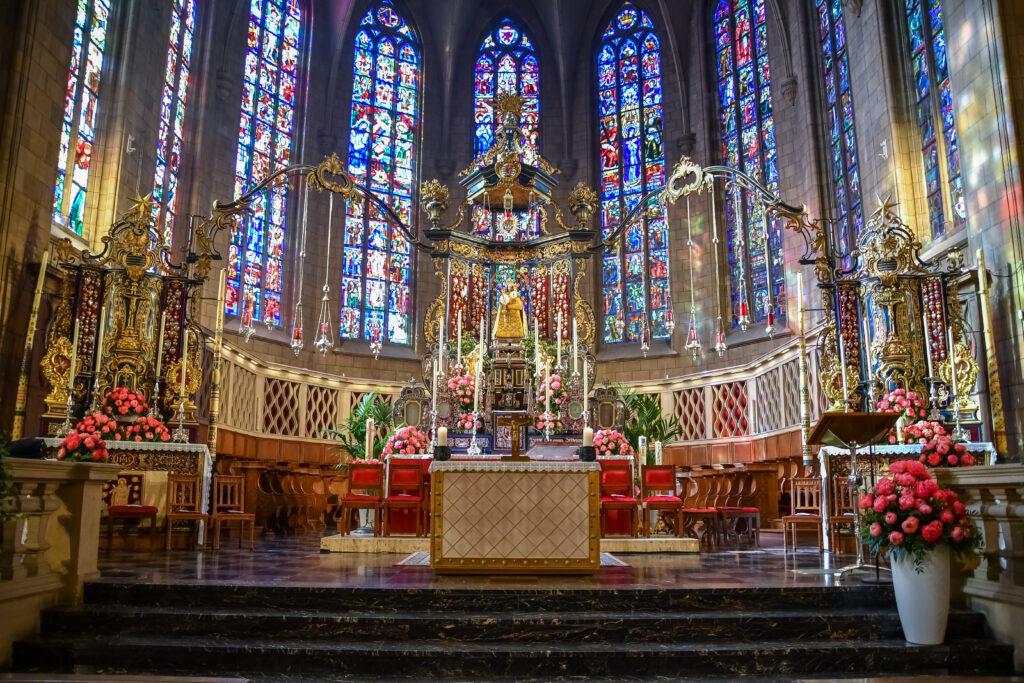
In 1666, Our Lady of Luxembourg was proclaimed as patroness and protectress of Luxembourg City. In 1678, she was proclaimed patroness of the entire Duchy of Luxembourg. In 1766, for the 100th jubilee of her being named patroness and protectress of Luxembourg City, a special votive altar was designed to be used during her two-week Oktav celebration. Luxembourg-born master metalworker Peter Petit fabricated the glorious altar in the Baroque style out of wood and iron. This beautiful altar has been erected each year in the cathedral of Luxembourg City for the Oktav celebration. Pilgrims come to the cathedral from Luxembourg and beyond to pray in front of the statue and to implore Mary’s intercession.
We invite you to view a fascinating video filmed in May 2025 by Kevin Wester, founder/CEO of Luxembourg Legacy. The 1766 votive altar had just been reassembled in the cathedral for the Oktavand when Kevin filmed a fascinating, behind-the-scenes look at how the 1624 statue is lifted into the votive altar. This is a scene the public would normally not be able to view.
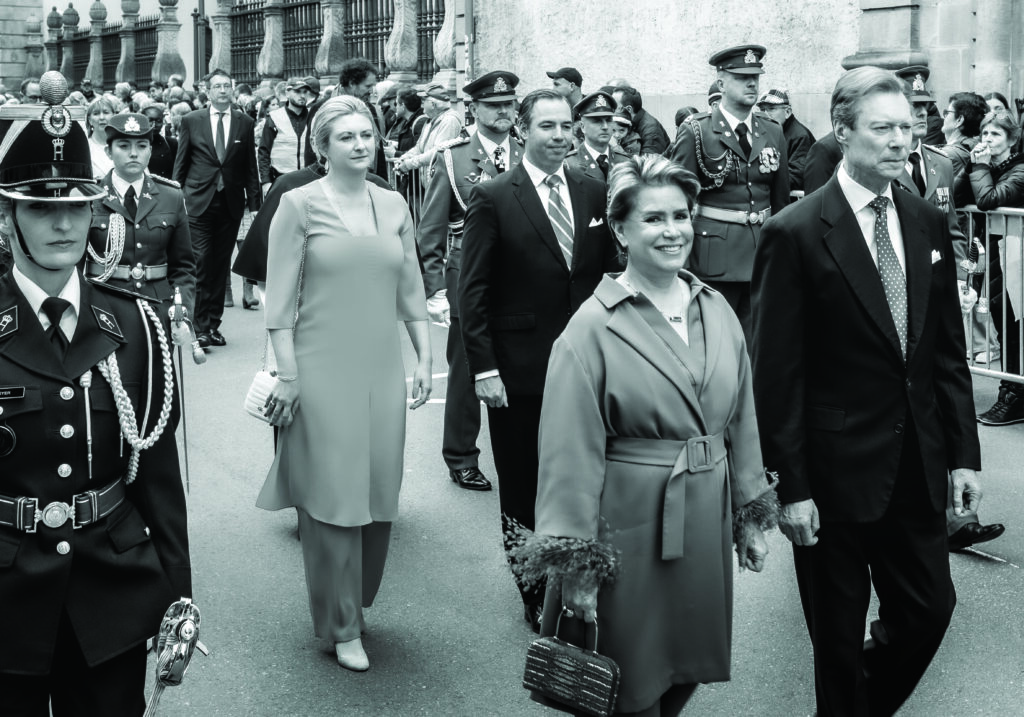
Americans carry banner in 400th jubilee closing procession
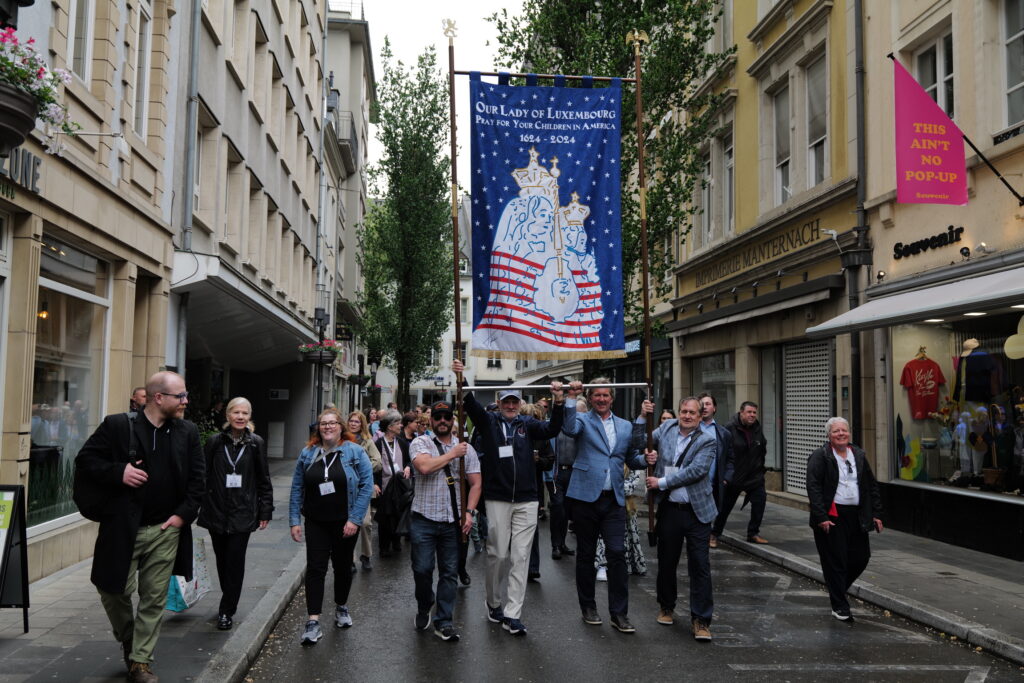
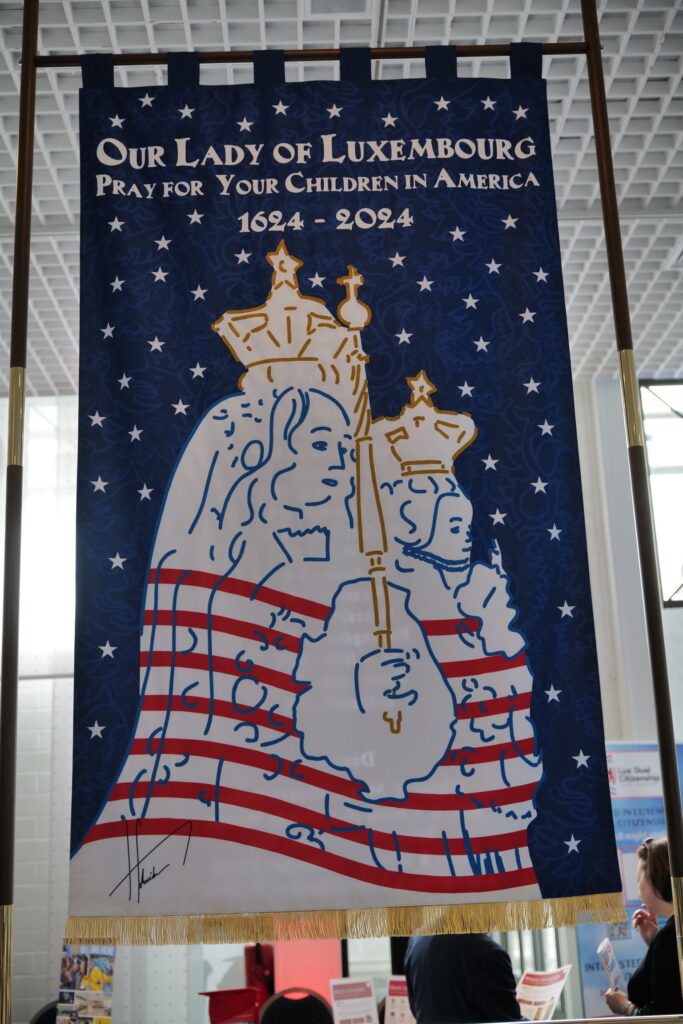
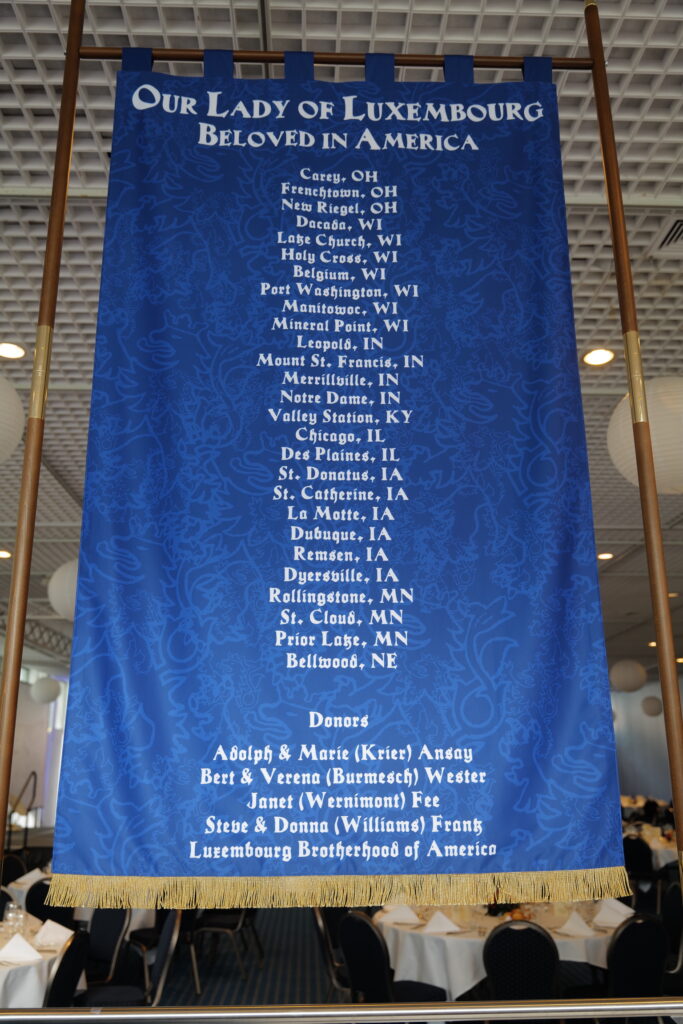
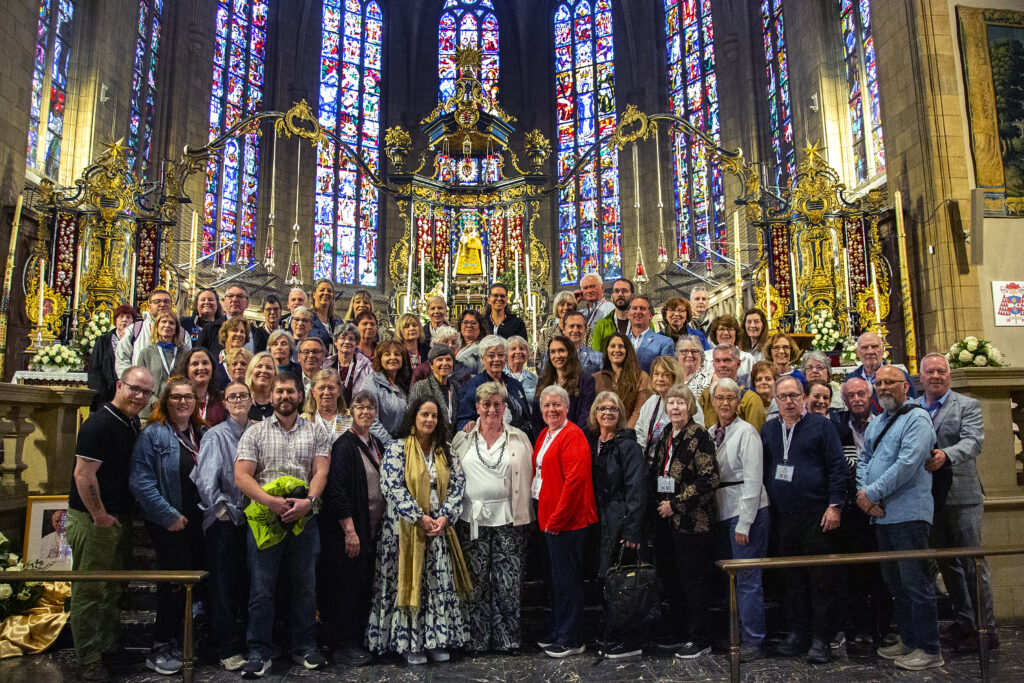
May 2025 was a very special celebration of the 400th Jubilee of devotion to Our Lady of Luxembourg. A group of 70 Americans, led by Luxembourg Legacy Tours with Kevin Wester, participated in the jubilee celebration representing the Luxembourg American community. Luxembourg Legacy led the charge to create a new Luxembourg-American processional banner that was carried in the closing procession for the 400th Jubilee on May 25, 2025, designed by Luxembourg artist, Jacques Schneider and fabricated by the Bernard-Kaufmann company of Lintgen, Luxembourg. Jacques’image of Our Lady of Luxembourg graced the front of the banner, and the back listed the U.S. towns that have images of Our Lady of Luxembourg along with names of the donors who funded the banner.
The Luxembourg Legacy tour group proudly carried the banner in the closing procession that day. The 2025 banner continued the tradition of the Luxembourg American community funding banners in 1892 and 1966 to represent the American Luxembourgers and their devotion to Our Lady of Luxembourg.
If you are visiting Luxembourg between April 19 to May 3, stop at the cathedral in Luxembourg City to experience the Oktav and to see the 401-year-old statue of Our Lady of Luxembourg and the 1766 votive altar.
If you are interested in learning more about Our Lady of Luxembourg, the Oktav and devotion to Our Lady of Luxembourg in the United States., check out the book “A Mother Who Consoles: Devotion to Our Lady of Luxembourg in the Grand Duchy and the U.S.” written by Luxembourg Legacy’s Kevin Wester and Mary Bolich.
0 Comments