
Did you get treats or a twig?
Many Luxembourg Americans celebrate St. Nicholas Day, but for most of us, Santa Claus’s visit on Christmas Eve has always been the highlight of our holidays. In the Grand Duchy, however, Niklosdag or Kleeserchersdag is the main celebration.
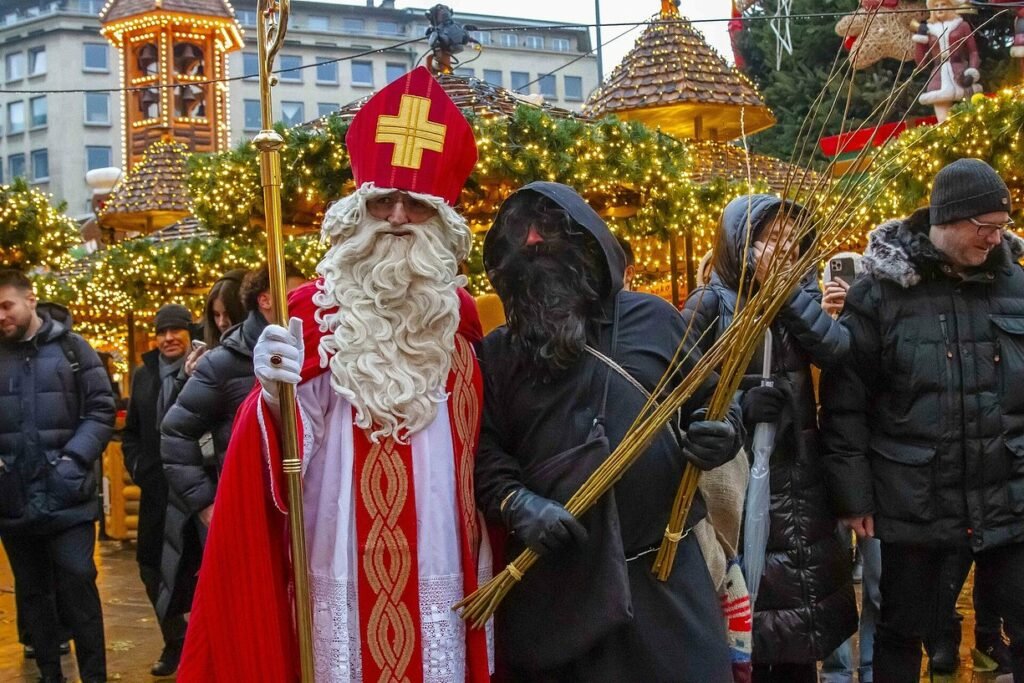
In the week leading up to December 6, children in Luxembourg go to see Kleeschen, the Luxembourgish incarnation of St. Nicholas. In the nights leading up to December 6, children leave their slippers or shoes outside their bedroom or by the front door every night. Each morning, they find candy, chocolates, nuts and a piece of fruit, such as a mandarin orange, inside their shoes. Kids are warned that if they haven’t been kind, they will get a Rutt (a small stick representing a switch) rather than treats. In the photo at right, which dates to the 1890s, members of the Mertens family of Chicago are dressed up as St. Nick and Houséker.
On the night of December 5, kids leave plates of hay or carrots for St. Nicolas’ donkey and a glass of milk or coffee for the saint. During the night, the saint delivers toys and fills the plate with sweets. Primary schools are closed on December 6, and children spend the day playing with their new toys.
History of Saint Nicholas
St. Nicholas was a bishop in what is now Turkey. Nicholas, who was from a wealthy family with devout Christian parents, was pious and generous from a young age. After his parents died, he inherited a fortune, which he used to help the less fortunate. He died on December 6 in 345 AD. Members of the St. Nicholas cult offered gifts during a pageant held to mark his death, the origin of the tradition of gift-giving by the saint.
In the Middle Ages, St. Nicholas was designated the patron saint of children. Known as St. Nicolas, or Kleeschen, in Luxembourg, he has white hair, a long white beard and is dressed in red, with a red mitre (bishop’s hat). He carries a bishop’s staff and is accompanied by a donkey.
A Fearful Companion
Kleeschen’s sidekick, the Houséker, wears a black coat, hood and boots. His role is to give naughty children a flick with his switch. The Houséker figure shares similarities with Black Pete (Zwarte Piet) in the Netherlands, although the Houséker is perhaps a less controversial figure. The history behind Houséker is rather dark. He is said to have been a butcher who killed three lost children who wandered into his shop. When the bishop visited the butcher, he brought the children (who had been salted and stored in the cellar) back to life. He punished the butcher by transforming him into Houséker and condemning him to follow St. Nicolas in shame. This is why St. Nicolas is often depicted with three children in a tub at his feet.
There are other legends surrounding St. Nicholas. Luxembourger René Daubenfeld shared these two: When he learned that a father could not afford to marry off his three young daughters, Nicholas—now rich but orphaned—put money in their stockings, which were drying by the fireplace. Thanks to him, the father was able to marry off his three daughters. The second legend is that he saved a boat, which was carrying a load of grain for the City of Myra, from a storm.
“In different areas, St. Nicolas became the patron saint of children, students, clerics, teachers, sailors, glaziers, butchers, young and unmarried girls, travelers, ferrymen, fishermen, dockworkers and grain and wine merchants,” Daubenfeld said.
Christmas In the Grand Duchy
On the night of December 23 or 24, the Chrëschtkëndchen, or infant Jesus, leaves gifts like clothes and books under the Christmas tree and family members exchange gifts.
Boxemännchen for Breakfast
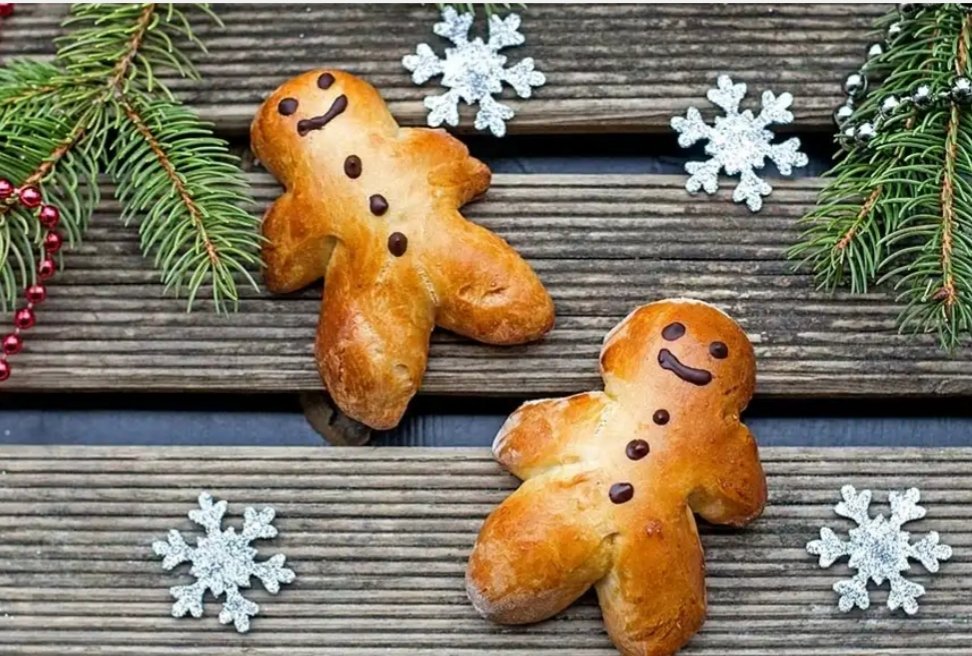
Leading up to Christmas, Boxemännchen, small men made of brioche dough can be found on display in every bakery in Luxembourg. Loved by both children and adults, they are traditionally eaten for breakfast on the morning of Niklosdag. Boxemännchen are often put in children’s slippers or shoes in the leadup to Niklosdag. Here’s a Boxemännchen recipe for you to try. Pictured at right: Making Boxemännchen each holiday season is a family tradition for the Rob Vanden Noven family.
Click here to listen to a song in Luxembourgish about Kleeschen
0 Comments